A S$2,000 holiday bill can attract S$65 in foreign currency fees before a single mile is redeemed. That is why the best credit card for overseas travel is not necessarily the one advertising the highest miles earn rate.
For Singapore travellers, our starting picks are Trust Freedom for miles without foreign transaction fees, Mari Credit Card for cashback on the first S$1,500 of eligible foreign currency spending each calendar month, and UOB EVOL for uncapped overseas cashback. UOB PRVI Miles, Citi PremierMiles and DBS Altitude deserve a place when their airline rewards or travel benefits justify the fees.
The right choice depends on the trip. A weekend in Johor Bahru, a S$4,000 family holiday and a traveller saving for a specific airline redemption produce different winners.
Terms checked on 27 October 2026. This comparison covers Singapore-issued personal credit cards for ordinary holiday spending. Rewards assume eligible purchases and full repayment by the due date. Welcome gifts are excluded from the rankings.
The six cards worth comparing
These are category picks rather than a claim that one card wins for everyone. The table separates the foreign transaction fee from the reward: a miles earn rate is not a cash discount.
| Card | Best fit | Eligible overseas reward | Foreign currency fee | Principal annual fee |
|---|---|---|---|---|
| Trust Freedom, Miles option | Miles with no FX fee | 1.3 Trust Miles/S$1, awarded in S$5 blocks | 0% | S$0 |
| Mari Credit Card | Cashback on modest monthly overseas spend | 1.5% on up to S$1,500 eligible spend/calendar month | 0% | S$0 |
| UOB EVOL | Cashback beyond a small monthly cap | 1%; 0.5% for FX spend processed in China and specified European countries | 0% | S$0 |
| UOB PRVI Miles | Higher miles earning on regional spending | 3 miles/S$1 on qualifying MYR, IDR, THB and VND transactions; 2.4 on other qualifying overseas spend | 3.25% | S$261.60 before any waiver |
| Citi PremierMiles | Non-expiring bank miles and occasional lounge use | 2.2 Citi Miles/S$1 foreign currency spend | Up to 3.25% | S$196.20 before any waiver |
| DBS Altitude | Existing DBS customers accumulating non-expiring points | Up to 2.2 miles/S$1 foreign currency spend | 3.25% | S$196.20 before any waiver |
Mari’s overseas cashback promotion and EVOL’s overseas cashback offer currently run until 31 December 2027. EVOL adds Australia to its 0.5% tier from 1 January 2027. Annual fees above include GST where applicable; first-year offers and later waivers vary.
Start with the cards that charge no FX fee
Trust Freedom: our starting pick for fee-free miles
Trust Freedom’s Miles option earns 1.3 Trust Miles per S$1 on eligible local and foreign spending, awarded for every S$5 spent. Trust Miles convert instantly at 1:1 into KrisFlyer Miles or HeyMax Max Miles. There is no annual card fee or foreign transaction fee.
This is an unusually useful combination for someone who wants airline rewards without paying a surcharge on each overseas purchase. Select Miles as the reward option: Freedom also offers cashback and stockback, and those are different arrangements.
The compromise is the lower earn rate compared with PRVI Miles. But paying nothing to earn 1.3 miles can be better than paying 3.25% to earn 2.2 or 2.4. The calculation below shows how much the additional miles actually cost.
Small transactions and S$5 reward blocks also matter. A theoretical 1,300 miles on S$1,000 is a comparison benchmark, not a promise that every collection of small purchases will earn exactly that amount.
Mari Credit Card: a strong cashback choice up to S$1,500 a month
Mari Credit Card combines no annual fee, no foreign currency transaction fee and 1.5% cashback on eligible foreign currency purchases up to S$1,500 per calendar month. That makes the maximum overseas promotional cashback S$22.50 a month.
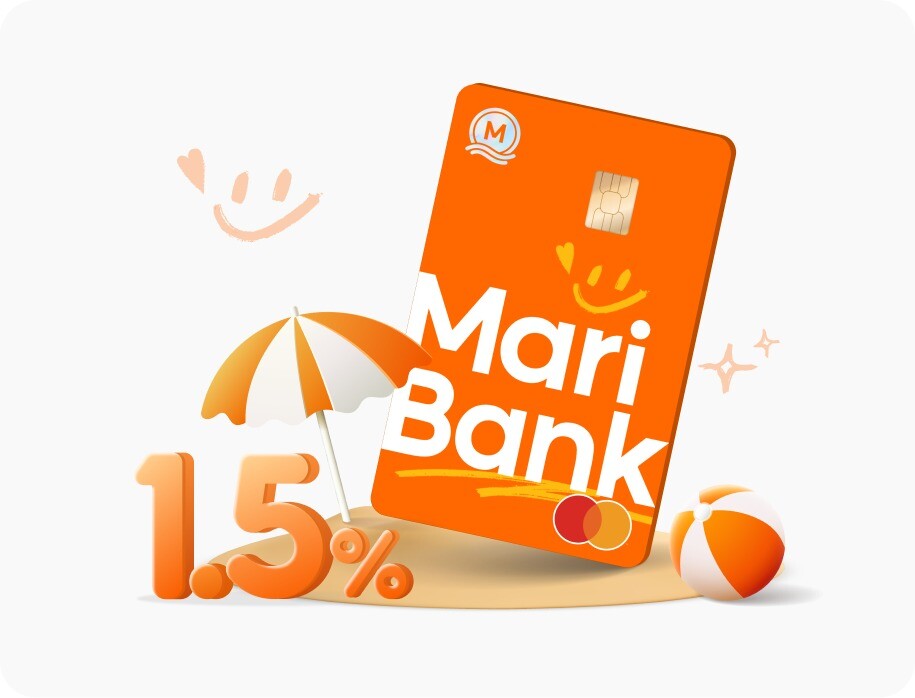
The overseas promotion terms cover eligible online card payments, Apple Pay or Google Pay purchases, and physical card payments. Purchases must be in foreign currency, charged and posted within a relevant calendar month, and not refunded, reversed or cancelled. Cashback is credited by the end of the following calendar month.
The local 1.5% cashback does not stack on top to make overseas purchases earn 3%. Nor should the overseas 1.5% rate be assumed to continue beyond the monthly cap. A S$4,000 holiday concentrated in one month earns at most S$22.50 under this promotion.
That makes Mari particularly attractive for a smaller trip or regular cross-border shopping. Its cap is less comfortable for a family paying the entire holiday bill on one card.
UOB EVOL: the straightforward cashback alternative for larger bills
UOB EVOL offers zero FX fees and promotional cashback without a minimum spend or cashback cap: 1% on eligible overseas foreign currency spend, or 0.5% for transactions processed in China and the European countries specified in its terms. Principal and supplementary annual fees have been waived since 1 July 2026.
The overseas offer is separate from EVOL’s local 10% cashback categories. The local S$800 qualifying spend requirement is not needed to unlock the overseas promotional rate.
For a S$4,000 eligible overseas bill at the 1% rate, EVOL returns S$40, compared with Mari’s maximum S$22.50 in one calendar month. At the 0.5% rate, the same EVOL bill returns S$20. Geography changes the result.
For this offer, Europe is a defined list, not the whole continent. The United Kingdom and Switzerland are absent from that list. Processing location matters, particularly for online bookings. The promotion terms exclude wallet top-ups, cash advances and specified merchant categories. Australia remains at 1% for qualifying spend in 2026, then moves to 0.5% on 1 January 2027.
When a traditional miles card still makes sense
UOB PRVI Miles: the regional miles earner
PRVI Miles earns 3 miles per S$1 on qualifying regional transactions and 2.4 miles on other qualifying overseas spending. The regional rate requires payment in MYR, IDR, THB or VND, with the merchant’s payment gateway in Malaysia, Indonesia, Thailand or Vietnam respectively.
Being in Bangkok does not, by itself, make every payment a 3-mile transaction. An online foreign currency payment processed through a Singapore gateway can earn the local rate instead. Taiwan is not included in the current regional definition.
Rewards are earned in S$5 blocks, and the 3.25% foreign currency fee remains payable. The card includes four complimentary Priority Pass lounge visits per calendar year for the principal cardholder; guests are chargeable. Its published principal annual fee is S$261.60.
PRVI is most persuasive for someone who already redeems airline miles well and uses the lounge allowance. The additional miles cost real money, so a bigger earn rate alone is insufficient reason to switch.
Citi PremierMiles: for patient collectors and occasional lounge users
Citi PremierMiles earns 2.2 Citi Miles per S$1 of eligible foreign currency spending. Citi Miles do not expire while held in the bank programme, and the card offers two complimentary Priority Pass visits a year for the main cardholder.
Its S$196.20 annual fee and foreign currency administrative fee of up to 3.25% need to be weighed against those benefits. Paying the renewal annual fee earns 10,000 Citi Miles; those miles are reversed if the fee is waived. That is a separate purchase decision, not free annual miles.
Non-expiring bank miles can suit occasional travellers building a balance slowly. Once transferred, the receiving airline programme’s expiry rules apply. Conversion charges and minimum transfer quantities also reduce the usefulness of a small balance.
DBS Altitude: a practical choice if DBS is already your main rewards bank
DBS Altitude earns up to 2.2 miles per S$1 on foreign currency spending and holds rewards as DBS Points that do not expire. Its principal annual fee is S$196.20, with a one-year fee waiver. Paying the annual fee earns 10,000 miles in DBS Points; a fee waiver reverses those points.
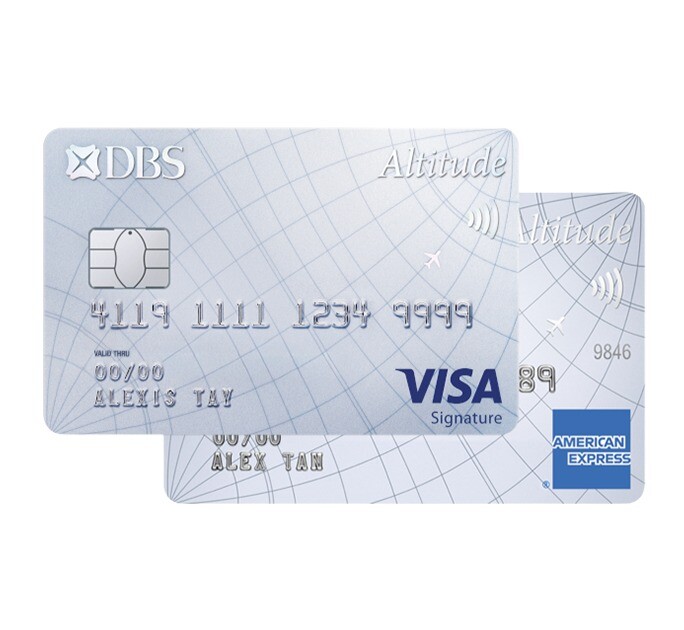
The Visa Signature version includes Priority Pass membership with two complimentary visits within each 12-month membership period, subject to enrolment and programme terms. Do not assume every Altitude version has identical lounge benefits.
There is a 3.25% FX fee. DBS also charges S$27.25 for each regular miles conversion, so transferring 10,000 miles costs proportionately more than transferring a larger balance. Altitude is a reasonable existing-bank option, but its ordinary overseas earn rate does not make it an automatic winner over fee-free cards.
What the miles cost on a S$2,000 trip
Assume S$2,000 of eligible purchases before FX fees, identical underlying exchange rates, full reward blocks, no annual or conversion fees, and no welcome bonuses. These assumptions isolate the card surcharge; actual exchange rates and reward rounding differ.
| Card or rate | FX fee | Illustrative reward | Net reward at an assumed 1.5 cents per mile |
|---|---|---|---|
| Trust Freedom Miles | S$0 | 2,600 miles | S$39 |
| Mari, all spend in one calendar month | S$0 | S$22.50 cashback | S$22.50 |
| EVOL at 1% | S$0 | S$20 cashback | S$20 |
| PRVI regional at 3 miles/S$1 | S$65 | 6,000 miles | S$25 |
| PRVI other overseas at 2.4 miles/S$1 | S$65 | 4,800 miles | S$7 |
| Citi PremierMiles or DBS Altitude at 2.2 miles/S$1 | S$65 | 4,400 miles | Minus S$1 |
The 1.5-cent valuation is an illustration, not cash you can withdraw or a guaranteed airline redemption value. It excludes taxes, surcharges and the difficulty of finding award seats.
Against Trust’s 1.3-mile rate, PRVI’s regional rate buys an extra 3,400 miles for S$65: about 1.91 cents per additional mile. PRVI’s 2.4-mile rate buys an extra 2,200 miles for about 2.95 cents each. At 2.2 miles, the extra 1,800 miles cost about 3.61 cents each. Annual fees and transfer charges raise those thresholds; lounge visits can add value if they replace something you would otherwise pay for.
Cashback has a different crossover. At EVOL’s 1% rate, its cashback matches Mari’s S$22.50 monthly maximum at S$2,250 of eligible spend. At 0.5%, that point is S$4,500. These comparisons assume one calendar month’s Mari spending and exclude any other card use.
Match the card to the trip, then pay in local currency
For a S$1,000 JB shopping weekend, Mari’s eligible 1.5% cashback is S$15 with no FX fee. PRVI’s qualifying regional rate produces 3,000 miles but adds S$32.50 in fees. That is a very different proposition from simply saying that PRVI earns more miles.
For a larger holiday, a cashback user could use Mari up to its monthly eligible cap and EVOL for subsequent eligible purchases. A traveller with a realistic KrisFlyer redemption in mind could instead favour Trust Freedom Miles. Someone who already holds PRVI and uses its lounge visits may reasonably keep it, without sending every overseas purchase through it.
Eligibility can settle the question before rewards do. UOB EVOL and PRVI generally require applicants to be at least 21, with S$30,000 annual income for Singaporeans and PRs aged 55 or below, or S$40,000 for foreigners. DBS Altitude requires S$30,000 for younger Singaporean/PR applicants and S$45,000 for foreigners; Citi PremierMiles requires S$30,000 and S$42,000 respectively. Older-applicant and secured-card routes differ. Mari also offers an assessed S$500-limit route for some applicants below its standard income threshold. Approval and the usable credit limit remain the bank’s decision.
At checkout, choose the destination’s currency, such as MYR in Malaysia or JPY in Japan. Selecting SGD can trigger dynamic currency conversion at the merchant’s exchange rate, remove foreign currency rewards and, on some cards, still attract an overseas processing charge. A zero FX fee card does not remove a merchant’s conversion markup.
A hotel deposit can temporarily tie up part of the credit limit, so leave room for the rest of the trip and carry a backup payment method. Credit card cash withdrawals are a separate transaction type with their own fees and interest. Complimentary card insurance also needs its own coverage and activation check; a lounge pass or a miles balance does not establish medical cover.
For most readers choosing a card from scratch, the strongest first comparison is now between fee-free miles and fee-free cashback. Pay for additional miles only when the intended redemption is worth more than their additional cost. A reward that requires carrying an interest-bearing balance is no holiday saving at all.