Singapore residents now take in an average of 4,000mg of sodium a day, twice the recommended limit, and Nutri-Grade labels and advertising curbs will be extended to salt, sauces, seasonings, instant noodles and cooking oil by 2028. The figures come from the National Population Health Survey 2025 and the Health Promotion Board’s National Nutrition Survey 2025, published on 3 October.
The two surveys point in different directions. More residents are exercising and going for health screening, and sugar intake has fallen, but calories, fat and sodium have kept climbing.
Sodium is up for a second survey running
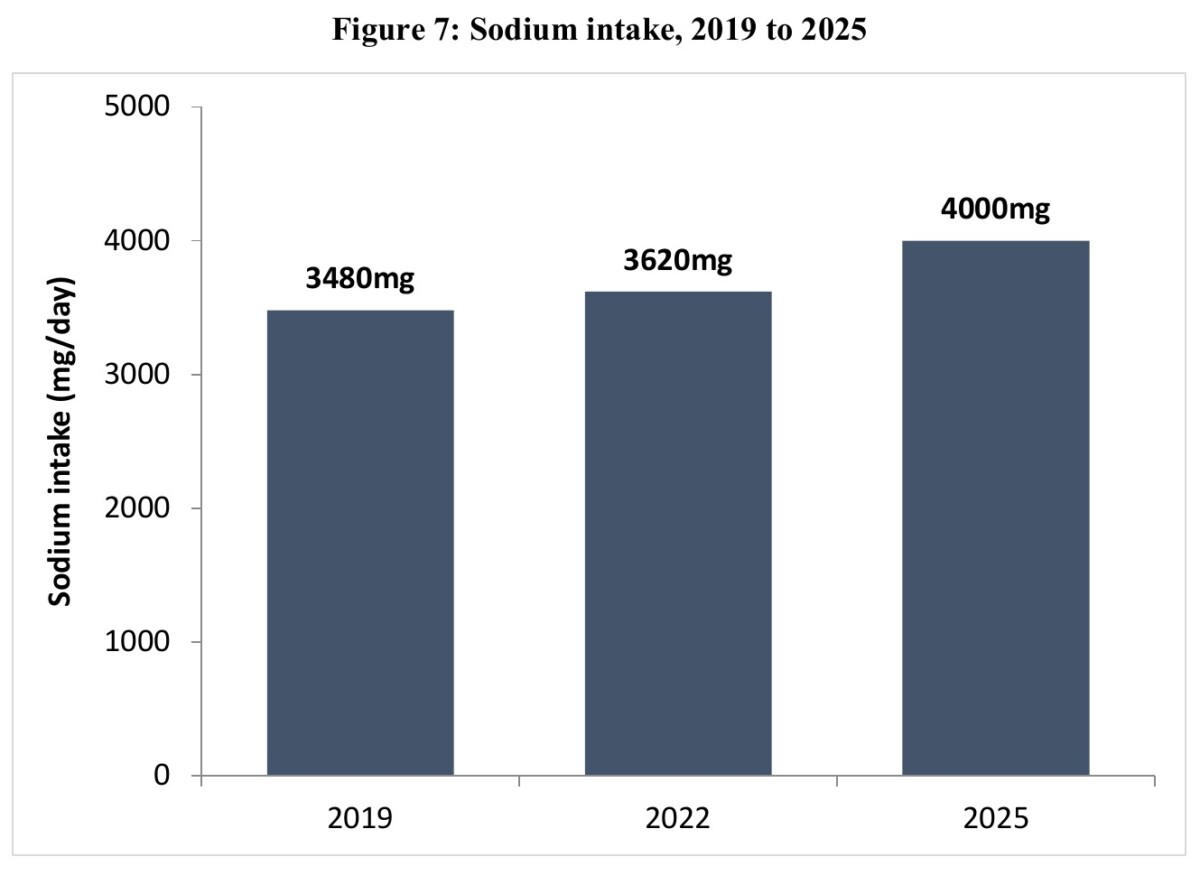
Mean daily sodium intake has risen from 3,480mg in 2019 to 3,620mg in 2022 and 4,000mg in 2025. The recommended limit is 2,000mg, equivalent to one teaspoon of salt, and 95 per cent of residents now exceed it, up from 88 per cent in 2019.
Salt and sauces added during cooking are a key source. Among residents with the highest sodium intake, salt, sauces and seasonings in cooked food such as soupy, gravy and sauce-based dishes make up 60 per cent of intake. Processed foods such as instant noodles, processed meats and nuggets are the second largest source.
Mean calorie intake has gone from 2,360kcal in 2019 to 2,460kcal in 2025, and 57 per cent of residents eat more than their daily recommended calories once physical activity is taken into account. Refined carbohydrate intake has risen from 154g to 166g a day, and total fat from 94g to 103g. Saturated fat is 35 per cent of total fat, above the recommended ceiling of 30 per cent.
Eating out more, and bigger portions
Sixty-six per cent of residents ate out at least once a day in 2025, up from 60 per cent in 2019, and the median number of meals eaten out rose from eight to nine a week. Residents who ate out two or more times a day averaged 2,682kcal and 4,459mg of sodium daily, against 2,261kcal and 3,552mg for those who ate out six times a week or less.
The food itself has also changed. A typical portion of common local dishes sold by food and beverage outlets carried nearly 10 per cent more calories in 2025 than in 2023, and 10 per cent more sodium.
Sugar falls, exercise and screening rise
Daily sugar intake has dropped from 60g in 2018, before Nutri-Grade labels for drinks were announced, to 48g in 2025. The share of residents within the recommended sugar limit, 10 per cent of daily energy intake or 50g on a 2,000-calorie diet, has gone from 61 per cent in 2019 to 79 per cent. Median sugar levels in pre-packaged drinks fell from 7.1 per cent in 2017 to 4.6 per cent in 2024, and in freshly prepared drinks from 7.5 per cent in 2020 to 4.1 per cent in 2025.
The share of residents getting enough total physical activity rose from 84.7 per cent in 2024 to 87.3 per cent in 2025. Screening for chronic diseases climbed from 62.6 per cent in 2023 to 71.5 per cent, and breast cancer screening from 34.7 per cent to 40.8 per cent. Daily smoking was stable at 8.8 per cent, from 8.4 per cent in 2024. Poor mental health stood at 15.9 per cent, and at 25.8 per cent among adults aged 18 to 29.
The population health survey ran from August 2024 to July 2025 and covered residents aged 18 to 74. The nutrition survey ran from June to December 2025.
Labels move from drinks to salt and sauces
The extension takes Nutri-Grade beyond beverages for the first time, to pre-packed salt, sauces, seasonings, instant noodles and cooking oil sold in retail settings, the key contributors of sodium and saturated fat. It will take effect in 2028, replacing the mid-2027 start announced earlier. As with drinks, products graded C or D must carry the Nutri-Grade label on the front of the pack and in online listings, and advertising of products graded D will be banned.
HPB is also working with central kitchens, hawker centres, coffee shops and food courts through its Healthier Dining Programme and the “Less Salt, More Taste” movement, to get more lower-sodium ingredients into cooking and less salt and seasoning added. Its “Ask for Less” movement, which started on 22 September 2026, encourages diners to ask for less salt, sauce and gravy when eating out.