There are two sets of CDC vouchers 2026 sitting in most Singaporean households right now, and they expire on completely different dates. Getting this wrong is the easiest way to lose money you already have.
The January tranche was $300 per household, and it is valid until 31 December 2026. That gives you roughly four months. The June tranche was $500 per household, claimable from 11 June 2026, and it runs all the way to 31 December 2027.
So the urgent one is the January money. The June money can wait.
The two tranches, side by side
- January 2026: $300 per household, expires 31 December 2026
- June 2026: $500 per household, claimable from 11 June 2026, expires 31 December 2027
The June tranche was brought forward by around seven months in response to global cost pressures. That was a deliberate decision to put money into households earlier, which is worth remembering when the next tranche timing is announced.
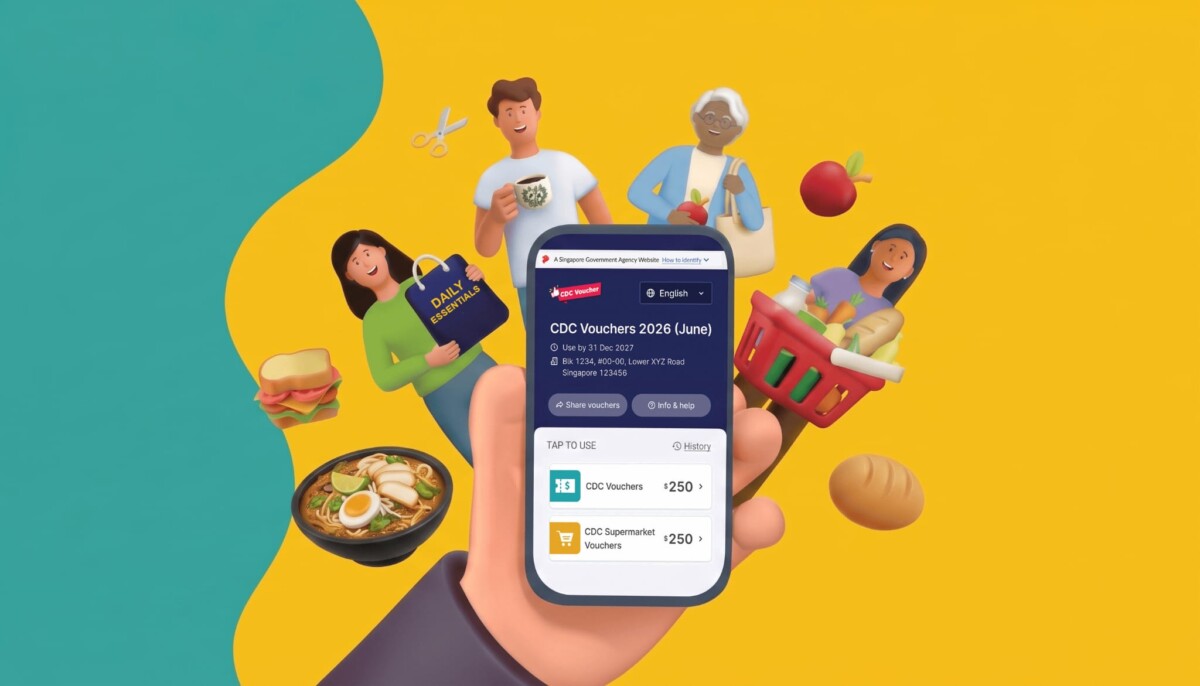
How the $500 splits
The June tranche is not a single pot you can spend anywhere. It divides in two:
- $250 at participating hawkers and heartland merchants
- $250 at participating supermarkets
This trips people up every single tranche. Households burn through the supermarket half in two NTUC runs, then discover the hawker half is still untouched in November.
The hawker and heartland half is the one that needs deliberate effort. Coffee shops, wet market stalls, provision shops, minimarts, neighbourhood bakeries and hair salons all commonly participate.
How to check your balance
- Go to go.gov.sg/cdcv
- Log in with Singpass
- Check both tranches separately, because the balances are tracked apart
- Note which half of the June tranche is running low
Only one member per household claims on behalf of everyone, so if the vouchers look missing, check with whoever handles the household admin before assuming something went wrong.

Where the January money is best spent now
With four months on the clock, the sensible move is to fold the vouchers into spending you were doing anyway rather than inventing new purchases.
- Weekly wet market run. Vegetables, fish and meat at a participating stall, which is money you were spending regardless.
- Rice, oil and household staples. Non-perishables that keep, bought at a participating supermarket.
- Kopitiam meals. Small amounts, but they add up faster than anyone expects across a month.
- Mooncakes and festive shopping. Mid-Autumn falls on 25 September, and plenty of heartland bakeries participate.
Two things worth knowing
Vouchers are used in denominations, and merchants do not give change. If your bill is $8 and you use a $10 voucher, that $2 is gone. Stack smaller denominations to match your bill instead of reaching for the biggest one.
Second, the participating merchant list is not static. A stall that took vouchers last year may not be on the list now, and vice versa. The look-up on the official portal is more reliable than the sticker on the shopfront.

The honest advice
Nobody gets a prize for holding vouchers to the last week. Households that treat them as a rainy-day fund tend to be the same ones scrambling in late December, discovering their favourite stall closed for the holidays.
Spend the January $300 across September and October. Leave the June $500 to run at its own pace, since you have another fourteen months on it.
Balance checks, merchant look-ups and full terms are on the official CDC Vouchers Scheme site.