
Less than six weeks after wrapping up a historic Commonwealth Games campaign in Glasgow, Team Singapore are already setting their sights on the next major challenge: the Asian Games 2026 in Aichi-Nagoya, Japan, which begin on 19 September with competition getting under way from 10 September.
The Glasgow Games offered a timely confidence boost — and a critical final test — for athletes who will now channel that momentum into arguably the most competitive multi-sport event in the Asian sporting calendar. With 43 sports and 469 gold medals on offer across Aichi and Nagoya, Singapore will be targeting a strong showing across multiple disciplines.
Athletics: Shanti, Marc and the Sprint Relay Ambitions
No athlete better encapsulates Singapore’s Asian Games ambitions than Shanti Pereira. At the Commonwealth Games in Glasgow, she became the first Singaporean individual sprinter to reach a Games final, clocking a season-best 22.81 seconds in the 200m semi-finals. That milestone was not just a personal achievement — it was a statement of where Singapore’s sprint programme stands on the global stage.
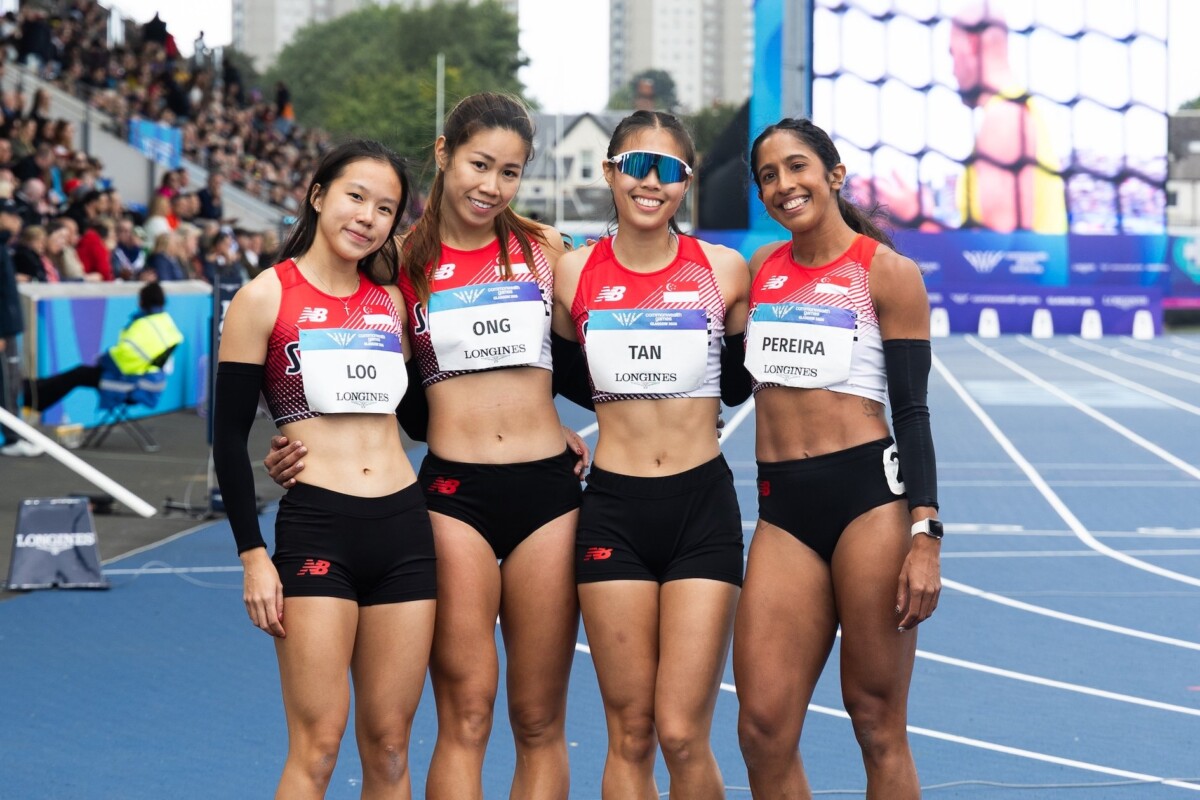
Pereira will anchor the women’s 4x100m relay team once again at the Asian Games, where the quartet of Elizabeth-Ann Tan, Kerstin Ong, Shanti Pereira and Amanda Loo will be targeting a national record. Their Commonwealth Games outing — a season-best 45.52 seconds — placed them just outside the final, but the relay exchanges were largely clean and the time suggests a national record assault is within reach under optimal conditions.
Singapore’s fastest man, Marc Brian Louis, will spearhead the men’s sprint challenge. He delivered back-to-back season-bests in Glasgow — 10.38 seconds in the 100m heats and 20.97 seconds in the 200m heats — and the men’s 4x100m relay team of Marc Brian Louis, Tate Tan, Xander Ho and Ian Gan have the collective speed to threaten the national record of 39.24 seconds, set back in 2015.
“Just give us a few more months, and we’ll build the chemistry needed to put together a better run in the future,” Louis said after Glasgow. Those months are now running out — the Asian Games will be the moment of truth.
Swimming: A New Generation Making Their Mark
Singapore’s swimmers have also arrived at the Asian Games cycle in fine form. Gan Ching Hwee announced herself emphatically at the Commonwealth Games, smashing the national record in the 400m freestyle on her Games debut. Her breakthrough performance signals a depth in Singapore’s women’s swimming that could translate into significant returns in Aichi-Nagoya.
Para swimming star Toh Wei Soong added a third Commonwealth Games medal to his growing collection in Glasgow, cementing his status as one of Singapore’s most accomplished multi-sport athletes. He will compete in the Asian Para Games rather than the Asian Games proper — but his achievements this summer have added to the sense of a wider Team Singapore machine performing at its peak.
Gymnastics: Amanda Yap’s Silver Lining
Amanda Yap delivered Singapore’s most celebrated gymnastics result in years at the Commonwealth Games, claiming a silver medal that lit up social media back home. The performance demonstrated that Singapore’s gymnastics programme is now capable of competing at the very highest Commonwealth level — and the Asian Games circuit, while different in character, offers another stage for Yap to build her international profile.
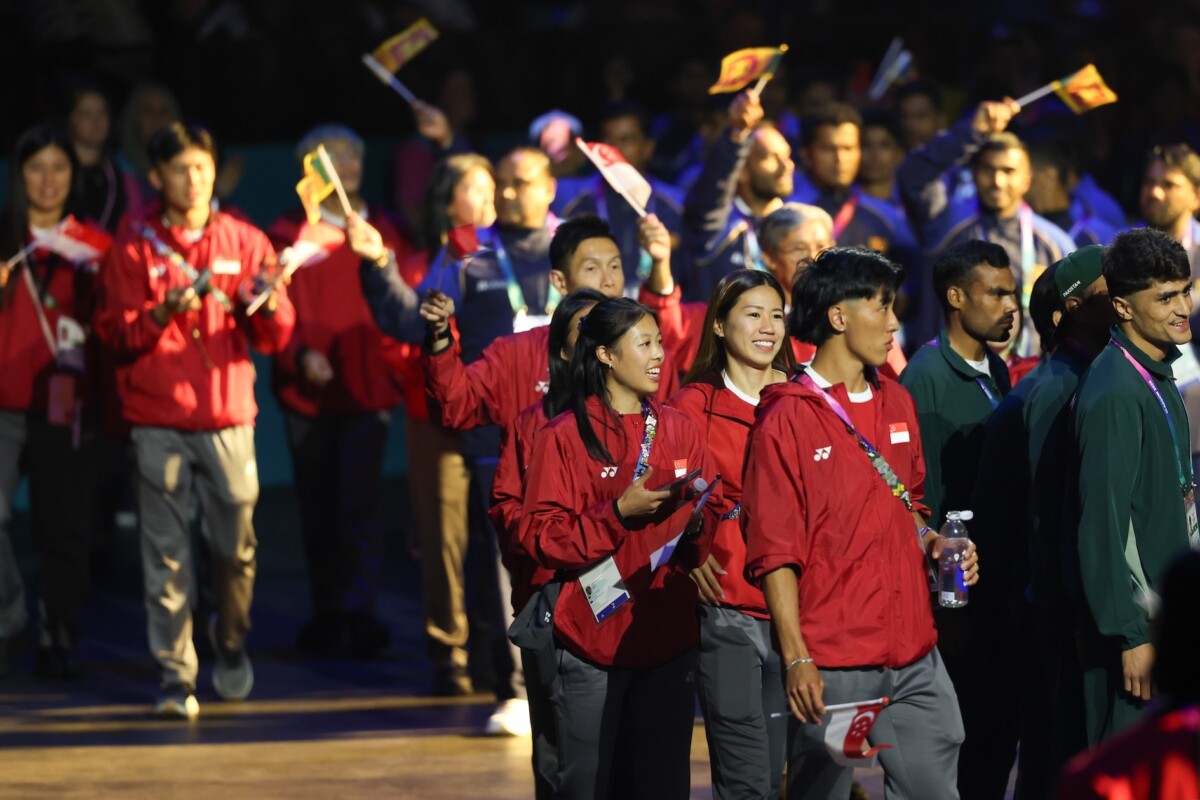
The Bigger Picture: Building Towards 2026 and Beyond
What makes Singapore’s Asian Games 2026 campaign particularly compelling is the timing. The Commonwealth Games served as the final dress rehearsal — a chance to identify gaps, fine-tune relay exchanges, and harden athletes mentally before the Asian Games’ higher stakes and deeper competition.
Multiple athletes spoke in Glasgow about having one eye firmly on Aichi-Nagoya. “We rarely get the chance to come together and run the relay at major competitions against strong competitors — this was one of the good opportunities for us,” said 200m finalist Elizabeth-Ann Tan. That mindset — of using the Commonwealth Games as a springboard rather than an end in itself — is exactly the mentality that could yield dividends in Japan.
Competition at the Asian Games begins from 10 September, with the main programme running 19 September to 4 October. For Team Singapore, the journey to Aichi-Nagoya starts now.