
Wall Street closed out an eventful week on a high note on Friday, 25 April 2026, as Intel (NASDAQ: INTC) stock surged to an all-time high after a stunning first-quarter earnings beat, while the Department of Justice’s decision to drop its criminal probe of Federal Reserve Chair Jerome Powell cleared the way for Kevin Warsh to take the helm of the US central bank. The Nasdaq Composite climbed 1.5%, the S&P 500 added 0.7%, and the Dow Jones Industrial Average slipped 0.3% — a classic tech-led divergence that Singapore investors should take note of.
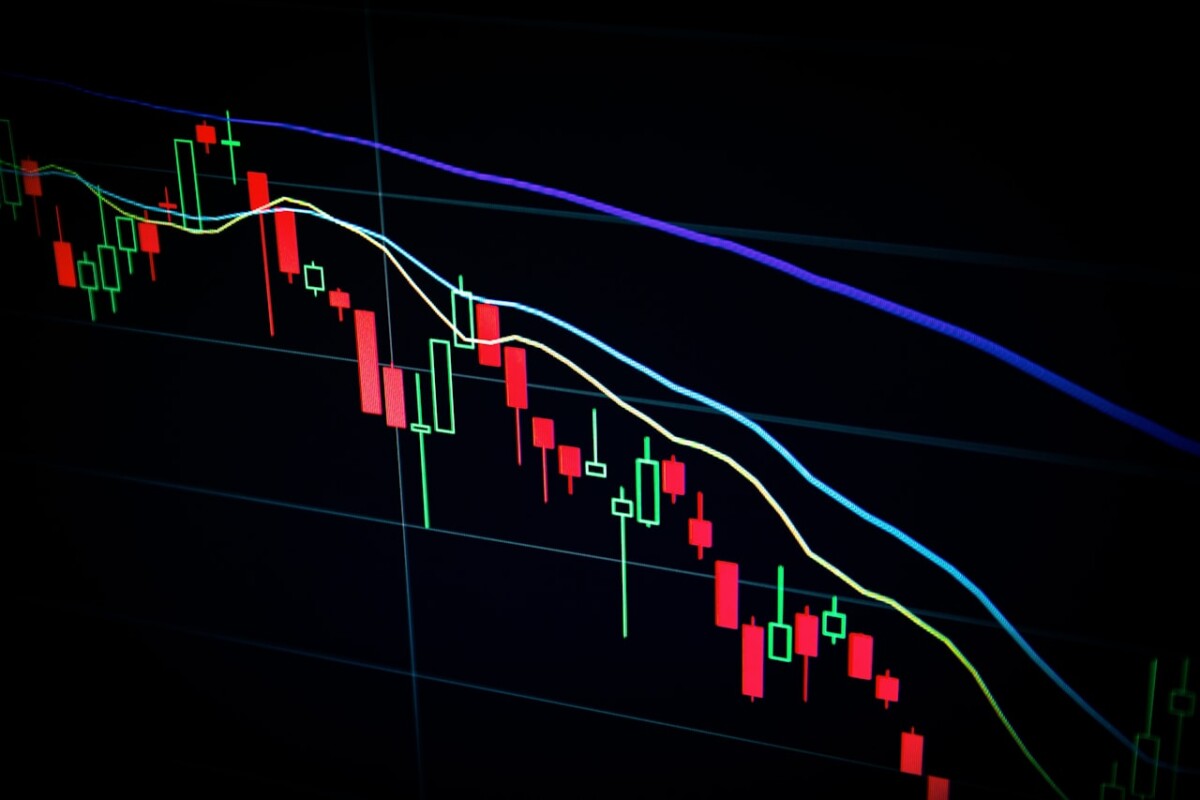
Friday’s Market Close: Nasdaq Leads, Dow Lags
Friday’s session saw a clear bifurcation in US equities. The Nasdaq Composite gained 1.5% as semiconductor and technology stocks powered ahead, while the S&P 500 added 0.7%, settling at approximately 7,115 — just off its all-time intraday high of 7,126 set earlier in the week. The Dow Jones Industrial Average edged down 0.3%, weighed by consumer and financial names that struggled to keep pace with the tech surge.
Two catalysts dominated the session: Intel’s extraordinary earnings report and the surprise announcement that the DOJ had dropped its criminal investigation of Powell, effectively paving the way for Kevin Warsh’s Senate confirmation as the next Fed chair. Together, these developments reinforced the risk-on tone that has characterised Wall Street since early April, when the Iran ceasefire and a string of strong corporate earnings triggered one of the broadest equity rallies in years.
Intel’s Historic Q1 2026 Earnings Beat
Intel delivered what may be its most remarkable quarterly result in more than two decades. The chipmaker reported adjusted earnings per share of 29 cents, obliterating the 1 cent consensus estimate, while revenue came in at $13.58 billion against expectations of $12.42 billion. This marked Intel’s sixth consecutive quarter of beating Wall Street forecasts on both the top and bottom lines — a remarkable turnaround for a company that was left for dead by many analysts just two years ago.
The stock responded emphatically, surging more than 25% during Friday’s session to breach its historic all-time high of $75.81 per share set back in August 2000 — a milestone Intel investors have waited a quarter of a century to witness. For Singapore investors holding Intel via US brokerage platforms such as Tiger Brokers, moomoo, or Interactive Brokers, this represents a generational moment in one of the world’s most-followed chip stocks.
Data Centre and AI CPU Demand Drive Revenue Surge
The standout performer within Intel’s business was its Data Centre and AI division, which posted revenue of $5.1 billion — up 22% year-on-year. The division’s operating margin expanded dramatically from 13.9% to 30.5%, delivering $1.5 billion in operating income. The driver? A fundamental shift in the artificial intelligence landscape that few analysts fully anticipated.
While Nvidia’s graphics processing units (GPUs) have dominated AI training workloads, the rise of agentic AI — where models act autonomously across complex, multi-step tasks — is generating surging demand for central processing units (CPUs). Intel’s Xeon server processors are benefiting enormously from this shift, with the company signing multiple long-term supply agreements in Q1, including a notable deal with Google for volume pricing of server CPUs and application-specific integrated circuits (ASICs) spanning three to five years. The once-sleepy CPU market, long overshadowed by the GPU boom, has reasserted itself as a critical component of the AI stack.
Q2 2026 Guidance Blows Past Expectations
If the Q1 results were impressive, Intel’s forward guidance was even more so. The company guided Q2 2026 revenue of between $13.8 billion and $14.8 billion, well above the analyst consensus of $13.07 billion. Adjusted EPS guidance of 20 cents also surpassed the 9 cents that analysts had anticipated. Revenue, gross margin, and EPS all came in above the high end of Intel’s own guidance range — a trifecta that signals genuine operational momentum rather than a lucky beat.
DOJ Drops Powell Probe — Kevin Warsh’s Path to Fed Chair Cleared

The second major market catalyst on Friday was the Department of Justice’s announcement that it would drop its criminal investigation of Federal Reserve Chair Jerome Powell. The probe — initiated in January 2026 following months of presidential criticism over the central bank’s multibillion-dollar Washington headquarters renovation — had created a significant political obstacle to Warsh’s Senate confirmation. Senator Thom Tillis had placed an effective hold on the confirmation vote until the investigation was resolved.
With the probe dropped — though the Fed’s own inspector general will still review the renovation costs — the White House indicated it expects a “swift” Senate confirmation for Warsh. Markets responded positively to the clarity: uncertainty over Fed leadership had weighed on rate expectations for weeks, and a smooth transition removes a meaningful tail risk for investors globally.
What the Fed Leadership Transition Means for Markets
Kevin Warsh, a former Federal Reserve governor and Hoover Institution fellow, is widely regarded as more hawkish than Powell on inflation but pragmatic on market stability. At his Senate confirmation hearing on 21 April, Warsh pledged to uphold monetary policy independence and rejected suggestions that he would be President Trump’s “sock puppet” on interest rates — a characterisation that had circulated in financial markets since his nomination.
For Singapore investors, the Fed leadership transition matters because US interest rate policy has a direct knock-on effect on the Singapore dollar, Singapore Government Securities (SGS) yields, and the cost of mortgage financing. A Warsh-led Fed that maintains credibility on inflation while remaining data-dependent could sustain the risk-on sentiment that has driven Singapore’s REITs and banking stocks higher in 2026. DBS, OCBC, and UOB — collectively accounting for roughly 40% of the STI’s weighting — benefit from a stable interest rate environment that supports net interest margins without triggering a sharp economic slowdown.
A Week to Remember: S&P 500 Erases All 2026 Losses
Friday’s gains capped an extraordinary week for US equities. As recently as early April, the S&P 500 had been down 7% year-to-date, buffeted by the Iran crisis, fears over Strait of Hormuz disruption, and Fed succession uncertainty. The subsequent rally — driven by the US-Iran ceasefire extension, a surge in Q1 earnings beats (88% of reporting companies exceeded estimates, well above the 10-year average of 76%), and Intel’s landmark results — pushed the S&P 500 to a new all-time high of 7,126 during the week — as we covered in our earlier report, Wall Street Hits Record High as Iran Opens Strait of Hormuz.
The Nasdaq’s performance was even more striking: the index ran a 13-day winning streak earlier in April — its longest since 1992 — before a brief consolidation. The week of 25 April finds Wall Street in a decidedly risk-on posture, with tech stocks, semiconductors, and growth names leading. The S&P 500 is now up approximately 4.1% for 2026 and up roughly 9% for April alone — a month that began with widespread recession fears.
What Singapore Investors Need to Know
Singapore investors have multiple avenues to participate in the Intel and broader tech rally. Those with US brokerage accounts through Tiger Brokers, moomoo, Saxo Markets, or Interactive Brokers can trade INTC directly on the NASDAQ. For those preferring local exposure, the Nikko AM STI ETF (SGX: G3B) and SPDR STI ETF (SGX: ES3) provide diversified Singapore blue-chip exposure, while tech-focused unit trusts available through platforms such as Endowus or Syfe offer a CPF-investment-scheme-compatible route to global technology exposure. For S-REIT exposure, see our recent analysis of the top 5 S-REITs Singapore retail investors are buying in Q1 2026.
SGX-Listed Semiconductor Adjacent Plays
On the Singapore Exchange, the Intel-led tech optimism may provide a tailwind for semiconductor-adjacent counters. UMS Holdings (SGX: 558) — a precision engineering company supplying semiconductor equipment manufacturers — has historically correlated with US chip sector sentiment. Similarly, AEM Holdings (SGX: AWX), which manufactures semiconductor test handler systems for Intel among others, is a direct beneficiary of Intel’s capital expenditure and production ramp. Frencken Group (SGX: E28), which provides precision manufacturing services to the semiconductor and medical technology industries, is another name worth monitoring as the chip cycle accelerates.
CPF Investment Considerations
Investors using the CPF Investment Scheme (CPFIS) should note that direct US stock purchases are not permitted under CPFIS-OA or CPFIS-SA. However, CPFIS-approved unit trusts with global technology mandates — available through platforms such as Endowus — offer exposure to the US tech rally in a CPF-compatible wrapper. Investors should review the fund prospectus and consider seeking advice from a licensed financial adviser to determine suitability.
Technical Outlook
For the S&P 500, the index is consolidating just below its all-time high of 7,126. Key support sits at the psychological 7,000 level and the 50-day moving average (rising through the 6,900–6,950 range). The 14-day RSI is elevated but not yet in extreme overbought territory, suggesting room for continued upside if earnings momentum and macro data cooperate. The next resistance to watch is at 7,200.
For Intel (INTC), the breakout above the 2000 all-time high is a significant technical event. Historically, when a stock breaks above a multi-decade record on exceptional volume and a strong fundamental catalyst, it tends to establish that level as new support rather than an exhaustion point. A healthy pullback to the breakout zone ($75–$78) would represent a potential accumulation opportunity for long-term investors.
The STI at approximately 4,975 remains in a solid uptrend, supported by strong dividend yields from the Big Three banks and positive corporate earnings guidance. A sustained break above 5,050 would confirm a re-test of the 2026 highs. Singapore REIT investors — including those tracking the worst-performing STI REITs in Q1 2026 — should watch the 10-year SGS yield closely — any move below 3.0% would be a meaningful tailwind for the sector.
This article is for informational purposes only and does not constitute financial advice. Past performance is not indicative of future results. Readers should conduct their own research and consider seeking advice from a licensed financial adviser before making any investment decisions.