Singapore faces a proposed Section 301 tariff of up to 20% on its exports to the United States, after the US Trade Representative (USTR) published findings on 25 November 2026 US time. The Ministry of Energy, Trade and Industry (METI) said on 26 November that the rate could drop to 10% if Singapore reaches an Agreement on Reciprocal Trade with the US or concludes other negotiations that answer the findings.
What the Singapore Section 301 tariff proposal says
METI’s media statement says the USTR report covers 14 economies, including Singapore, under Section 301 of the US Trade Act of 1974. The probe is about structural excess capacity and production in specific manufacturing sectors.
- Maximum potential tariff on Singapore: 20%, net of existing Section 301 tariffs
- Possible adjustment: 10%, if Singapore reaches an Agreement on Reciprocal Trade or concludes other negotiations responsive to the findings
- Status: proposed. METI says a public consultation period is coming, and it will submit further comments
Singapore’s response
METI said it is disappointed and disagrees with the proposed actions. It argues that Singapore’s global trade surplus reflects an outward-oriented, market-oriented economy and its role as a trusted business and trading hub, and that its policies do not protect the domestic market or subsidise manufacturing for export.
It also pointed to the US-Singapore Free Trade Agreement. Under that deal the US has enjoyed a consistent trade surplus with Singapore for over 20 years, METI said, and the surplus grew to US$33 billion in 2024.
Speaking to reporters on 26 November, Deputy Prime Minister Gan Kim Yong said Singapore was “very disappointed” and that the findings did not account for its unique structure: a small domestic market, no natural resources and no tariffs on anybody. He also addressed the Central Provident Fund, calling it a savings scheme for housing, healthcare and retirement, not a scheme to suppress consumption, and noted that CDC vouchers support local spending.
What DPM Gan said on 27 November
At the SPH Asia Future Summit the next day, Mr Gan said Singapore has no reciprocal trade agreement with the US. He said the tariff on Singapore had been 10% and was recently raised to 12.5%.
On the new proposal, he said negotiations are not binary and the outcome “can be somewhere in between” 10% and 20%. He added that Singapore must be prepared to walk away if the price the US asks is too high, and that there is no guarantee talks will succeed.
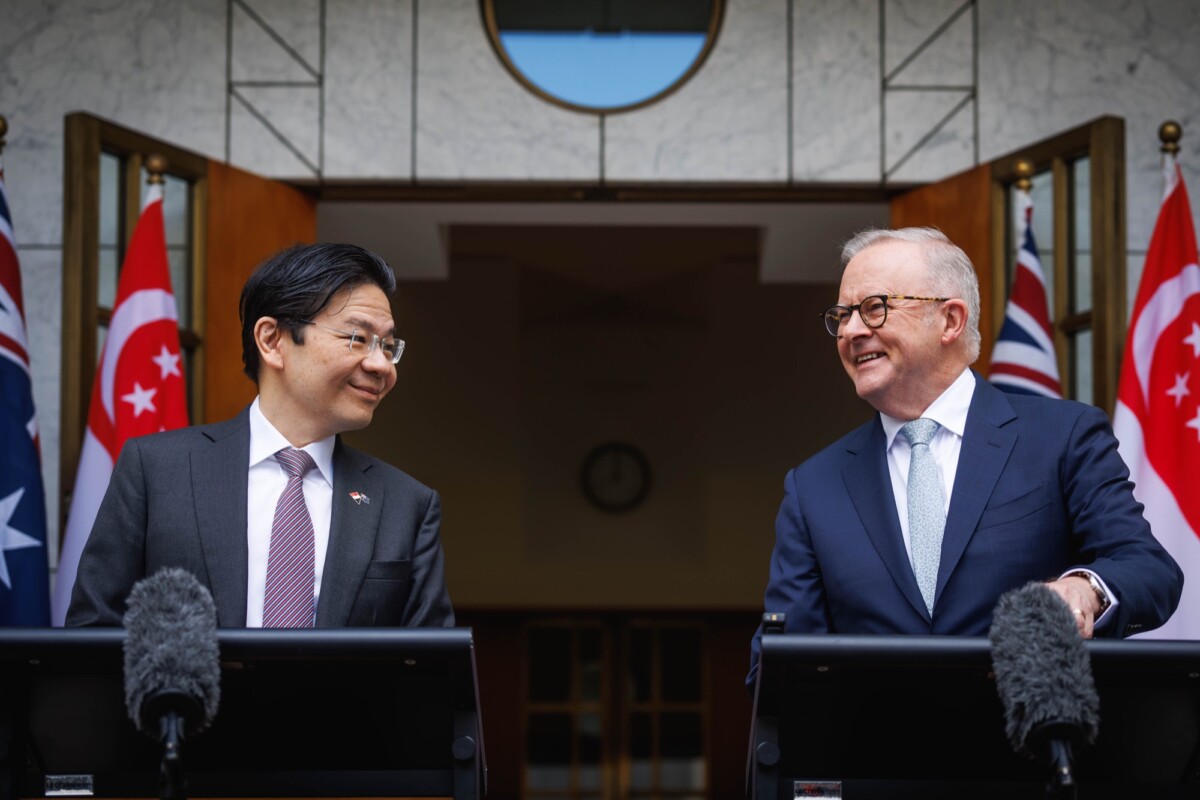
He also said Singapore does not want to be a conduit for illegal trade, and that it is reviewing processes to strengthen regulations and monitoring. On the AI chip rules, he said the government had not confirmed reports that Nvidia stopped shipping to Southeast Asia, and was engaging businesses on the impact. Our earlier report covers the US licence requirement for advanced AI chips shipped to Singapore.
What affected firms and workers should do
METI encourages affected companies to share their concerns through go.gov.sg/contactmeti. Mr Gan said the ministry is working with partners in the Singapore Economic Resilience Taskforce (SERT) to reach out to affected firms and help them manage the impact.
Nothing changes at the customs counter yet, since the tariff is a proposal. For households, the practical watch items are the public consultation dates and any trade agreement news.
Where this sits among Singapore’s other trade moves
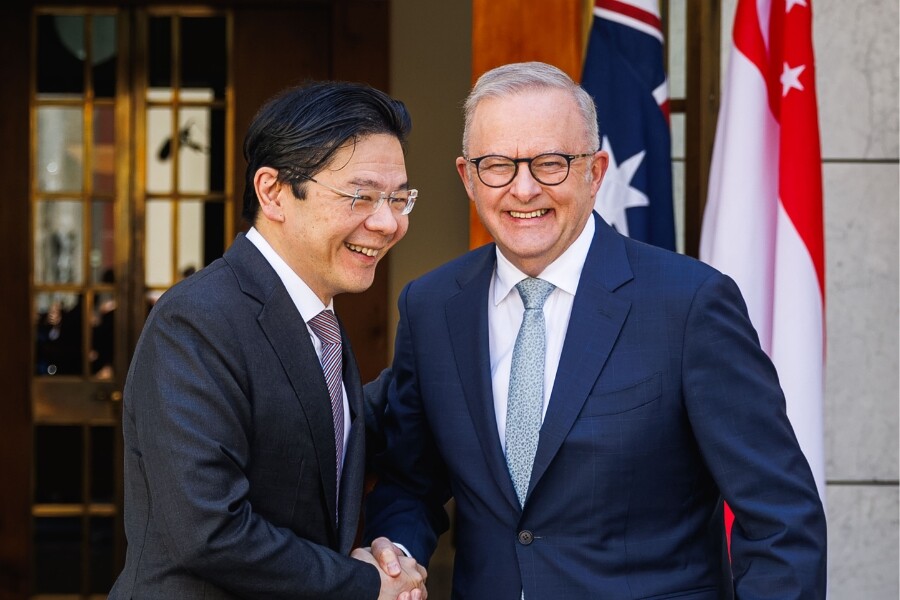
The proposal lands in a busy week for Singapore’s trade diplomacy. Prime Minister Lawrence Wong was in Canberra on 24 November for the 11th Singapore-Australia Annual Leaders’ Meeting, where the two countries signed an MOU on Essential Supplies, according to METI. Our PM Wong Australia visit explainer has the details.
Mr Gan, in his 27 November summit speech, said ASEAN should answer rising economic nationalism with deeper integration and wider partnerships, and noted that Singapore chairs ASEAN in 2027. The PM’s earlier trip is also covered in our APEC and Beijing report.
Read METI’s full statement and the DPM’s doorstop transcript on the METI newsroom.