Screen time for children in Singapore is about to get harder to police. The year-end school holidays run to the end of December, and Term 1 starts on 4 January 2027 for Primary 1 and Kindergarten 1, and 5 January for Primary 2 to 6 and Kindergarten 2. That is a long stretch of home days, aircon and tablets.
The guidance has not changed, but it is scattered across KKH, HealthHub and the government’s Be Screen Smart site. Here it is in one place.
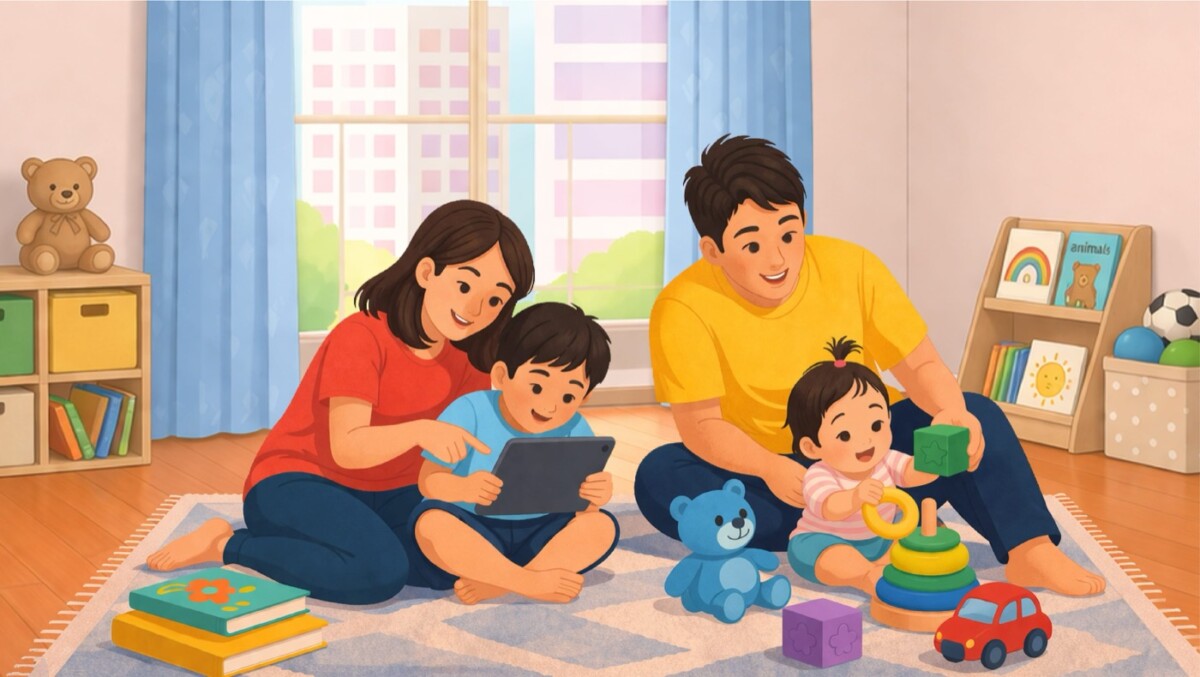
Screen time for children in Singapore: limits by age
KK Women’s and Children’s Hospital published its screen use guidance on 7 September 2026. The government’s Be Screen Smart site and HealthHub’s Parent Hub give very similar numbers, with small differences at the youngest ages.
- Babies and toddlers: no screens apart from video calls with family. KKH draws the line at 2 years old, while HealthHub and Be Screen Smart say 18 months.
- Preschoolers: about one hour a day or less. HealthHub says this is outside school hours.
- Primary school (about 7 to 12): recreational screen time under two hours a day. HealthHub adds “unless for schoolwork”.
- Teens, 13 and above: KKH recommends under three hours a day. Be Screen Smart sets no hour limit for this group and focuses on family rules instead.
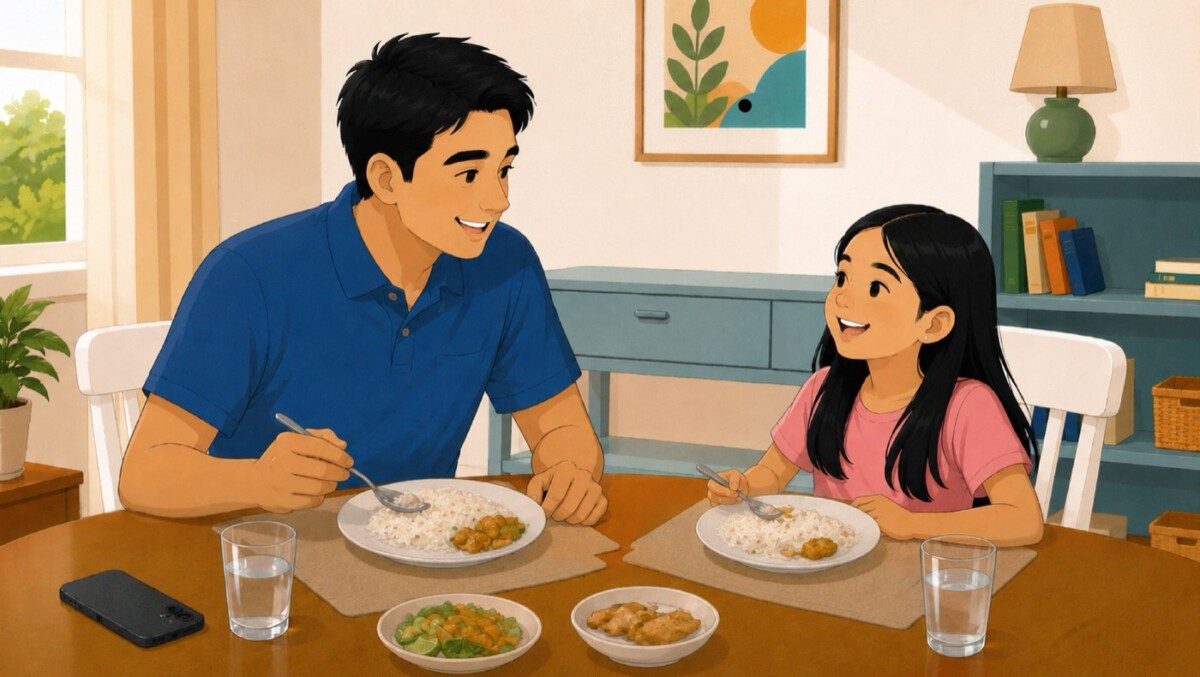
Across all ages, the shared rules are no screens at meals and none in the hour before bed. Be Screen Smart also advises waiting until 13 before social media.
Warning signs KKH says to watch for
KKH’s doctors and physiotherapist list signs that screen use is taking a toll. Some are physical: joint or muscle pain that does not go away, a rounded-shoulder “tech hunch”, digital eye strain and unexplained headaches.
Others show up in mood and routine: disturbed sleep, loss of appetite, low mood, anxiety, withdrawing from friends, or trouble getting through the day. Too much sedentary screen time can also contribute to weight gain. If several of these appear together, a chat with your family doctor or paediatrician is a sensible next step.
Sleep is the quiet casualty. HealthHub says school-age children need 9 to 11 hours, and that 65% of them in Singapore do not get it.
A holiday plan that survives week two
Rules set on day one tend to collapse by day ten. These are the ones the official guides suggest, trimmed to what is realistic.
- Agree a daily timetable together, and use built-in device timers instead of nagging.
- Write a Family Tech Agreement. Be Screen Smart has a free template and a Family Screen Use Contract, and older kids stick to rules they helped write.
- Keep devices in shared spaces for younger children, and switch on parental controls for apps, games and streaming.
- Check age ratings before downloading, and ask your child to get your okay first.
- Do not use a screen to fill a boring moment for a young child. Puzzles, blocks and colouring teach them to handle boredom.
- Watch together and talk about it, which turns passive viewing into something closer to a shared activity.
Screen-free outings that cost little
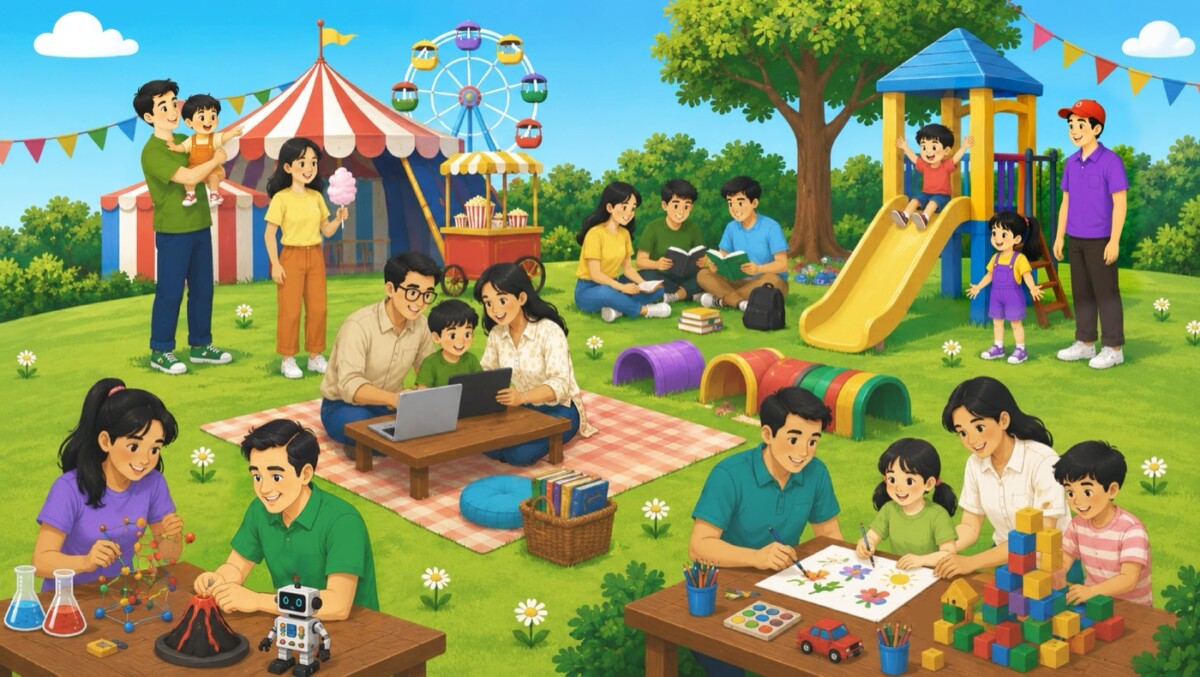
You do not need a big plan. The Children’s Garden at Gardens by the Bay is free for a morning of running around, and Ang Mo Kio Library at AMK Hub opens at 9am if you want a cool, quiet hour with books.
For something with a screen-adjacent hook, Money Town at the Children’s Museum teaches money habits through hands-on play. Pair one outing with one home project a day and the tablet fight usually shrinks.
You can read KKH’s full guidance, including links to the family media plan tools, on the KKH website.