One of the most significant art exhibitions to arrive in Singapore this year opens at the Asian Civilisations Museum today — and it has taken over six centuries of Islamic art history to make it happen.
Crosscurrents: Masterpieces of Mughal, Safavid, and Ottoman Art from the Musée du Louvre brings together 100 masterpieces from the Louvre’s Islamic art collection alongside 30 works from ACM, tracing how trade, diplomacy, migration, and artistic exchange shaped a cosmopolitan world stretching from Istanbul and Isfahan to Delhi and Southeast Asia.
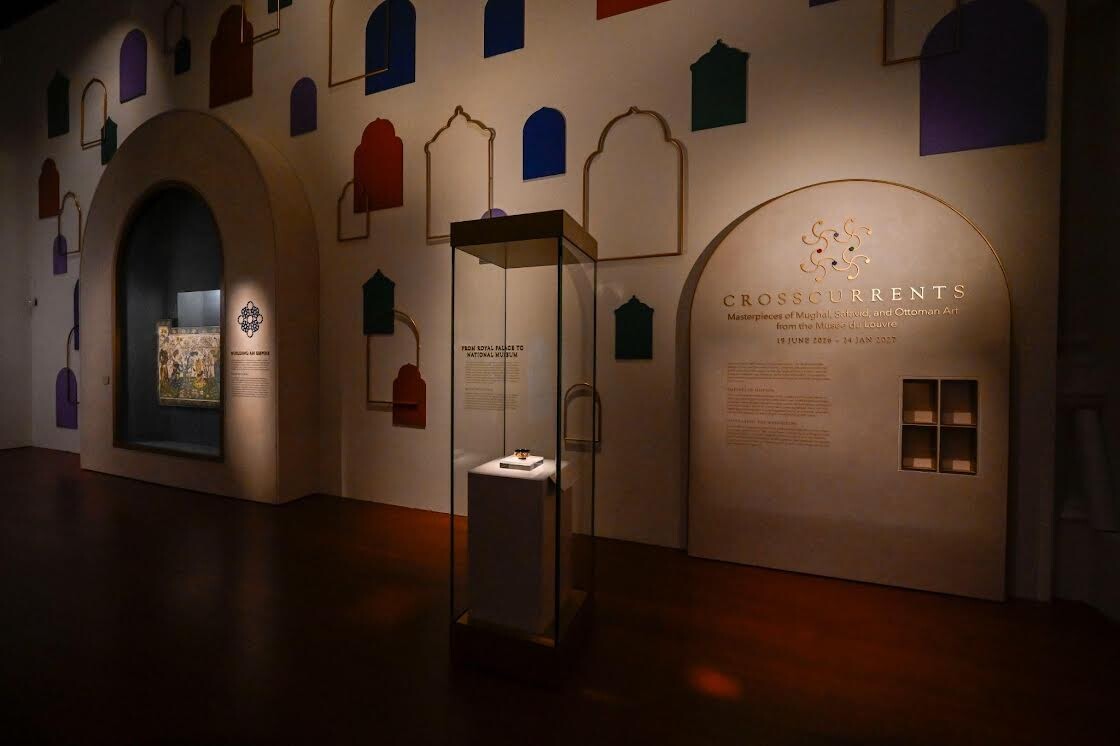
The exhibition focuses on three great empires — the Mughals, Safavids, and Ottomans — at the height of their influence between the 16th and 18th centuries. This was a period when artists across these courts were blending influences from China to Europe, producing some of the finest works of Islamic art ever made.
The objects that tell the story
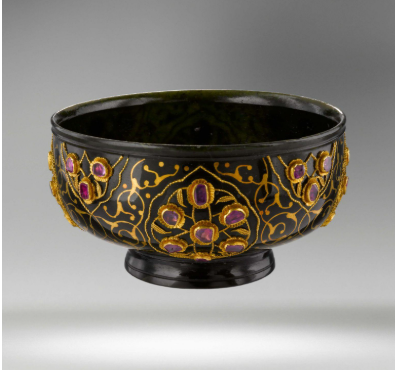
Among the most remarkable pieces is an Ottoman jade cup once owned by Louis XIV, displayed at the Palace of Versailles before entering the Louvre in 1796. It is inlaid with rubies from Myanmar — a quiet reminder that the networks linking Southeast Asia to Ottoman workshops and European royal collections were already centuries old.
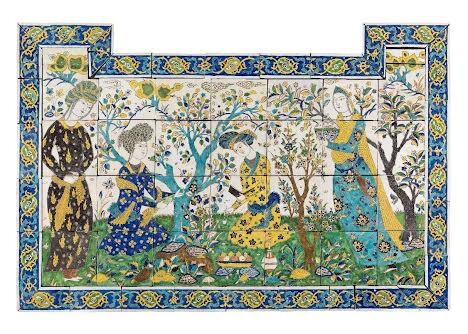
The exhibition is spread across two floors of ACM. Level 2’s Islamic Art Gallery explores how courtly life and artistic production in Mughal India and Safavid Iran developed alongside expanding trade routes — including a mother-of-pearl ewer and basin destined for royal courts across Asia and Europe, and a monumental tiled panel from Isfahan that gives a glimpse into the literary culture of Safavid Iran.
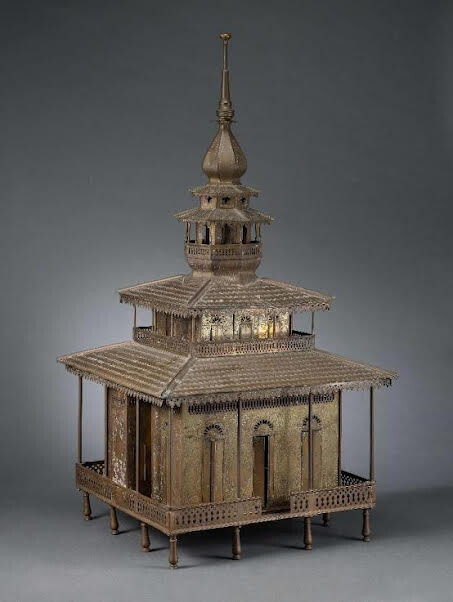
Head up to Level 3’s Design Gallery and the story broadens to include the Ottoman world, provincial centres such as Cairo and Damascus, and — crucially for Singapore audiences — Southeast Asia. A brass and copper mosque model from West Sumatra shows how Ottoman and Mughal architectural forms were adapted locally to express a cosmopolitan Islamic identity. Iznik ceramics, developed in response to imported Chinese porcelain, show how ideas moved not just across regions but between mediums.
Southeast Asia finally in the frame
ACM Director Clement Onn notes that Southeast Asia has long been underrepresented in global narratives of Islamic art despite the region’s deep and rich history of exchange with the wider Islamic world. This exhibition is a deliberate corrective — placing ACM’s own collection alongside the Louvre’s to show just how central the region has always been to these cosmopolitan networks.
The exhibition also opens at a symbolic moment: its launch coincides with the signing of the Singapore-France Roadmap on Cultural Cooperation by the Permanent Secretary of the Ministry of Culture, Community and Youth, and the French Ambassador to Singapore.
Crosscurrents: Masterpieces of Mughal, Safavid, and Ottoman Art from the Musée du Louvre runs from 19 June 2026 to 24 January 2027 at the Asian Civilisations Museum (1 Empress Place). General museum admission applies. For more details, visit nhb.gov.sg/acm.