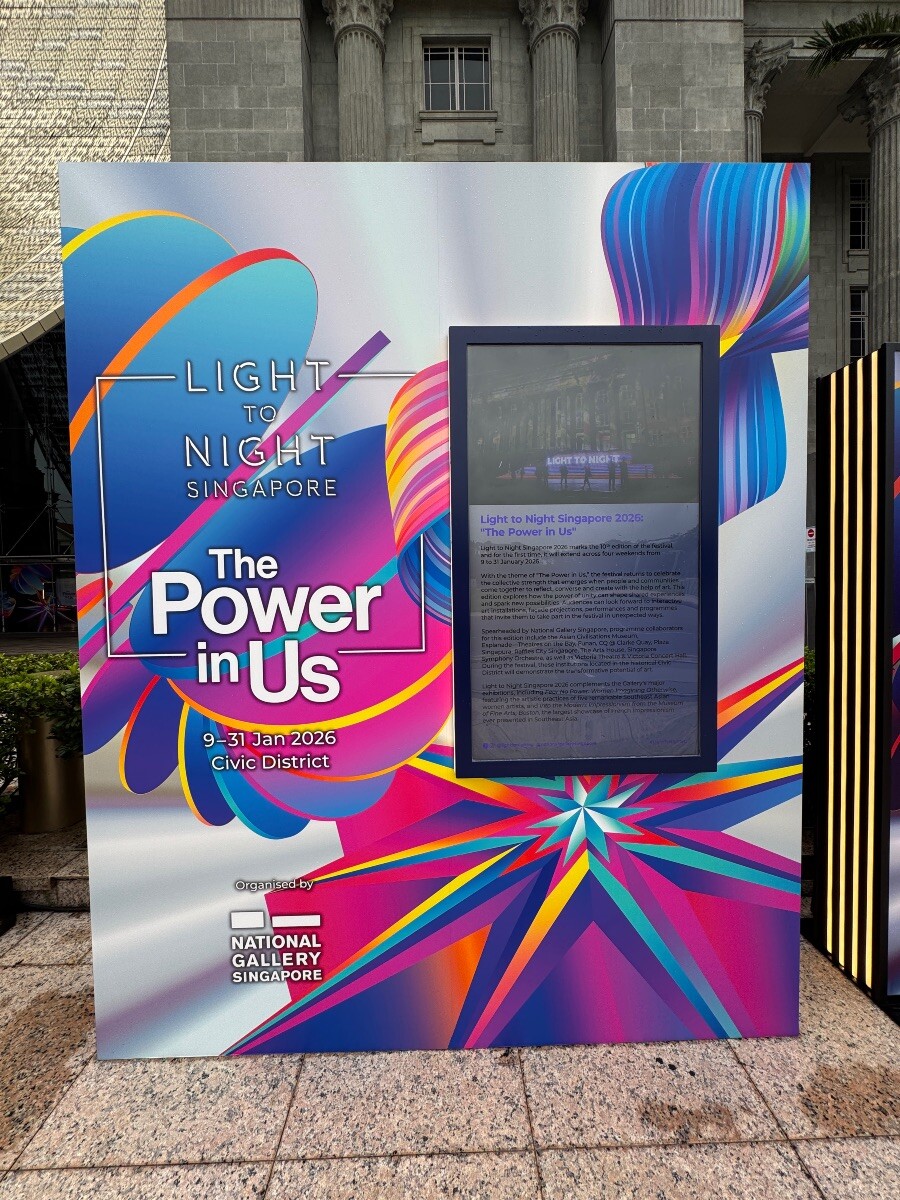
Kickstart your new year with a burst of colour and creativity! Light to Night Singapore returns for its landmark 10th edition. This year is particularly special. The festival is celebrating a decade of transforming the Civic District into a luminous wonderland. Running from 9 to 31 January 2026, this milestone edition marks the longest run in the festival’s history. Consequently, visitors can enjoy the festivities across four weekends for the very first time.
The theme for 2026 is “The Power in Us.” This theme beautifully highlights the strength of community. It also celebrates the richness of diverse perspectives. Most importantly, it showcases the magic that happens when people gather to co-create art. Whether you are a regular festival-goer or a first-timer like me, there is an incredible sense of connection. The historic Civic District truly glows up after sundown.
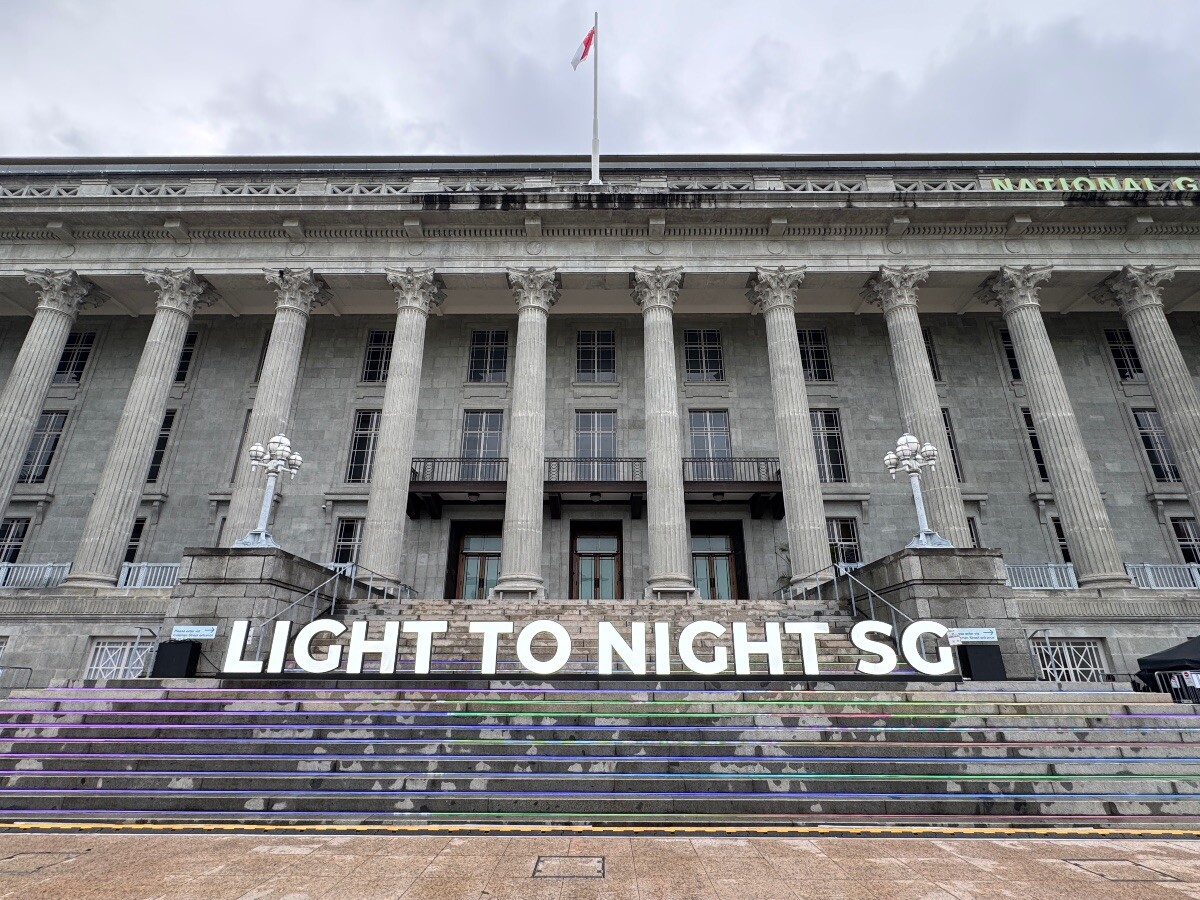
A Meaningful First Visit to the National Gallery
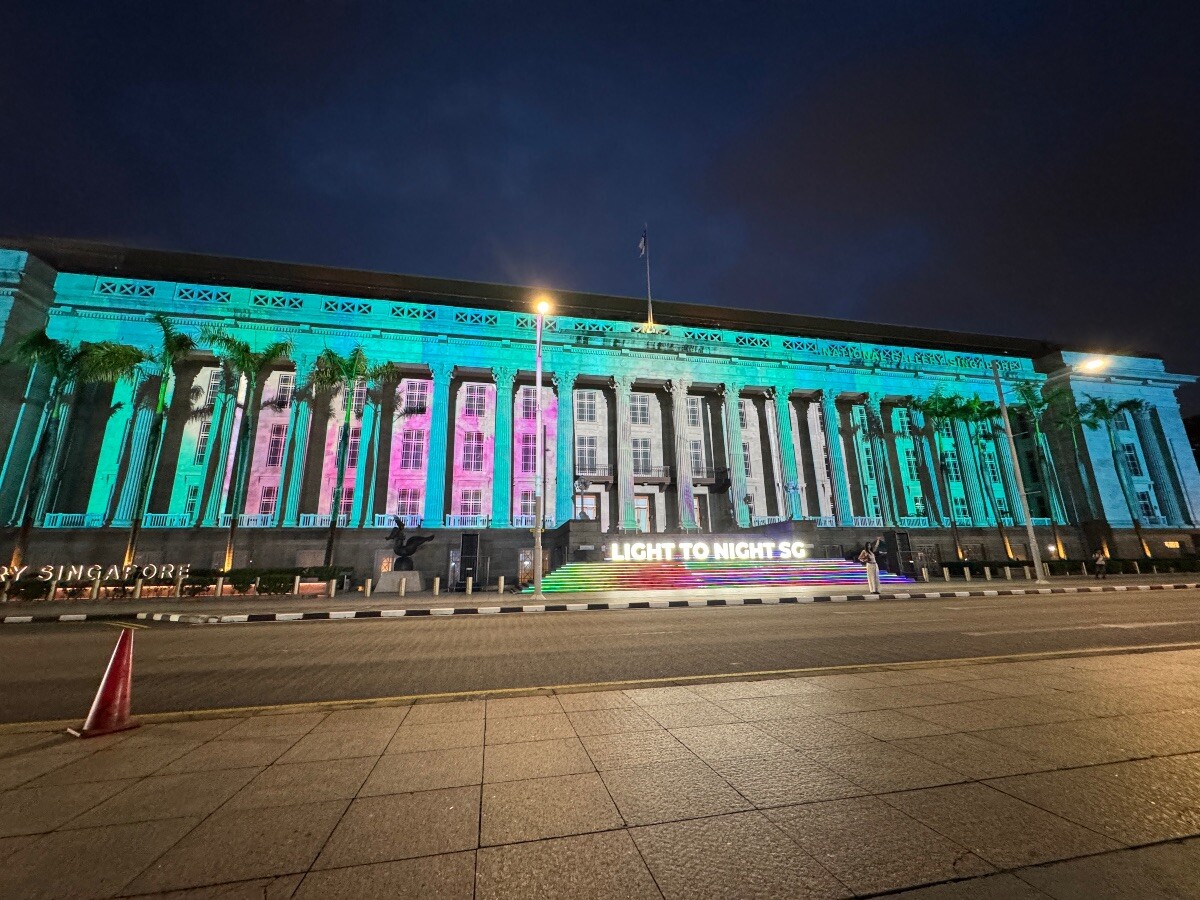
Interestingly, I have lived in Singapore for years and frequent the surrounding museums. However, this was actually my first time attending the Light to Night festival. I started my journey at the National Gallery Singapore. It is just a short, breezy walk from City Hall MRT station.
As I arrived, I realized it had been far too long since I stepped inside this iconic building. This location holds great significance for our nation. Standing at the entrance, you look directly across at the Padang. This is the very site where our country hosted its first-ever National Day Parade.
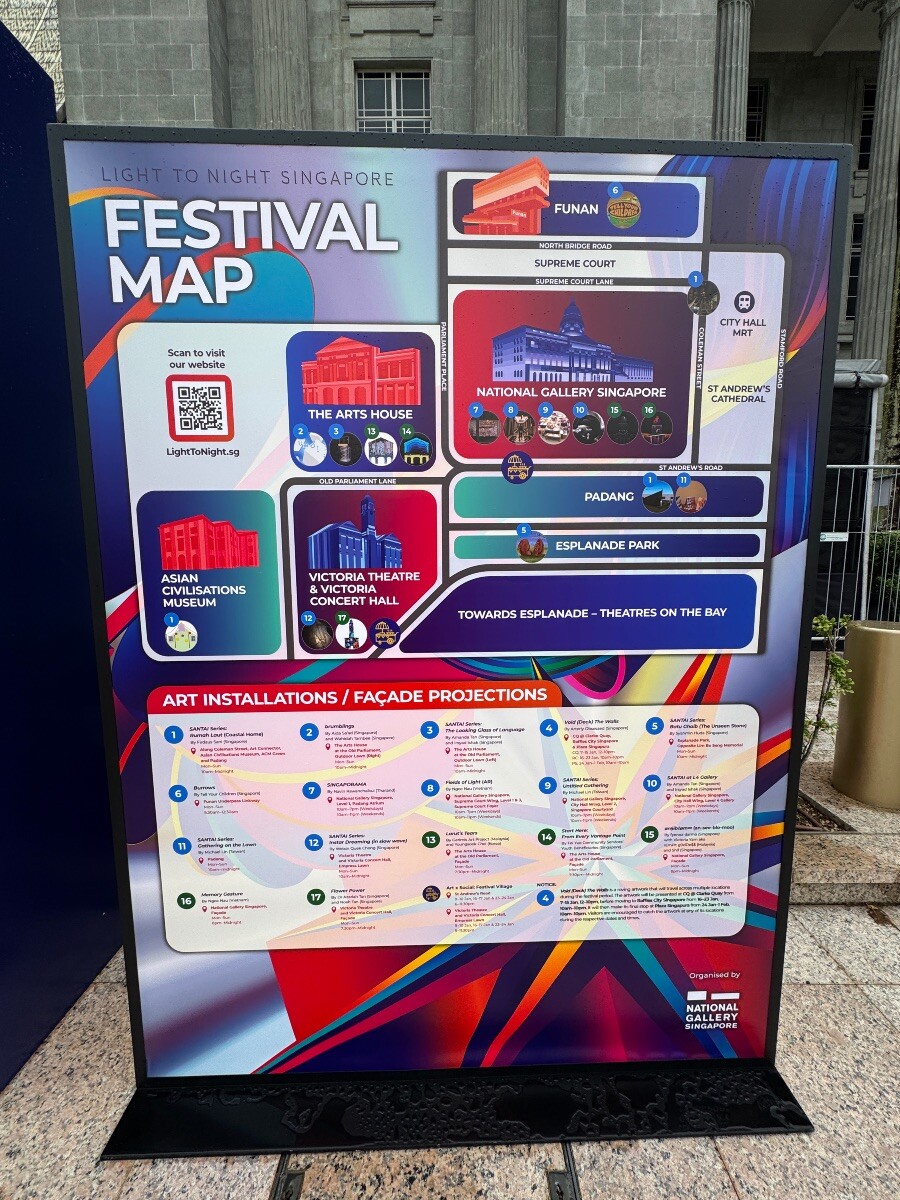
While I walked through the area, I noticed many glowing display boards. These boards indicate the positions of the various artworks. They light up beautifully after dark. Furthermore, they guide visitors through five key gathering points: the Padang, Empress Lawn, the Front Lawn at The Arts House, ACM Green, and Esplanade Park.
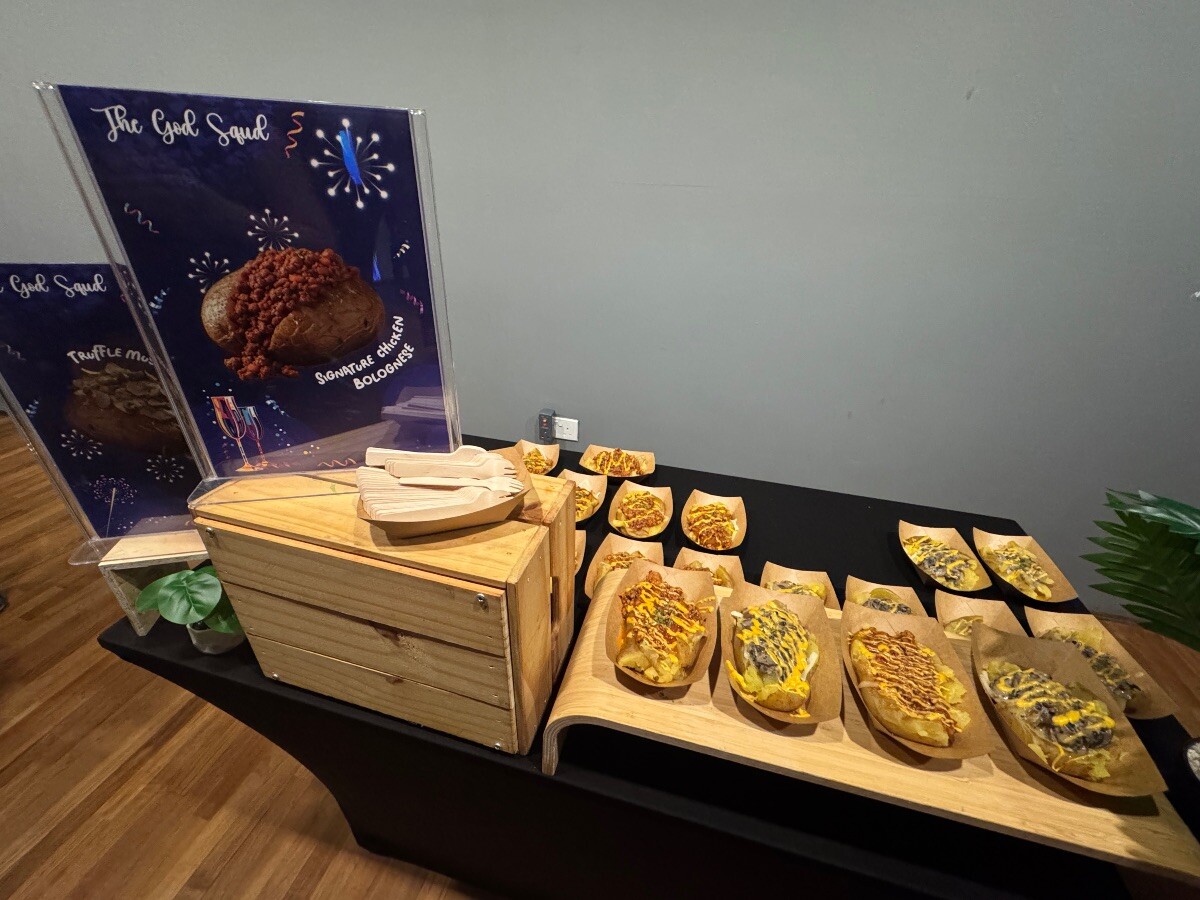
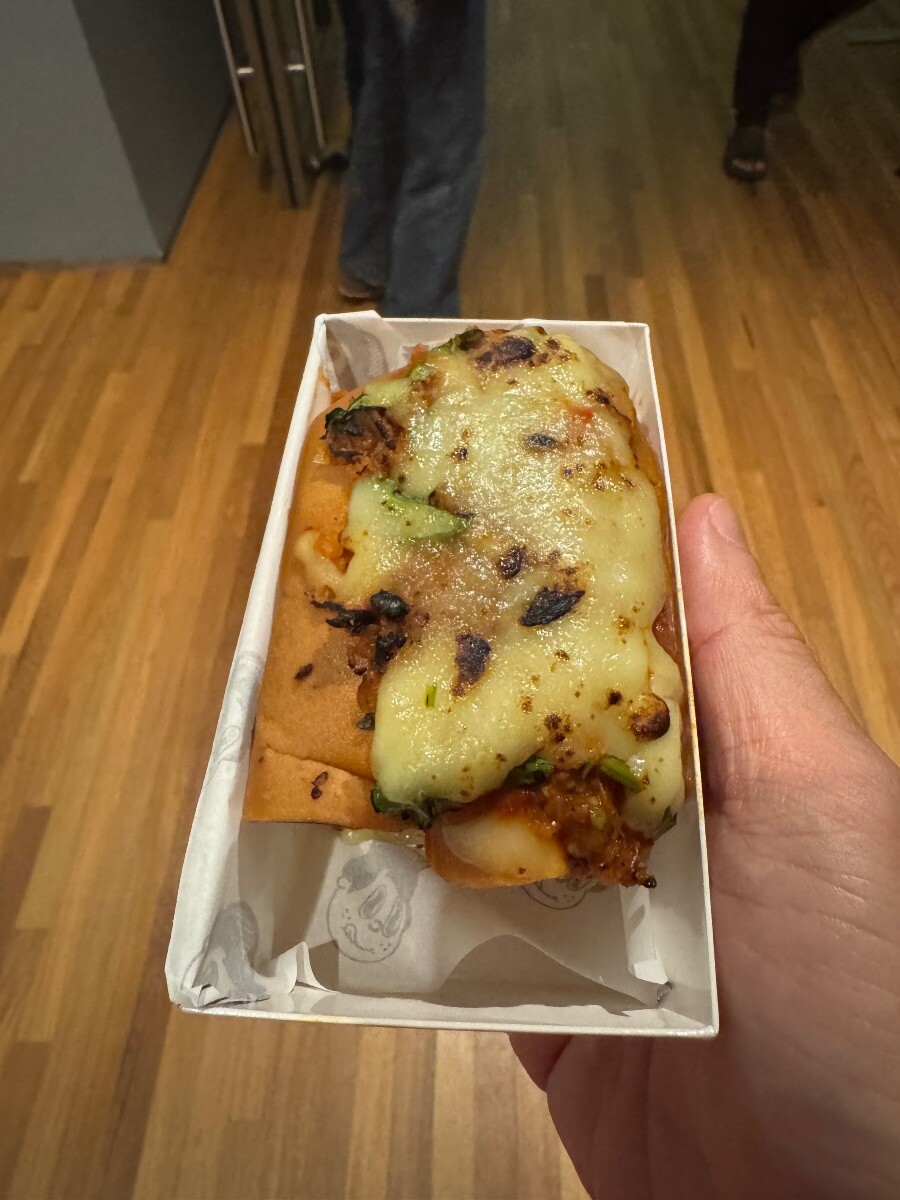
There is quite alot of walking ahead so let’s tuck it with some bites. This potato is delicious, and I seldom eat potatoes. I had 2 servings straight up and a 3rd if I could manage. Tasty max.
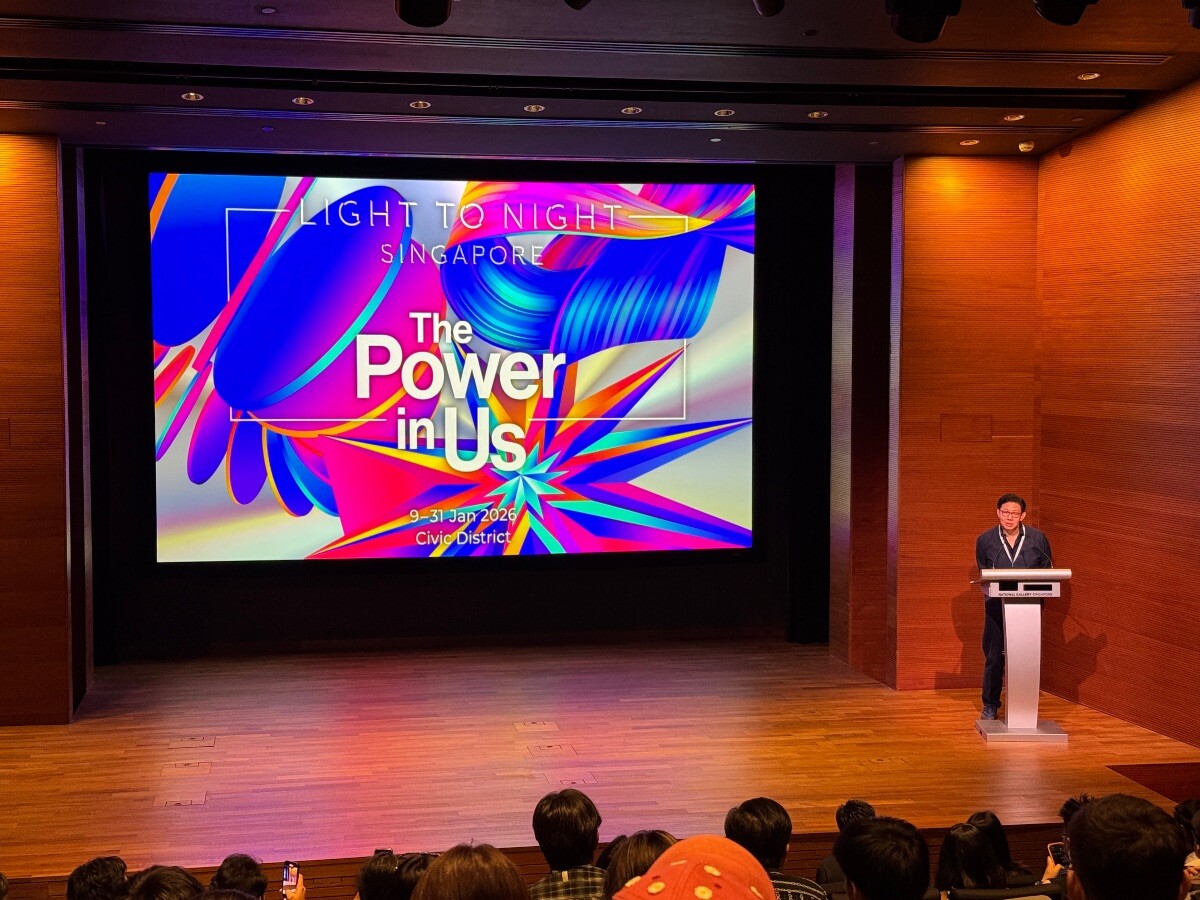
A quick brief on this year’s Light to Night and the atmosphere is thick with anticipation!
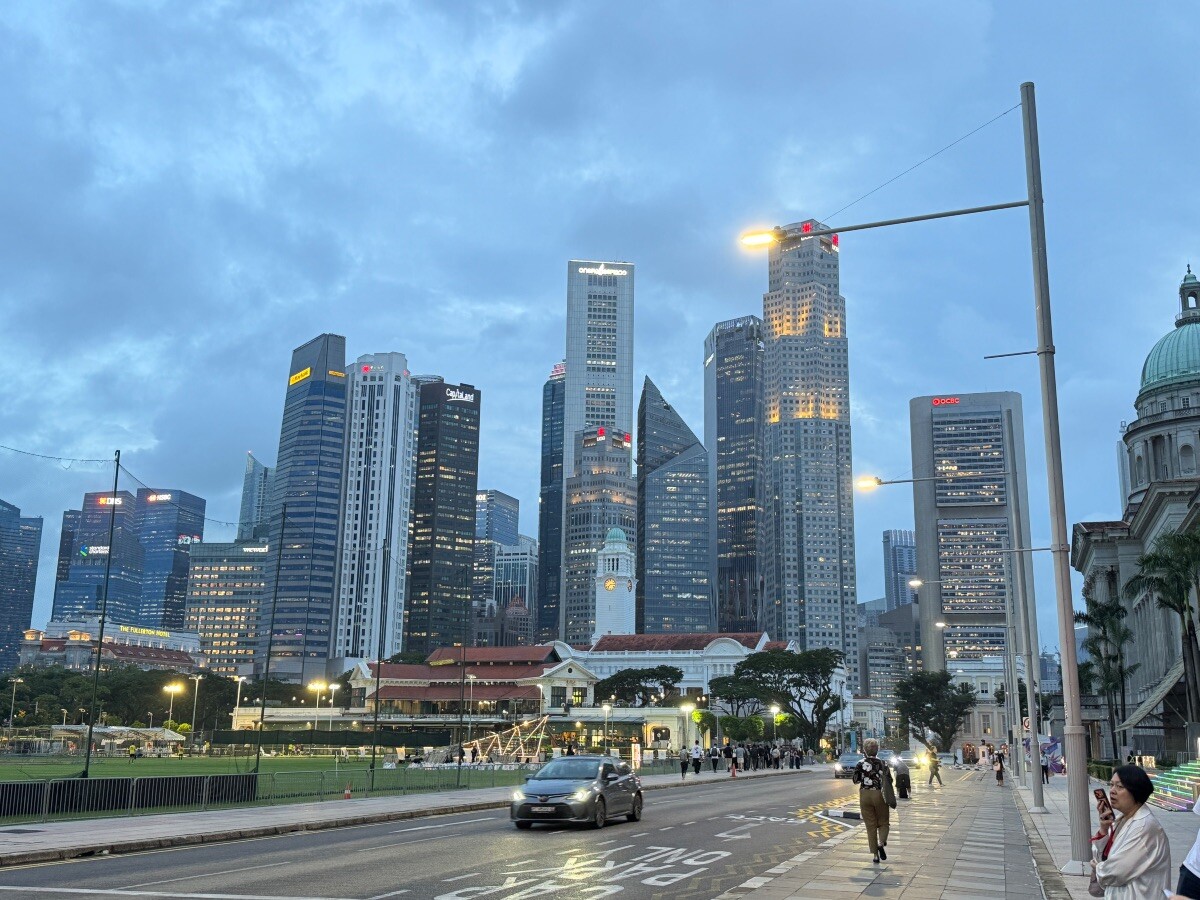
As we stepped out of the gallery, I caught this view of the skyline. A great piece of art over the years.
Introducing the SANTAI Series: Art to Relax By
One of the biggest highlights this year is the brand-new series titled SANTAI. This title is inspired by the Malay word meaning ‘to relax’. Therefore, this series invites audiences to gather and encounter compelling artworks at a much slower pace.
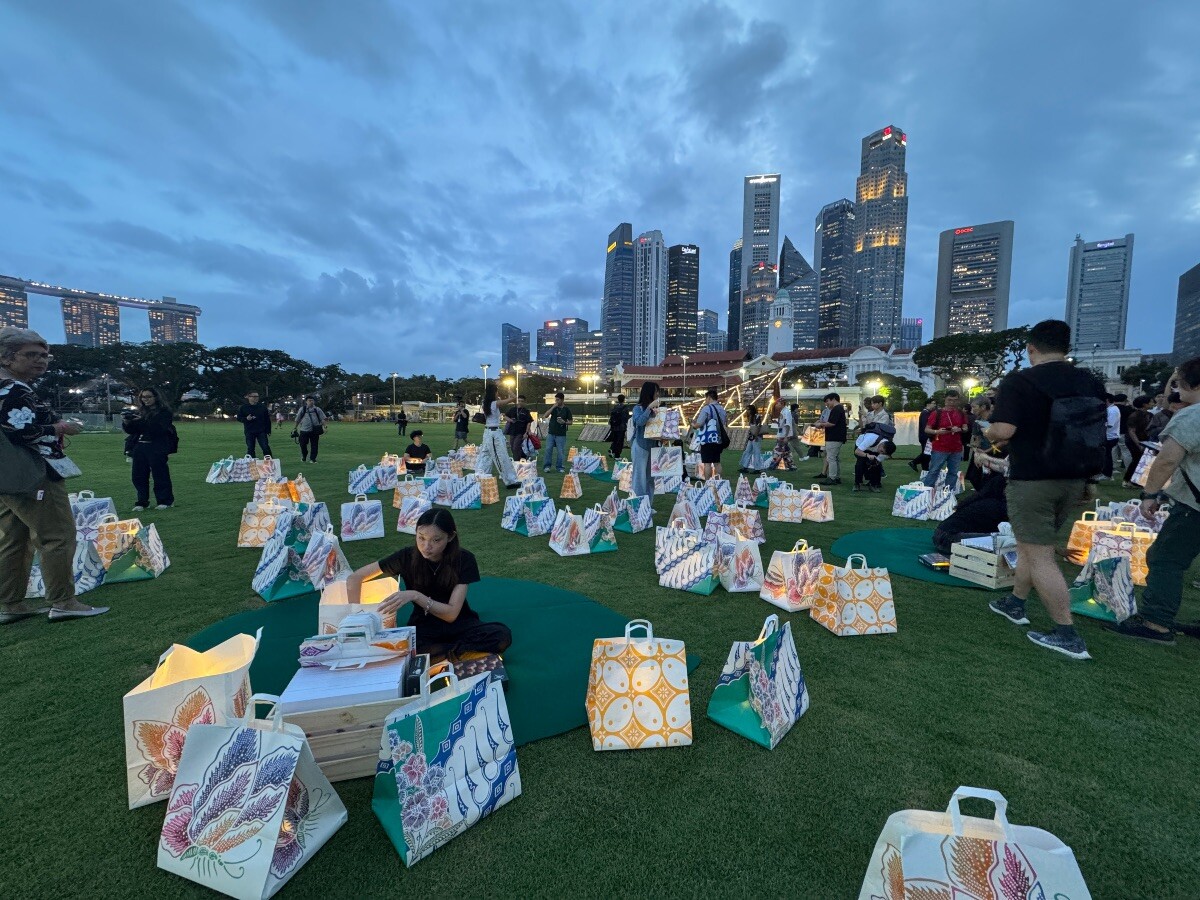
1. Gathering on the Lawn by Michael Lin
The Padang has been transformed into a site of collective participation. This is thanks to the renowned Taiwanese artist Michael Lin. He is famous for monumental painting installations. These works turn architectural spaces into immersive environments. Lin redefines painting as something to inhabit rather than merely view.
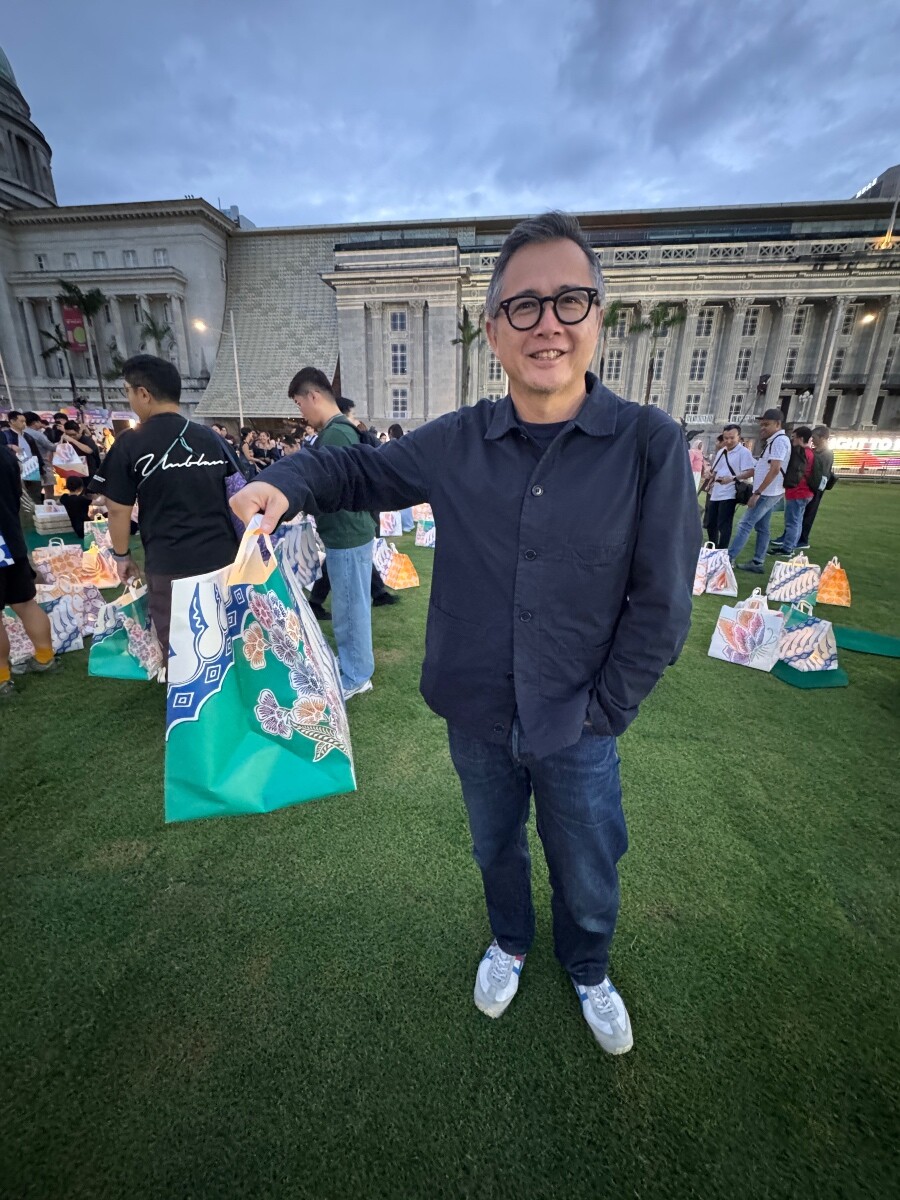
Michael Lin’s impressive portfolio includes works at the Hayward Gallery and the Metropolitan Museum of Art. For this festival, his work is titled Gathering on the Lawn. It features artist-designed paper lantern bags. These bags are adorned with stunning batik-inspired motifs. Consequently, the work invites the public to walk, create, and gather together.
Interestingly, participation extends beyond the moment. You can actually take these lantern bags home! Thus, you carry a tangible piece of collective memory with you. On 16, 17, 23, and 24 January, the work will be activated further. Specifically, there will be performance responses by The Artists Village. This group is one of Singapore’s earliest contemporary art collectives.
2. brumblings: A Literary Playground
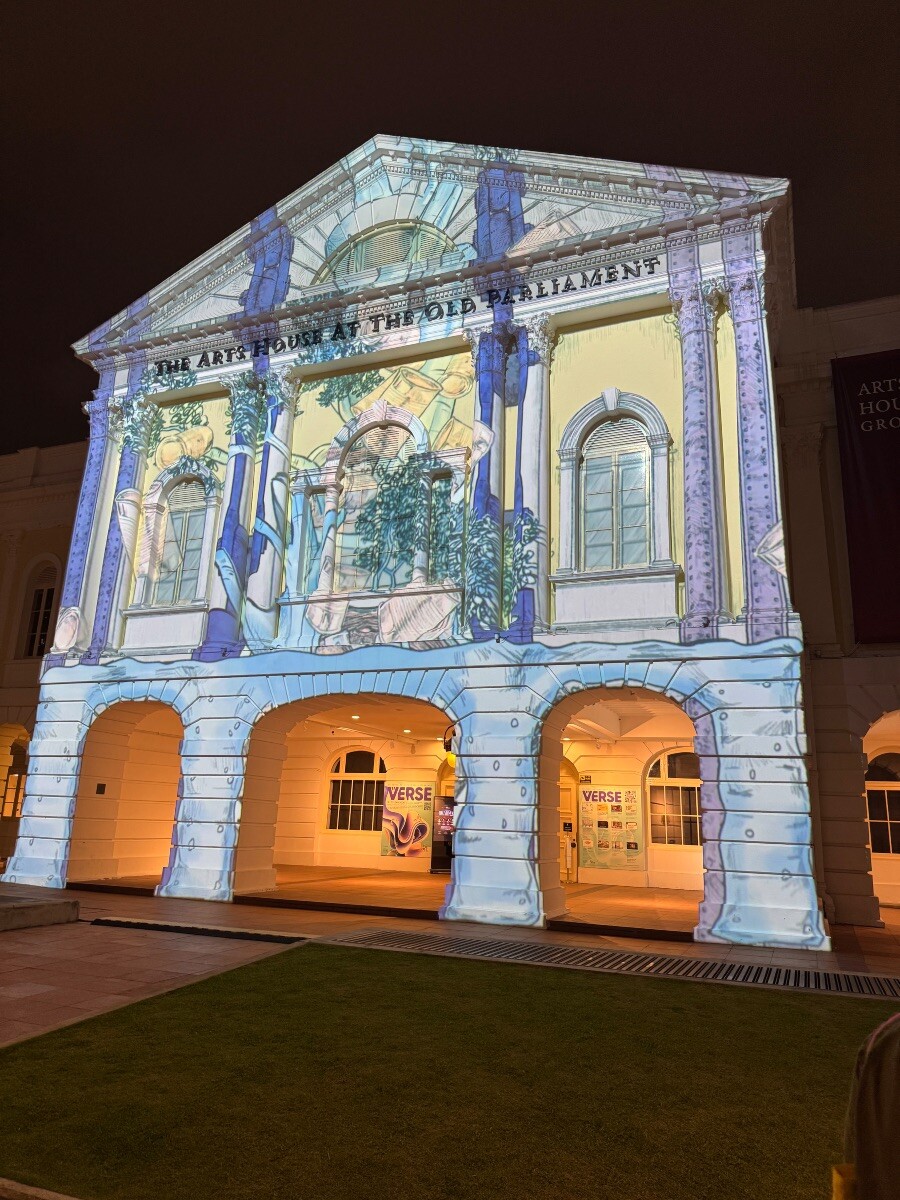
Next, head over to The Arts House at the Old Parliament. The Outdoor Lawn has become an illuminated literary playground called brumblings. This work draws inspiration from Singaporean poet Wahidah Tambee. Specifically, it looks at her visual poem collection titled Eke (2025).
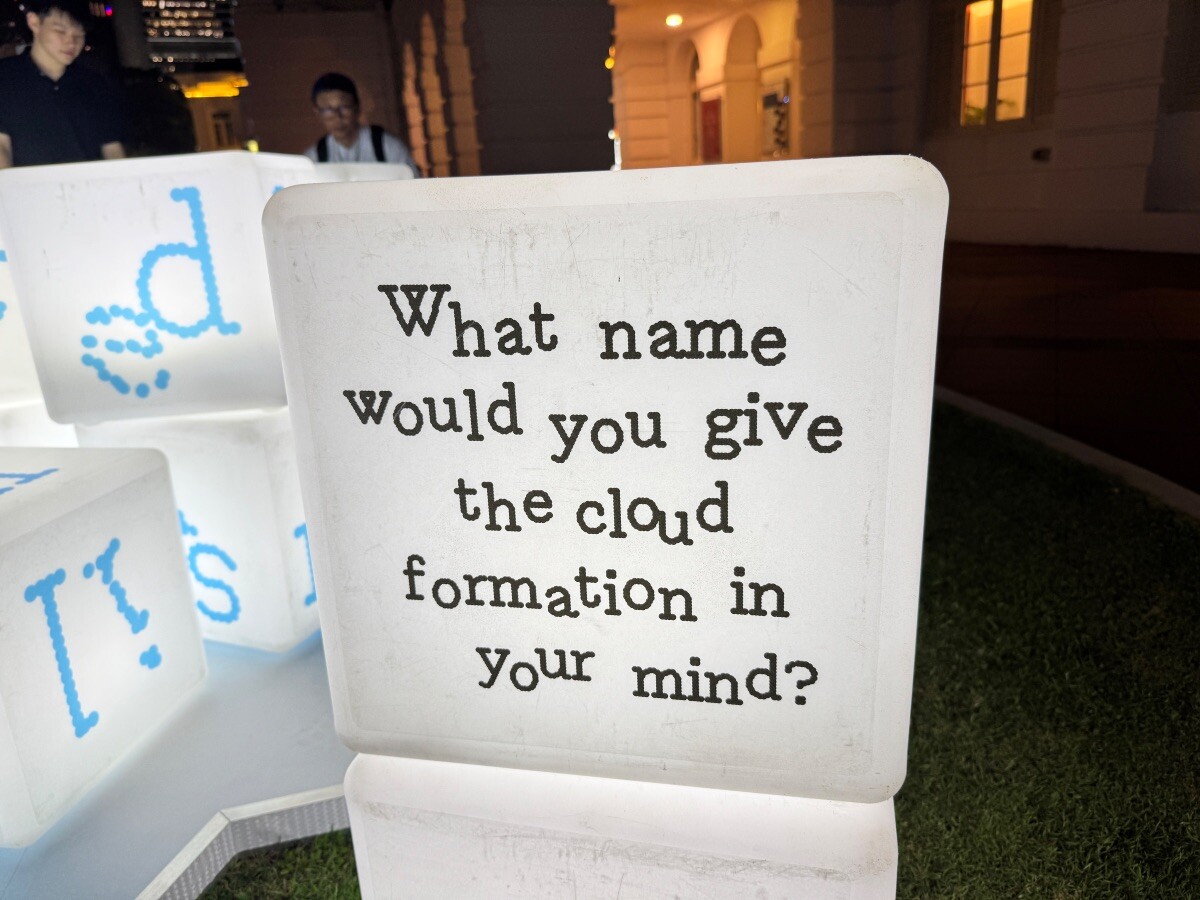
The installation captures the awkward “stuckness” of expression. It represents moments when words fumble, stammer, and collide. Using tactile and playfully reimagined alphabet blocks, it reveals the power of human imagination. Audiences are invited to form and scatter word entanglements. As a result, new meanings emerge each time curiosity meets the work.
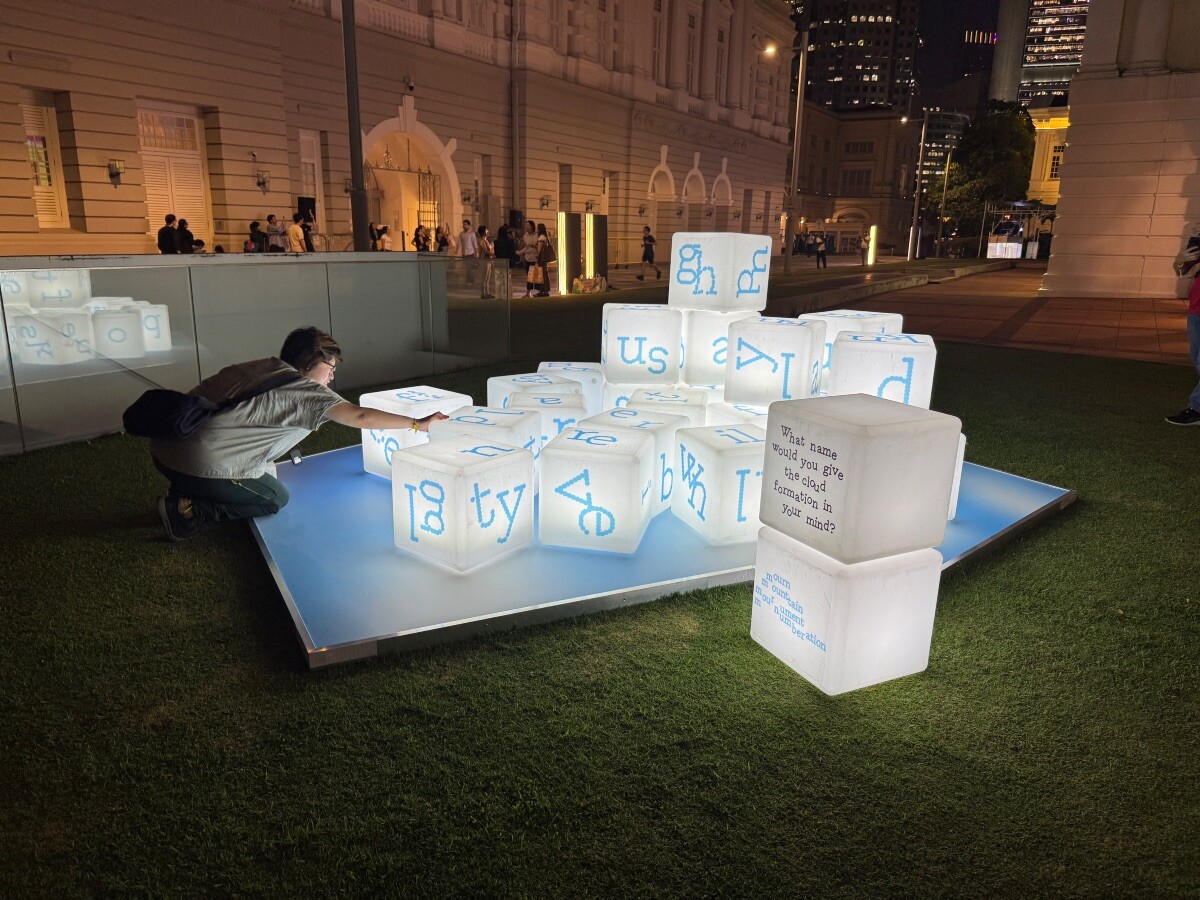
Reminds me of a game called Boggle that is about forming words. But I enjoyed it more when I saw them scrambling the blocks. Hehe.
3. Larut’s Tears: Addressing Ecological Grief
At the ACM Green, you will find a thought-provoking piece called Larut’s Tears. This is a collaborative research work involving Gerimis, Youngsook Choi, and the Semai communities. These communities hail from Pahang and Perak.
The piece reimagines the story of Larut the elephant. Larut is the symbolic link to the discovery of tin-rich land in Perak. Through this perspective, the work reflects on nature’s exploitation. It covers everything from mining to monoculture. In contrast, it highlights ancestral Semai practices. These practices embody a truly harmonious relationship with the environment.
4. Batu Ghaib (The Unseen Stone)
Nearby, Batu Ghaib explores the relationship between mysticism and the environment. This work draws on the Malay belief that ancestral spirits inhabit rocks. Specifically, it was inspired by the discovery of the Singapore Stone.
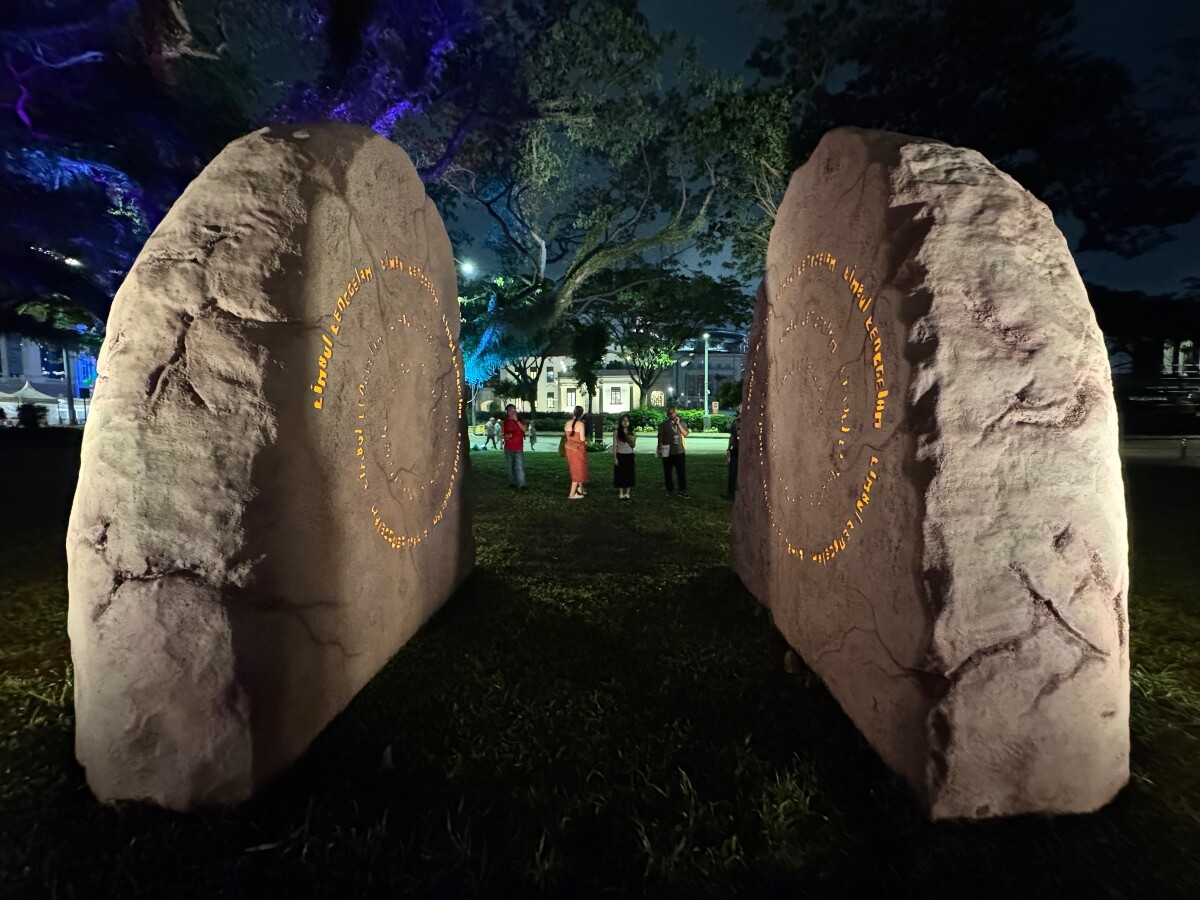
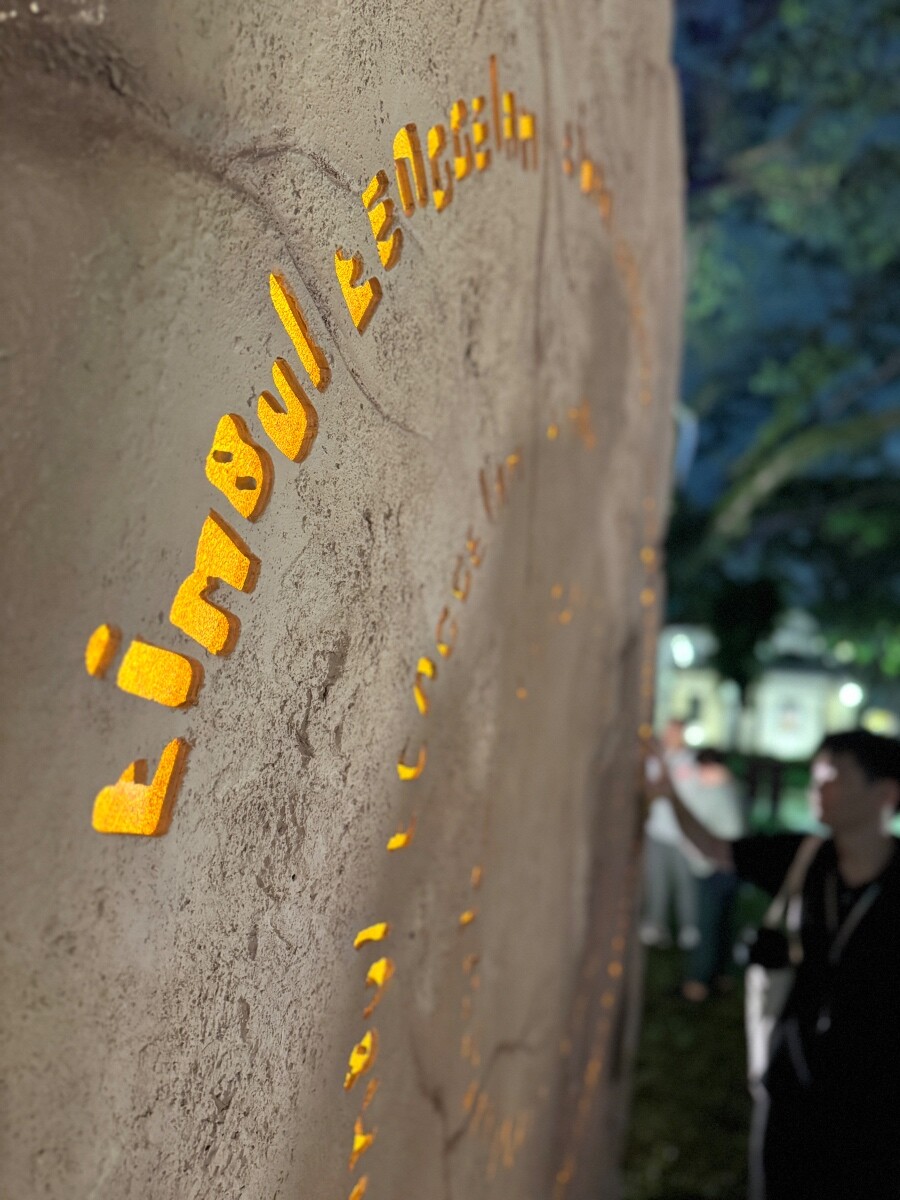
The artwork features a boulder split in half. The words timbul tenggelam are repeated over and over. This translates to “to appear or rise” and “to sink or disappear.” It sounds almost like an incantation. Ultimately, it encourages us to see natural elements as objects with their own spirits.
Digital Ecosystems and Indigenous Legacies
ⱥn§ibløm∞ and Instar Dreaming
For fans of digital art, ⱥn§ibløm∞ is a mesmerizing four-minute digital meditation. It features a synthetic thread that expands into fibre-optic ecosystems. By blending organic and artificial forms, it interrogates digital resistance. It exposes how beauty and critique intertwine within our fragile technological imagination.
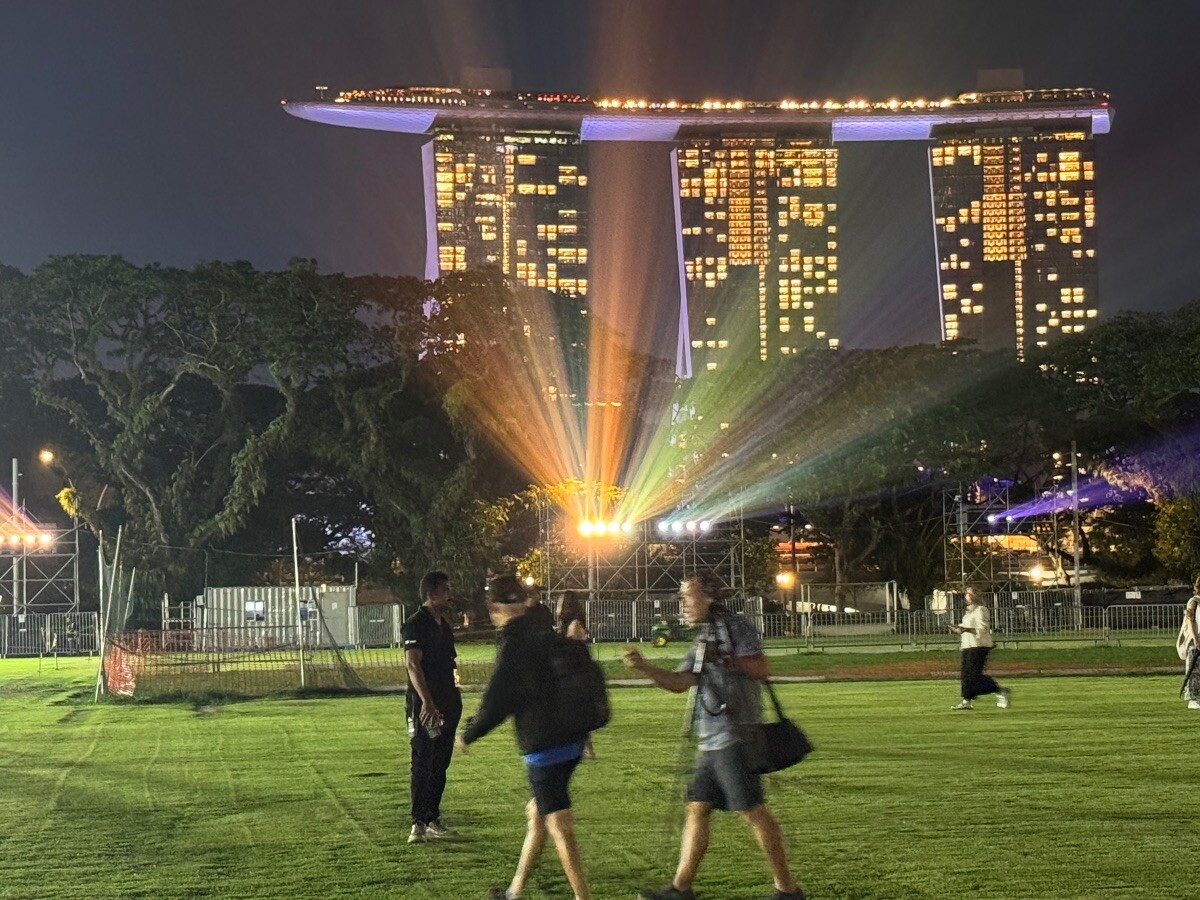
The light source is quite a spectacle itself. High-powered projectors that creates art emblemed with music. Nice.
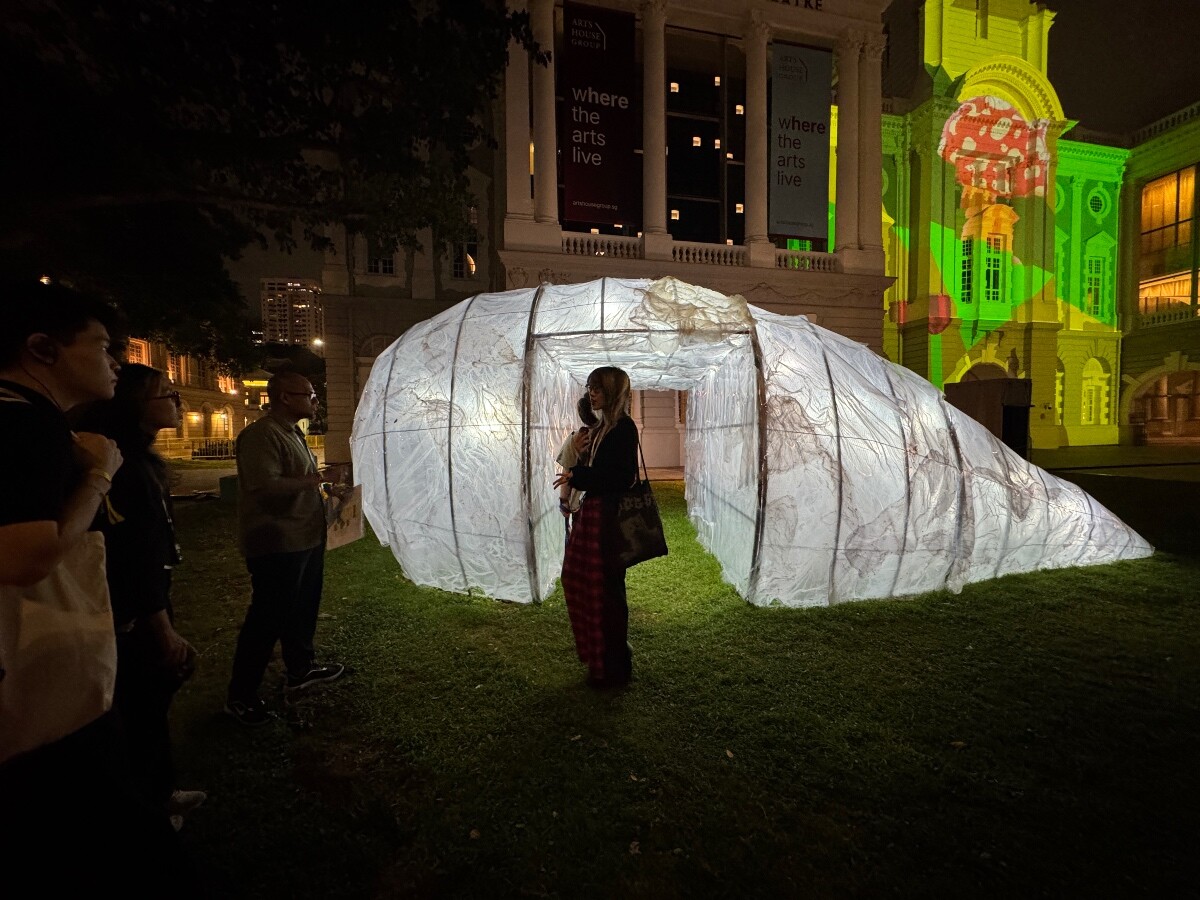
In addition, Weixin Quek Chong presents Instar Dreaming (in slow wave). This Madrid-based Singaporean artist is known for exploring fluidities and hybrid states. She is a recipient of the President’s Young Talents Grand Prize. Her installation features a cluster of four sculptural pods inspired by larval insects. These represent different stages of moulting, also known as ‘instars’.
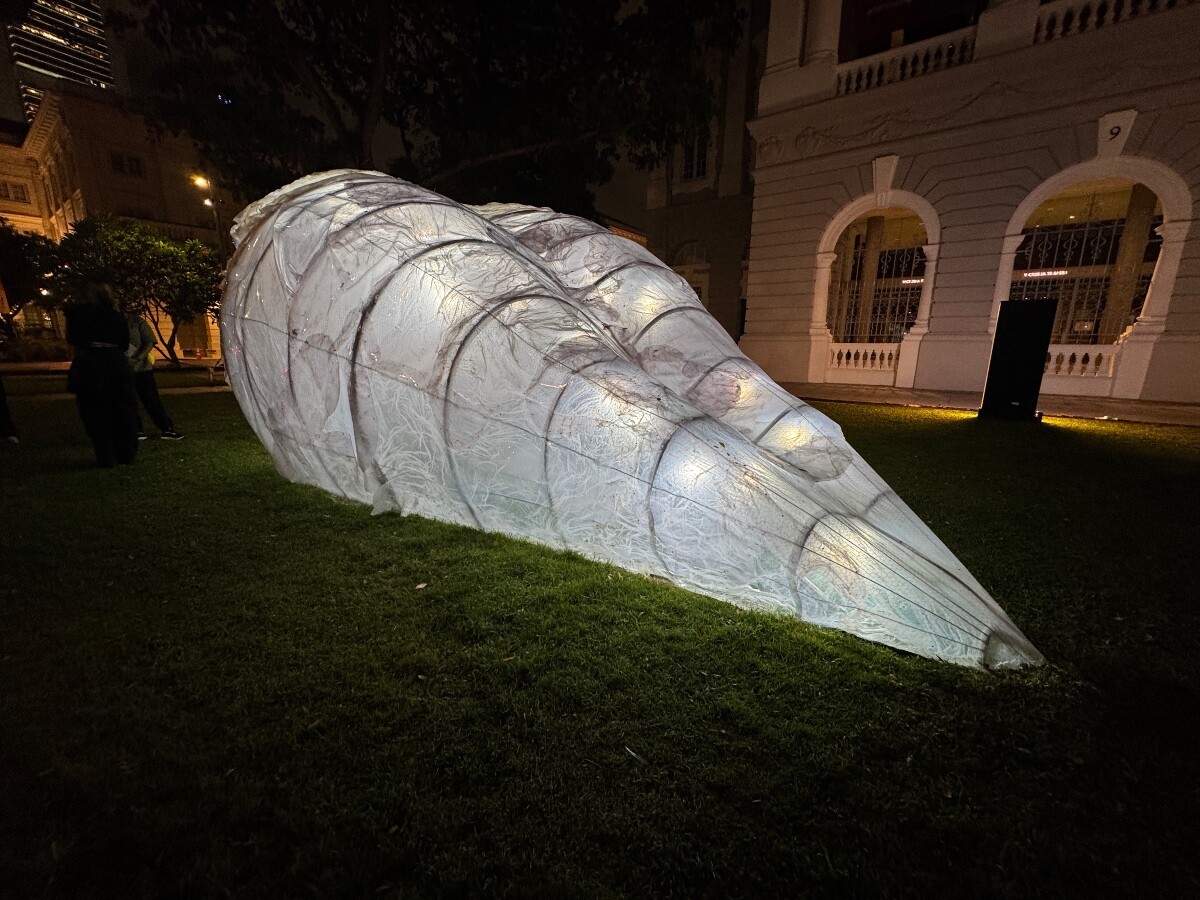
Interestingly, the sculptures are lined with special textural elements. These are highly sensitive to sound vibrations and local wind movements. As a result, the experience draws beautiful parallels between the state of listening and feeling. Moreover, the work is designed to respond dynamically to the façade projections at the Victoria Theatre and Victoria Concert Hall.
Rumah Laut (Coastal Home) by Firdaus Sani
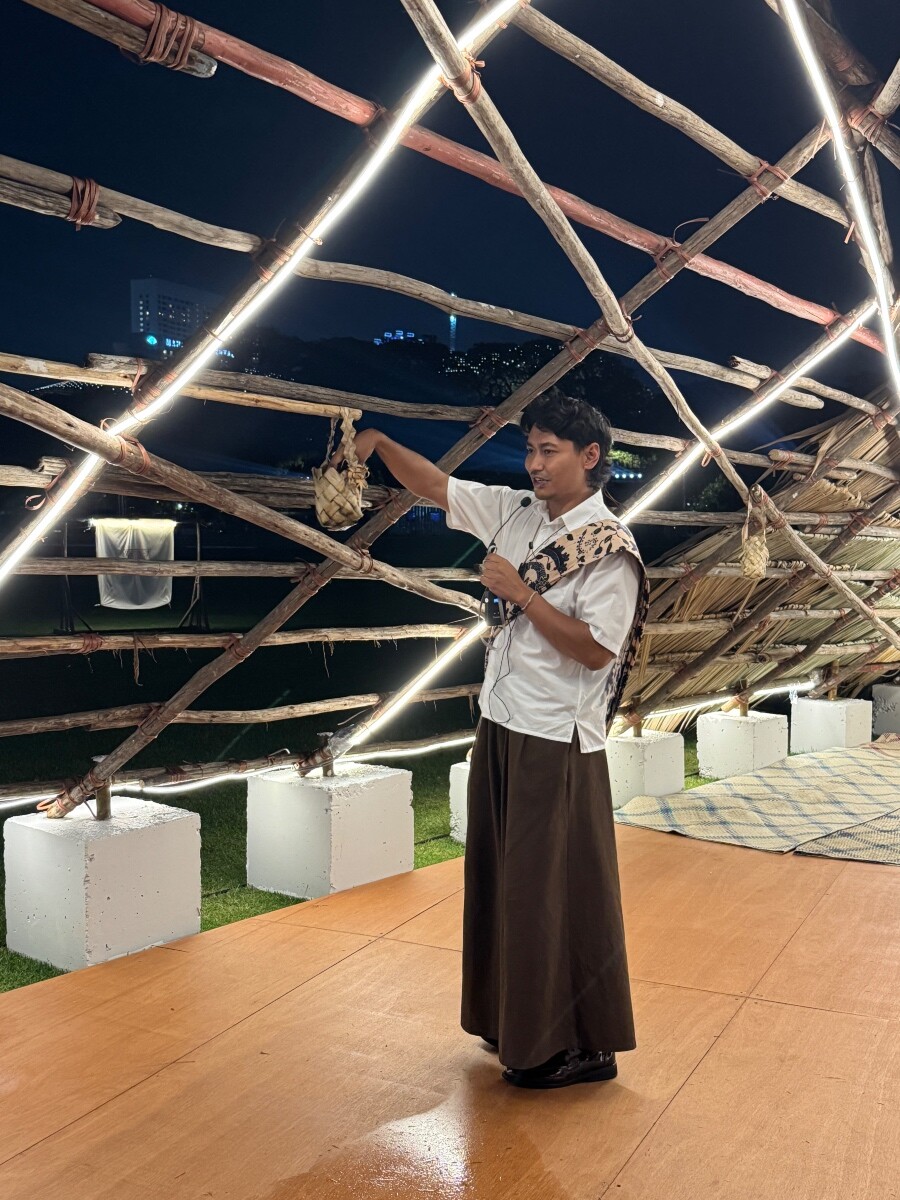
Cultural practitioner Firdaus Sani presents a deeply personal and reflective work titled Rumah Laut. As a fourth-generation Orang Laut descendant and founder of Orang Laut SG, Sani is a vital advocate for indigenous voices.
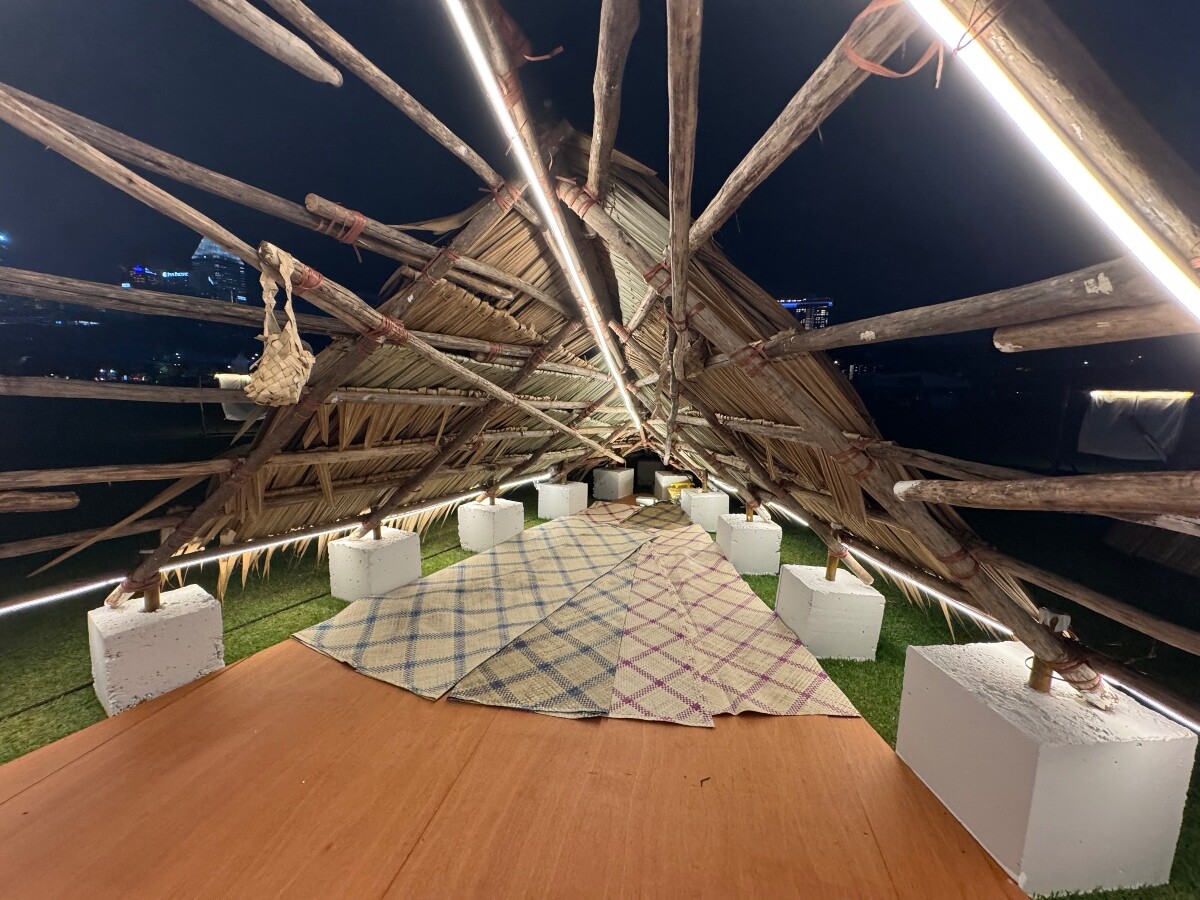
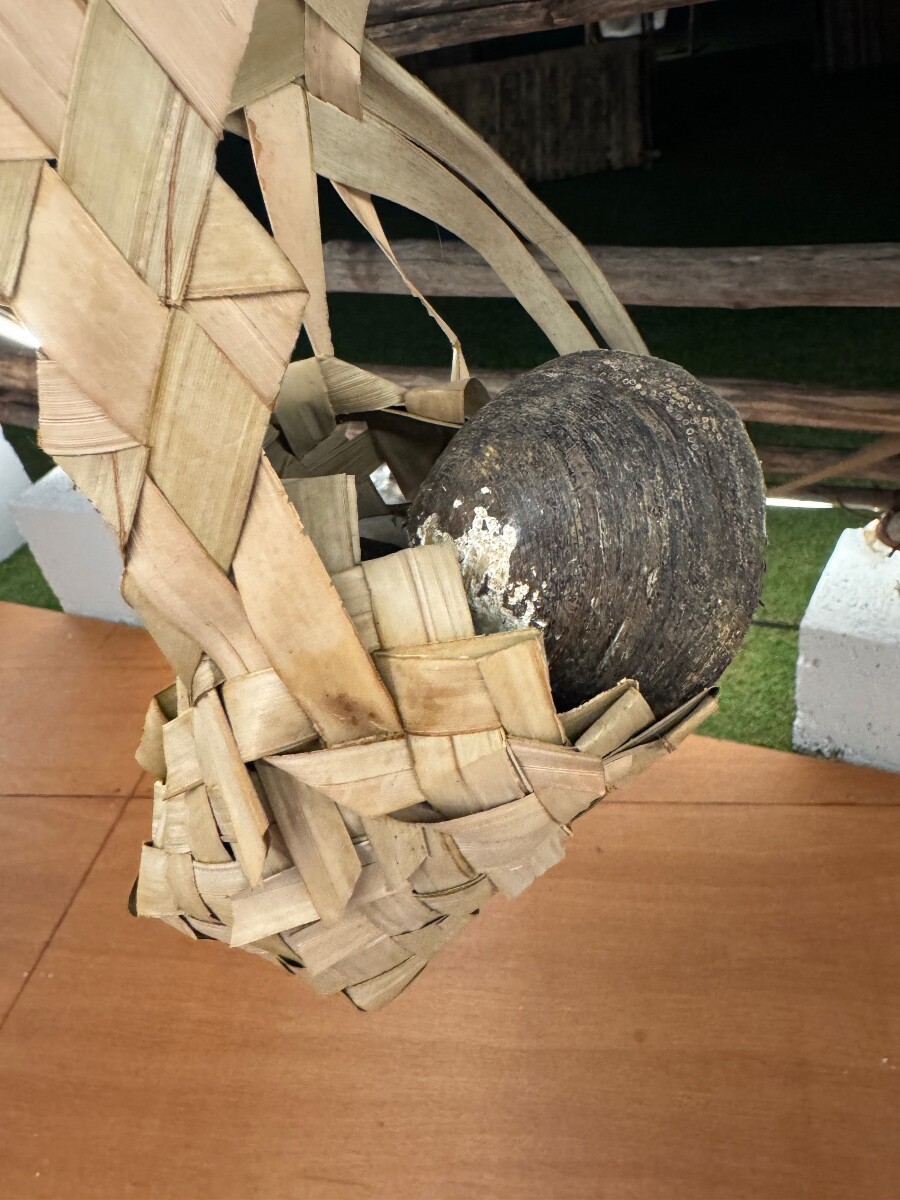
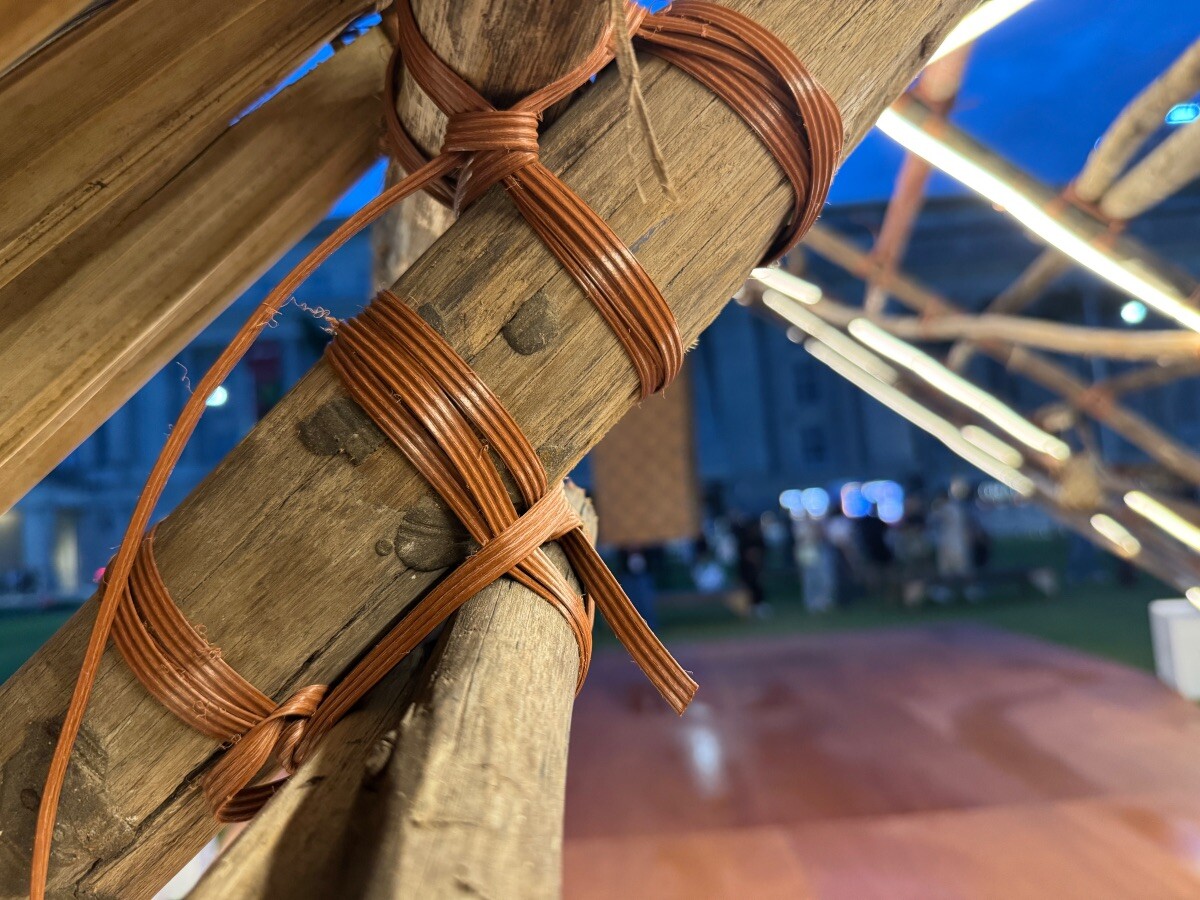
This three-part installation is strategically situated at the Art Connector, Padang, and ACM Green. It reimagines the legacy, displacement, and resilience of Singapore’s indigenous communities. These include the Orang Gelam, Orang Kallang, Orang Seletar, and Orang Selat. The work reflects on histories of navigation, dwelling, and subsistence that have been eroded by urbanisation. Sadly, these traditions were lost to land reclamation and restricted coastal access. Therefore, the installation responds to the tangible and intangible losses of culture, knowledge, and belonging.
The Looking Glass of Language
Furthermore, The Looking Glass of Language explores how the written word operates as a pathway to understanding. It suggests that symbols are endlessly rearranged to create entirely new meanings through human encounter. The mirrored surface of the installation is particularly significant.
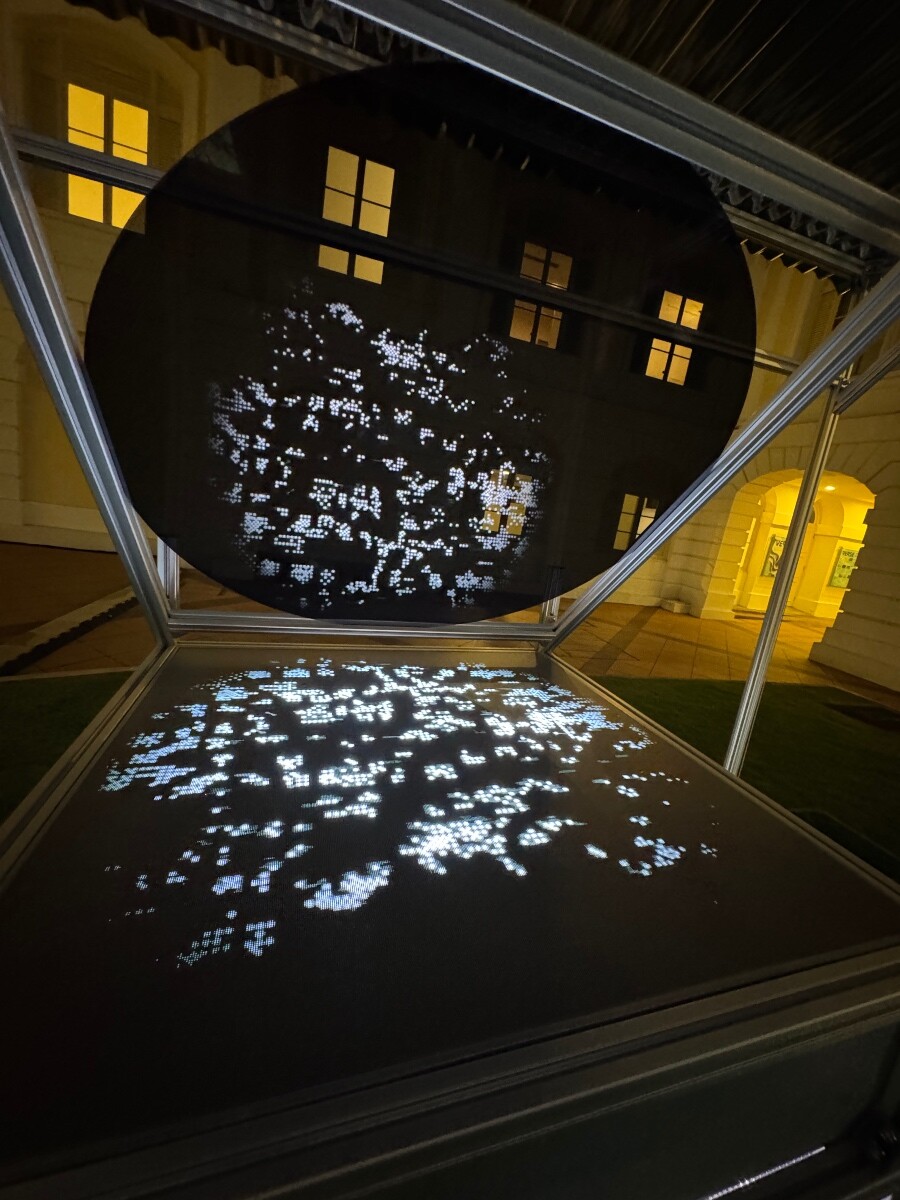
It frames language as more than just a tool we learn in school. Instead, it presents language as a living, energetic process. Because the audience interacts physically with the work, the symbols appear to shift and breathe. Thus, communication becomes a shared journey of discovery. Language is revealed as an active force rather than a static set of rules.
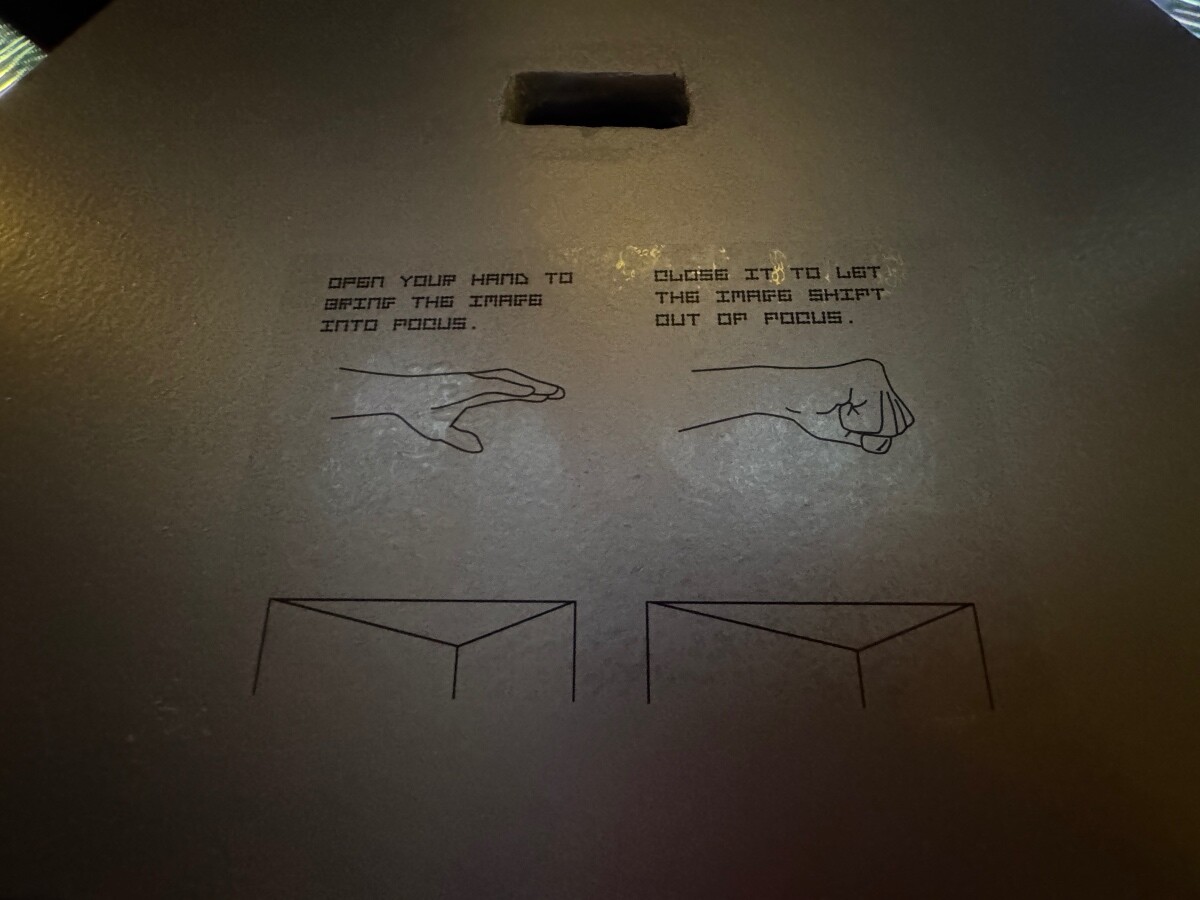
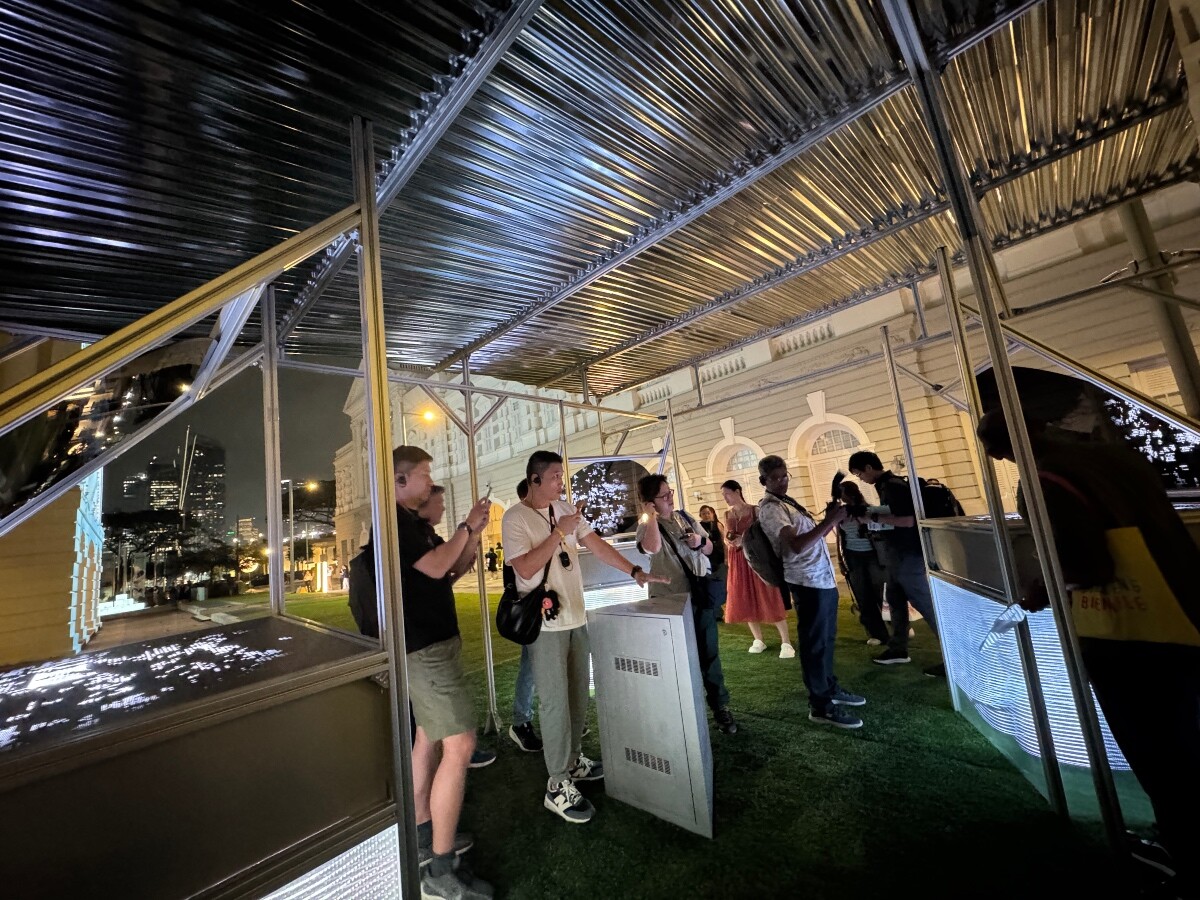
This installation reminds of metal roofs used for old shophouses in the past, but its brand-new shine and reflectiveness brings modern and a futuristic element.
The Grand Finale: SINGAPORAMA
Finally, step inside the National Gallery’s Padang Atrium. Here, Thai artist Navin Rawanchaikul presents SINGAPORAMA. This is a monumental panoramic installation for the Gallery’s OUTBOUND series.
The work features three large-scale hanging billboard paintings. These are rendered in the style of vintage cinema posters. This style is a signature of Rawanchaikul’s practice. He developed this work over a year of research. He worked closely with migrant workers, artists, and Peranakan communities.
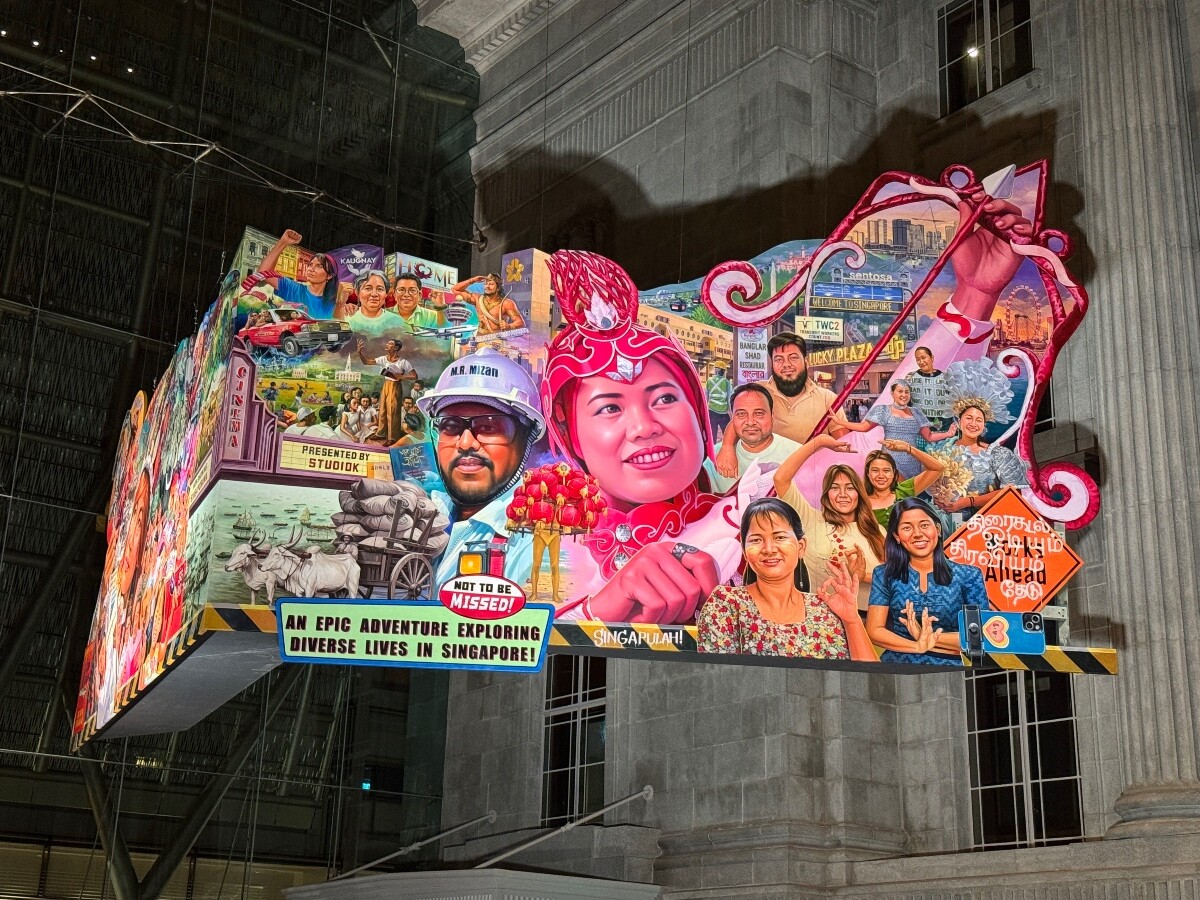
The first phase launched on 9 January 2026. A full reveal will happen in mid-January. Visitors can also watch a seven-episode travelogue video. This video traces the artist’s journey across Singapore. New episodes will be released monthly through April 2026. This makes it a truly evolving encounter.
Plan Your Visit
Light to Night Singapore 2026 runs from 9 to 31 January 2026. I highly recommend visiting during the weekends. You can enjoy free entry to selected exhibitions every Friday, Saturday, and Sunday. This is a perfect way to celebrate a decade of art. Join the community and experience the power in us!