Whenever I attend media invites or event launches, I usually do my homework. I’ll scour the net, read the press releases, and try to get a solid understanding of what I’m walking into. However, this time around, I decided to flip the script. I wanted to go in with a completely blank slate and an exploratory mindset.
To be honest, the event title was a total question mark to me. SKULLPANDA CAGE-UNCAGE. What is a SkullPanda exactly? Is it a Skull? A Panda? Or perhaps a panda with a bare skull? I thought, “You know what? Let curiosity lead the way.”
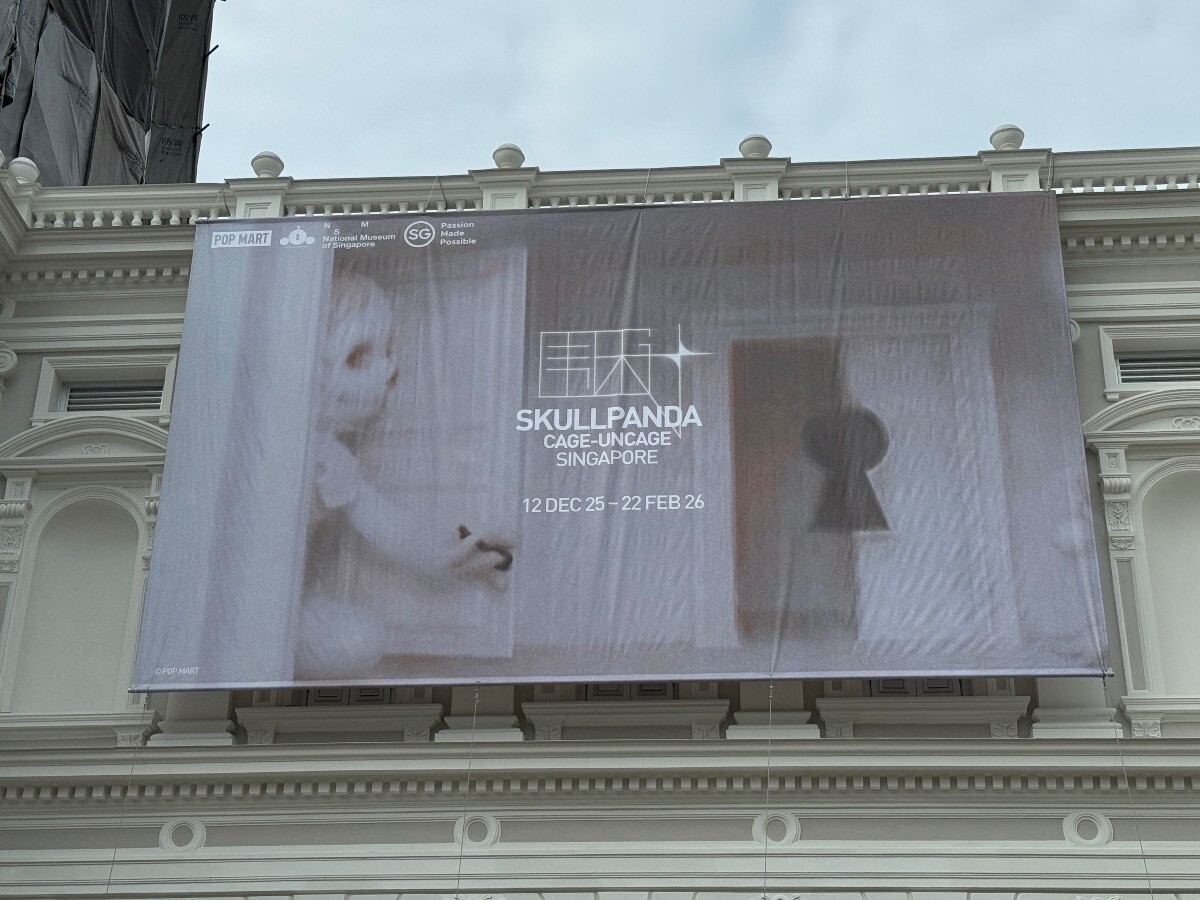
The debut exhibition, held at the National Museum of Singapore, sets a mysterious tone right from the banner. It features a childlike character opening a small door, looking somewhat trapped. The Chinese characters “围困” (Wei Kun) suggest a theme of being surrounded and contained. It immediately begs the question: Is that keyhole meant for a key that unlocks something? And if so, unlock what, exactly?
First Encounters: The Astronauts
Before I even stepped into the main hall, outside the museum, I was greeted by three imposing figures—astronauts, to be precise. But these weren’t your typical NASA explorers. They wore gigantic headphones that looked suspiciously like spherical earrings.

I couldn’t help but chuckle thinking that if they turned their heads, they were surely going to knock into each other. Their facial expressions looked perpetually surprised, facing various directions as though frantically looking for a way out. It was a perfect primer for what was to come.
Who is the Mind Behind the Mask?
Before diving into the exhibition proper, I took a detour to check out the merchandise at the Pop Mart shop (because who can resist?). It turns out these astronaut-alike characters are the creative works of Chinese artist Xiong Miao.
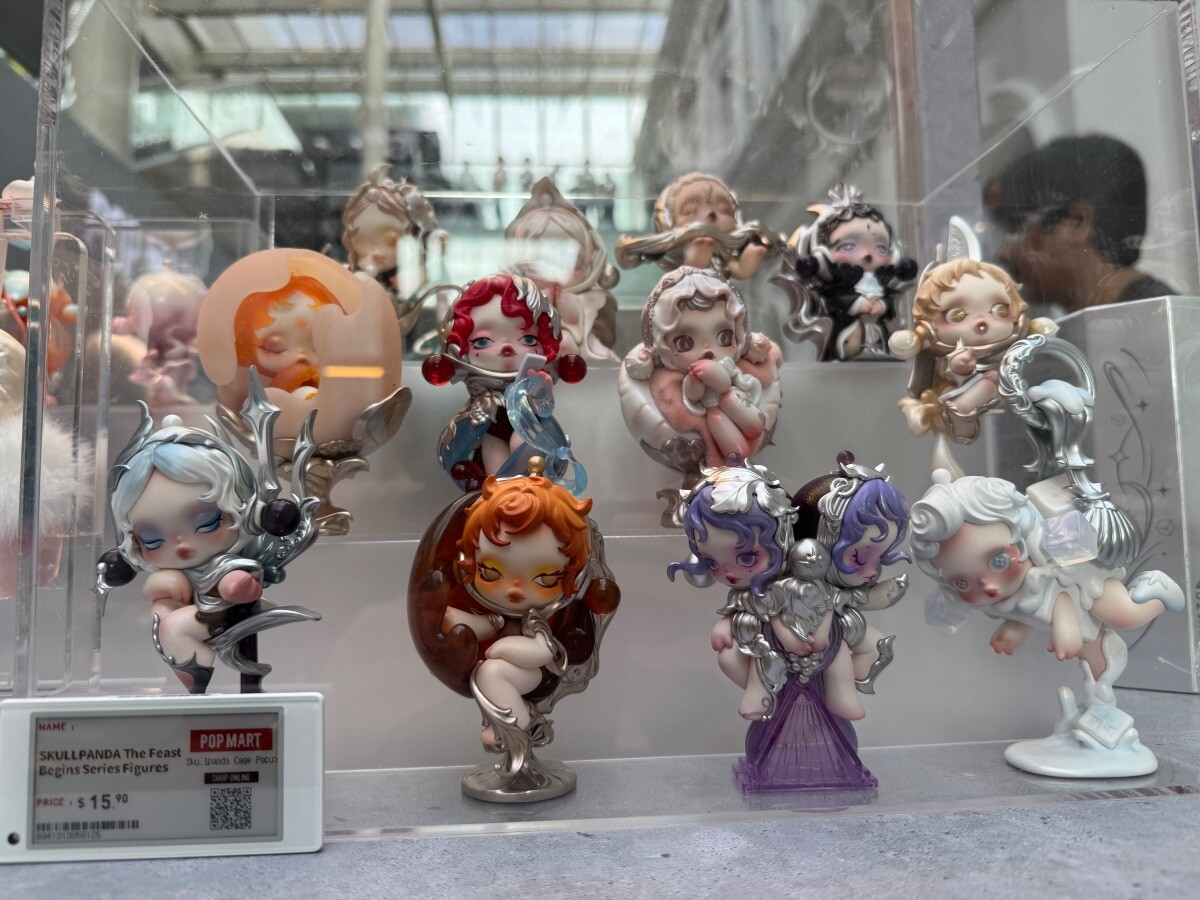
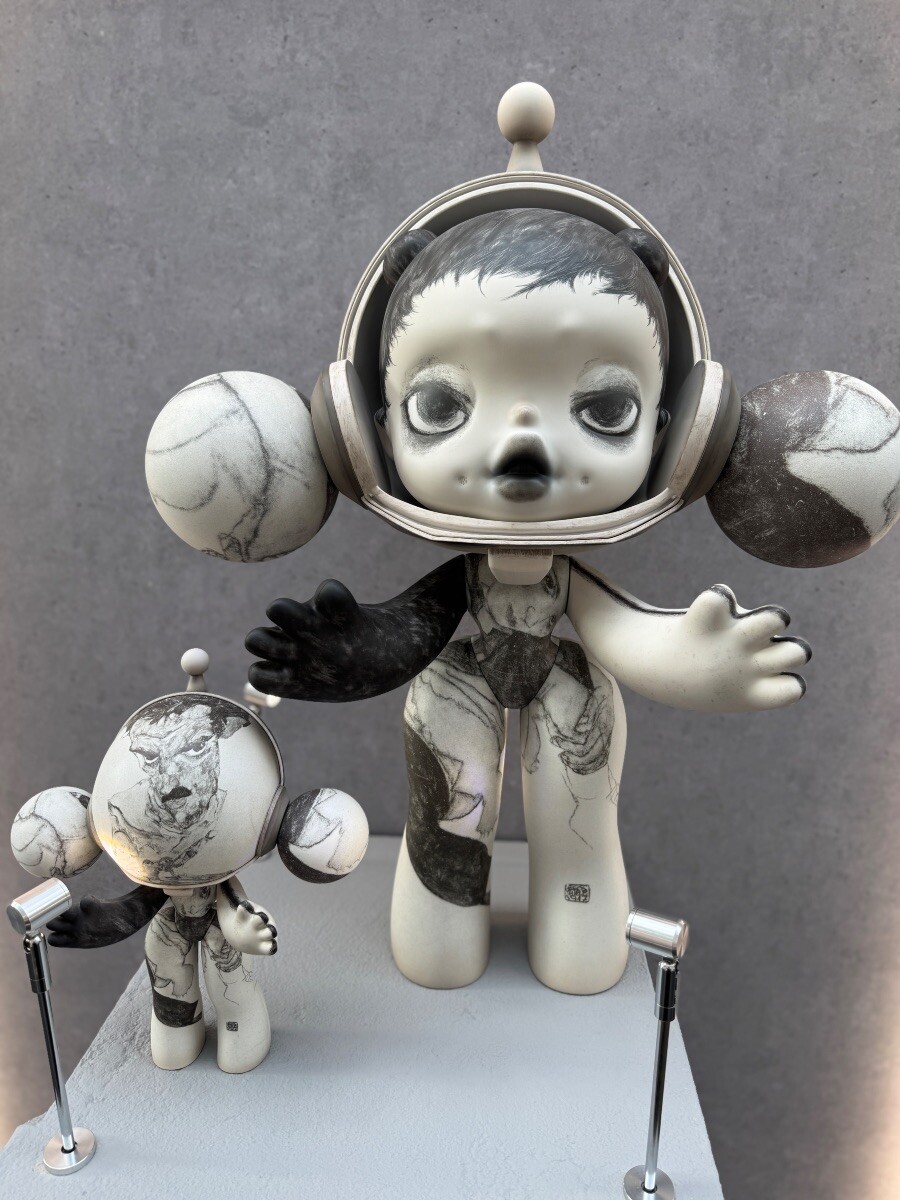
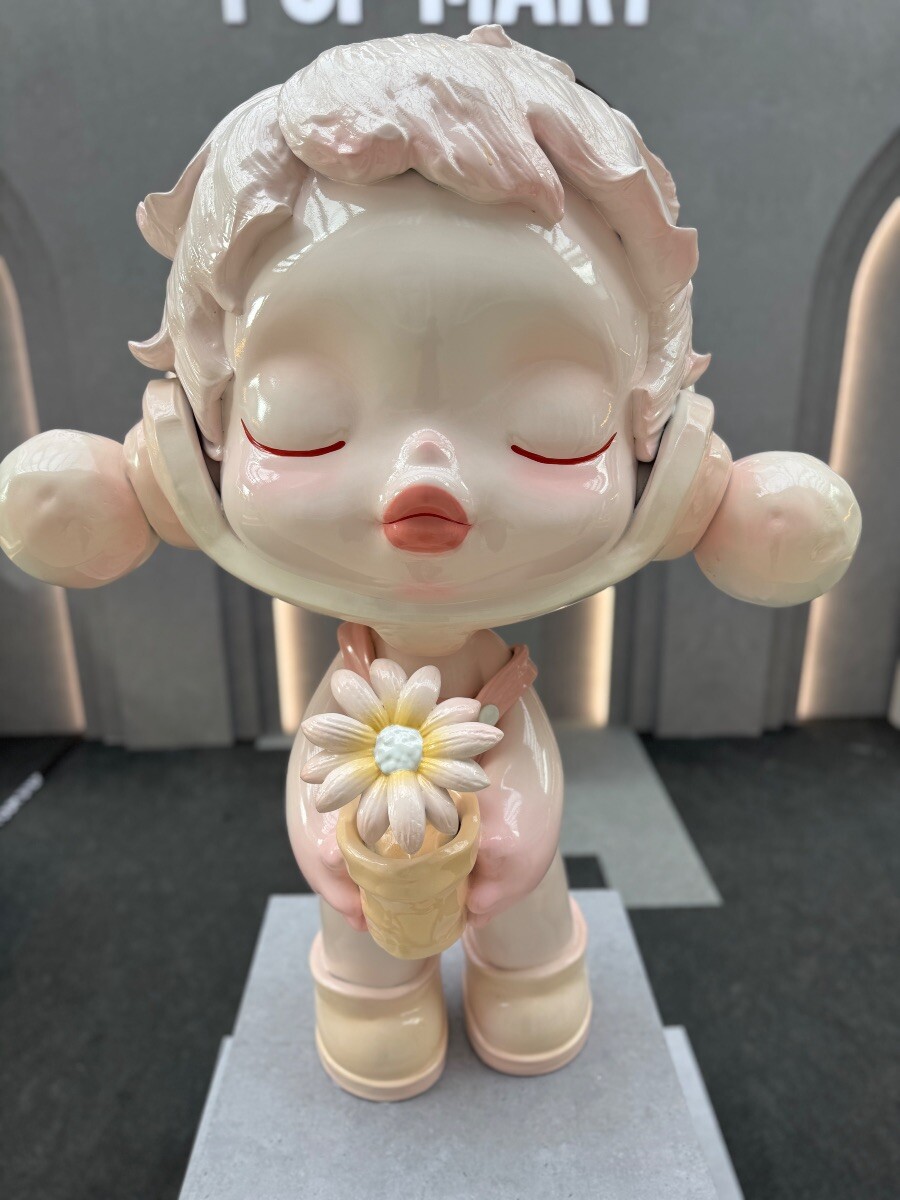
For those who, like me, went in blind, here is the lowdown: Xiong Miao (熊喵) is a powerhouse concept designer and the creator of the popular art-toy character SKULLPANDA. She has a strong background in CG concept design and gaming, having founded her own studio, Beizhai (later North Studio/Lazy North).
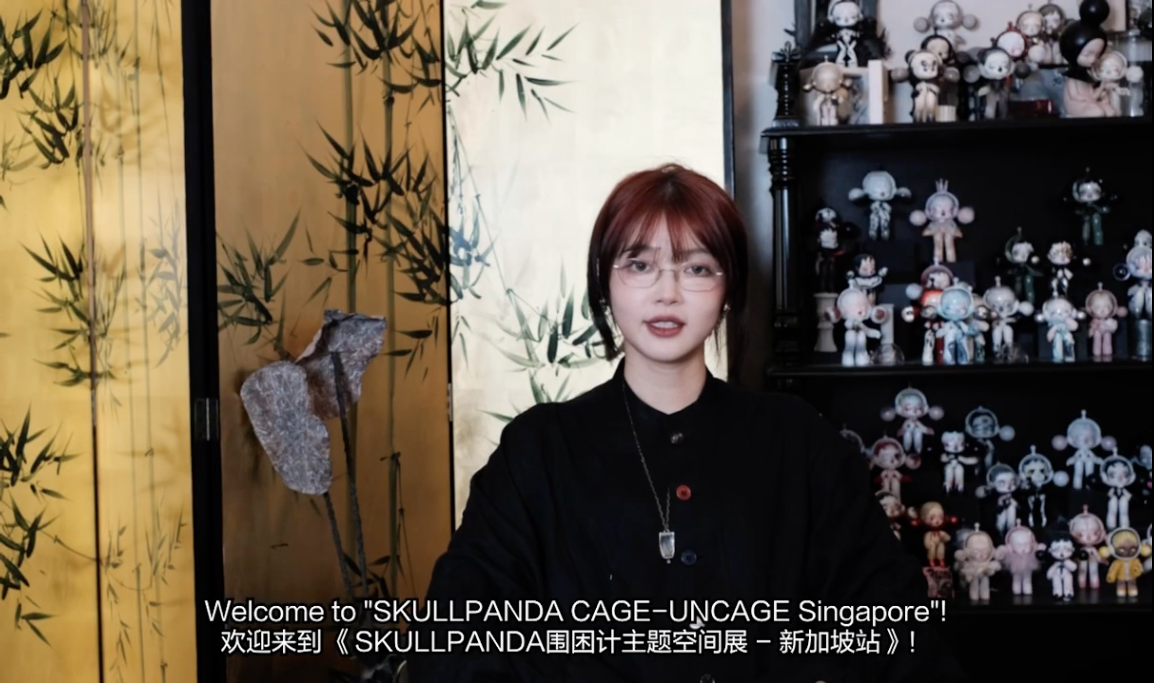
She launched the SKULLPANDA character series in 2018, envisioning it as a creative expression of freedom and identity. In 2020, she partnered with the major designer-toy brand POP MART, and the rest is history—her blind-box series sold out almost instantly. It’s clear her work bridges art, storytelling, and collectible design perfectly.
Zone 1: Emotion
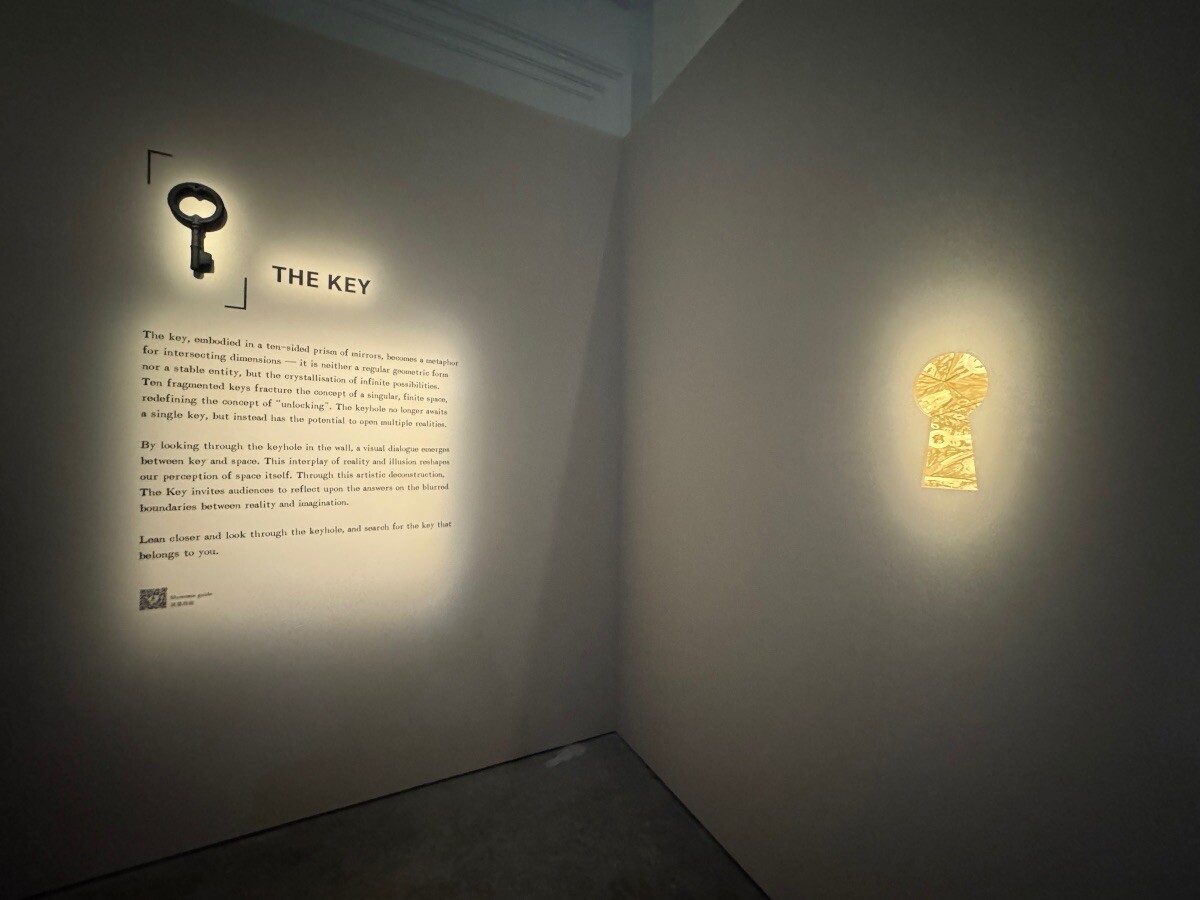
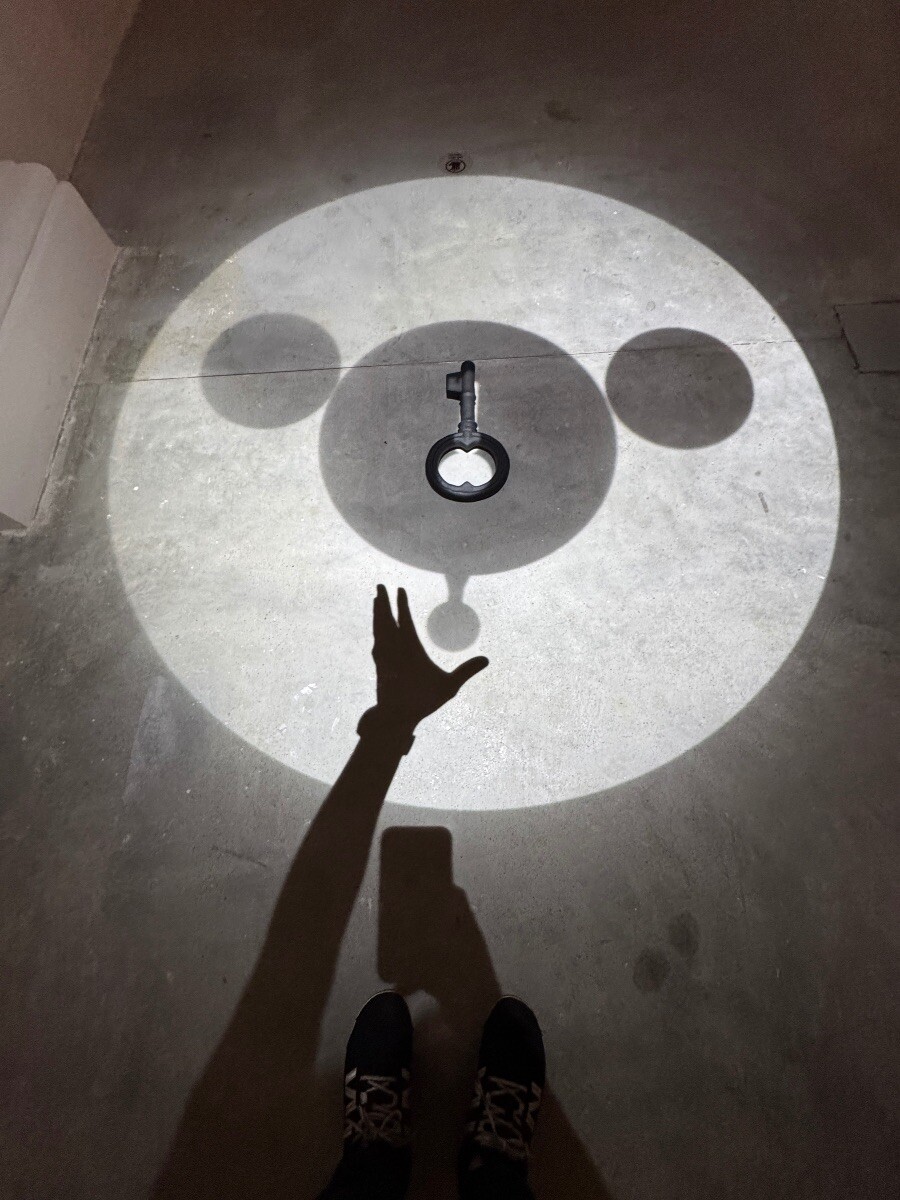
The exhibition is split into several zones, starting with Emotion. Here, I found that the lock and key are treated as two symbols in an eternal dialogue.
When freed from their conventional relationship and placed in opposition, the projection of light completes the image. It’s a fascinating metaphor. The entangled lines become visible threads of emotional connection. As I moved around the space, the dynamic relationship between shadow and structure shifted continuously.
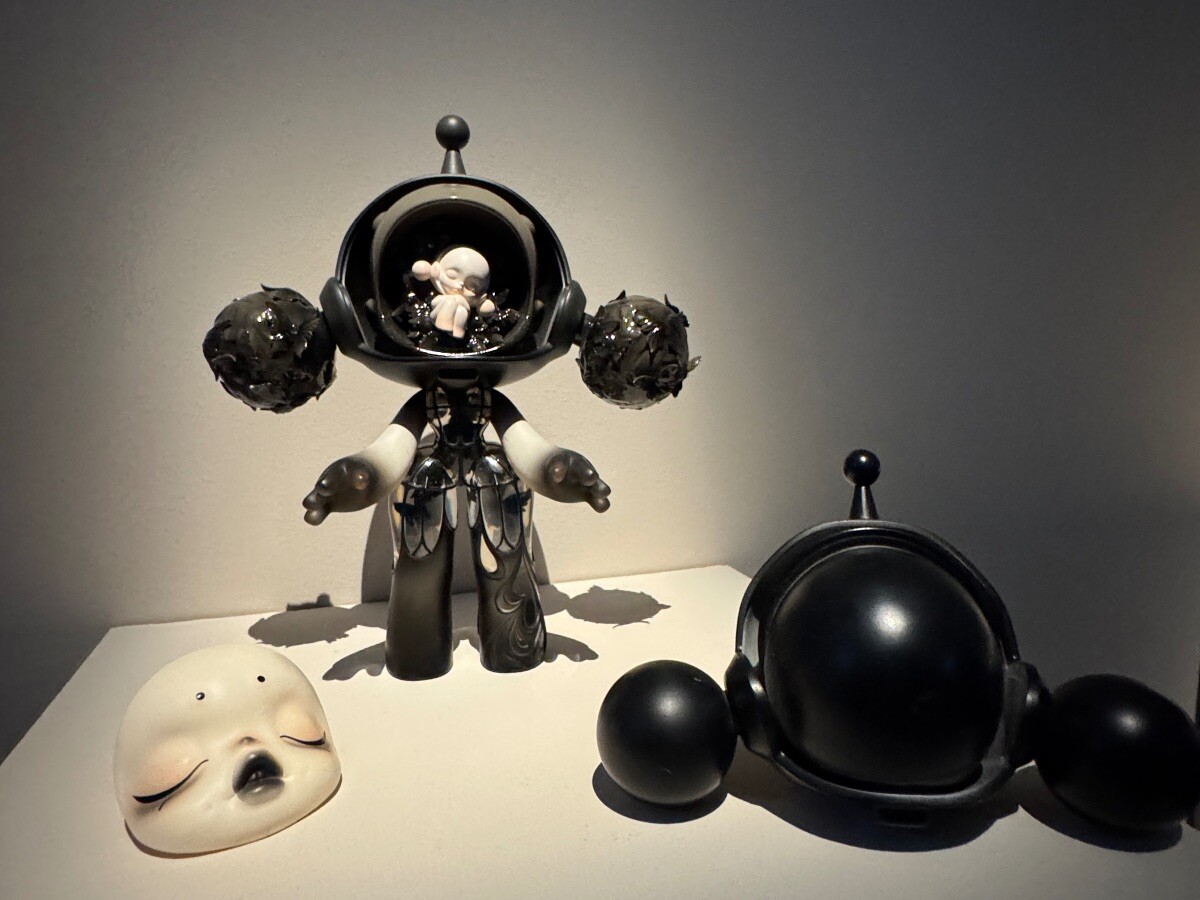
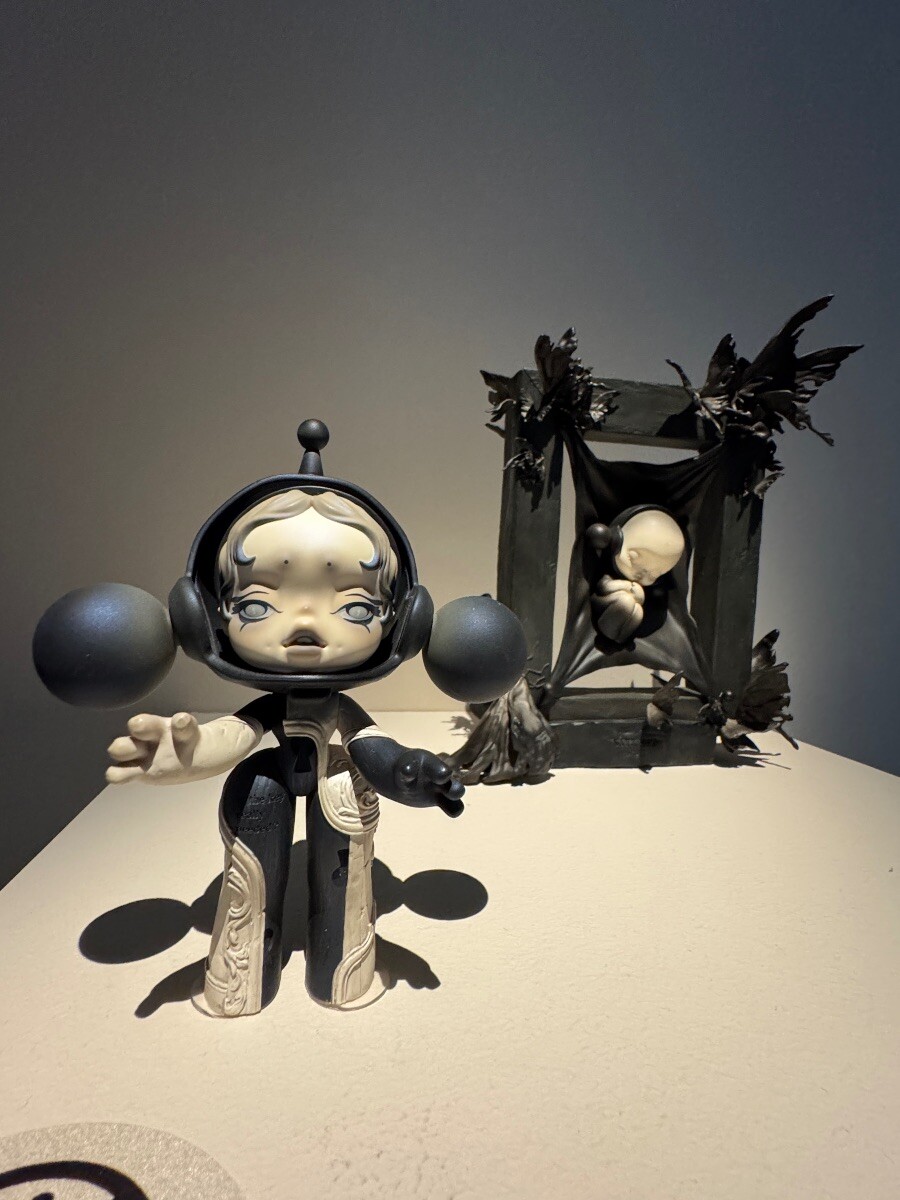
One specific black-suited astronaut here really caught my eye. It reminded me of a character in the movie Men in Black, where the human is controlled by a tiny alien sitting behind the face like a cockpit. My emotions were definitely mixed—intrigue, confusion, and awe all rolled into one.
Zone 2: Direction
Next up was the Direction zone, where we explored diverse perceptions of freedom.
This area felt surreal. A series of transparent book pages carried layered imagery of imprisonment—thorns, shackles, and webs. But the highlight for me was the “Giant Book.”
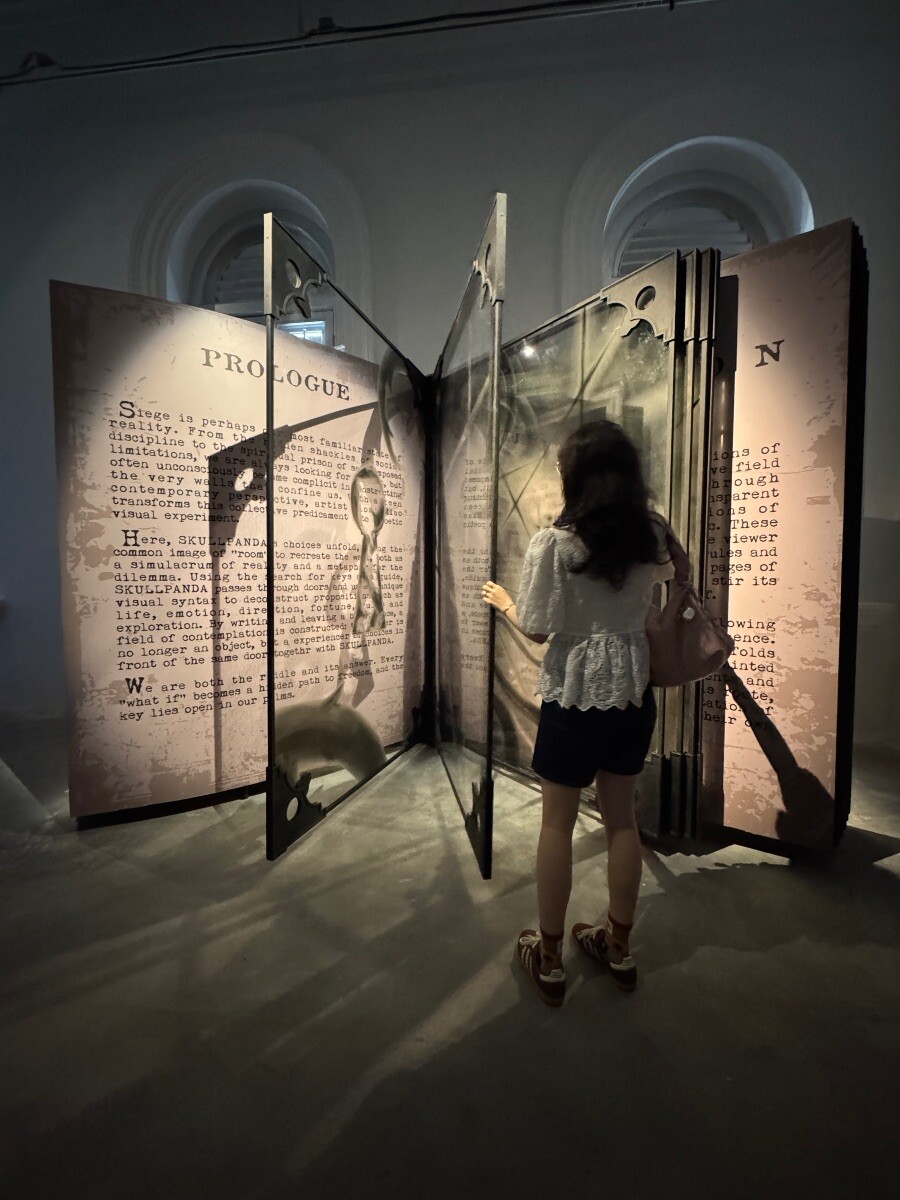
For a moment, I felt like Alice in some kind of Wonderland. This giant book has pages that you can actually turn (with care, of course—it’s pretty heavy!). If you have short-sightedness issues, this book solves them instantly; everything is massive. In the fluid visual imagery composed of hand-drawn illustrations, a butterfly serves as a key motif, weaving the narrative of the entire exhibition together.
Zone 3: Fortune
Following the path, I arrived at the Fortune zone. Here, a huge mirror is laid on the ground with shattered fragments scattered around, reflecting the ceiling.
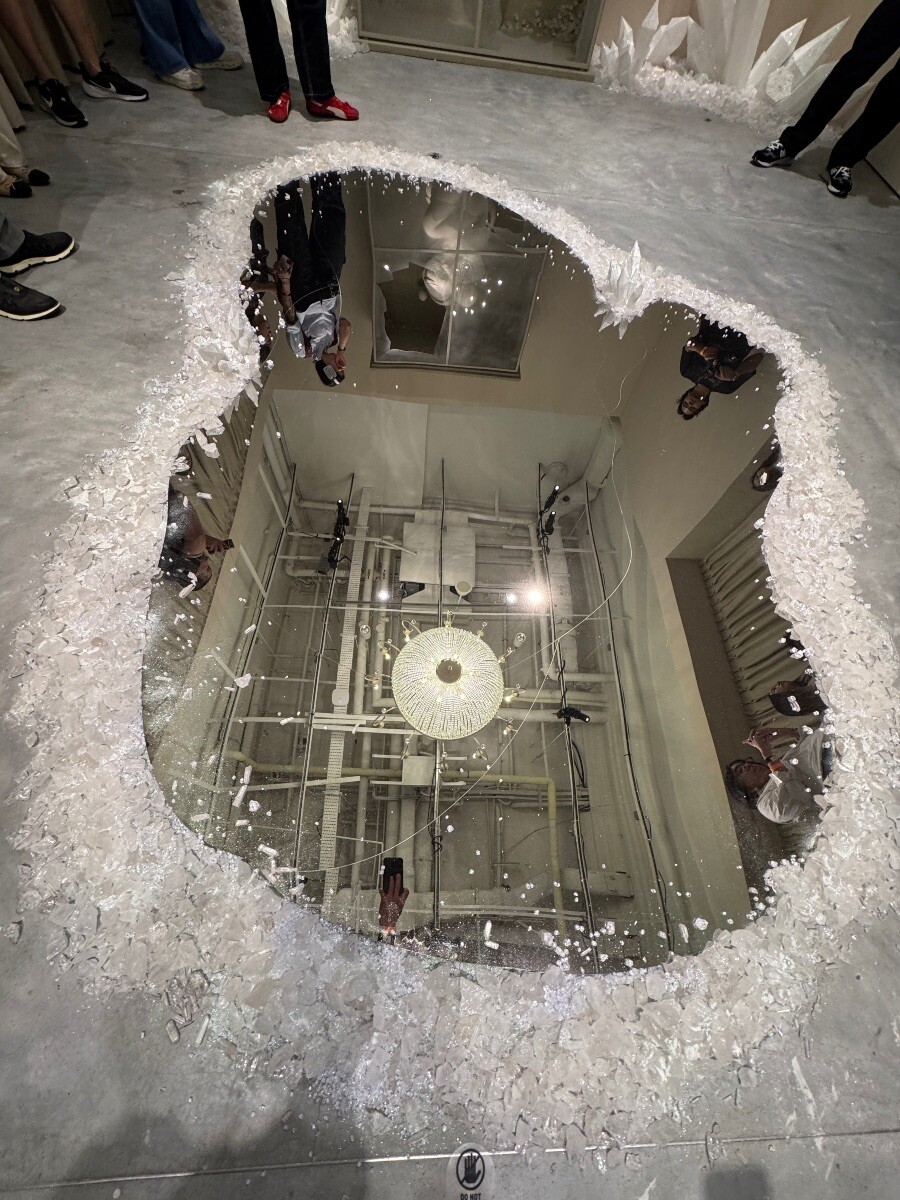
In a fantasy world, this resembles a gateway portal that you could jump into to pass through to another dimension. The installation explores the dual nature of wealth—it is both a dazzling crystal and a sharp-edged form; a warm light and a blinding halo.
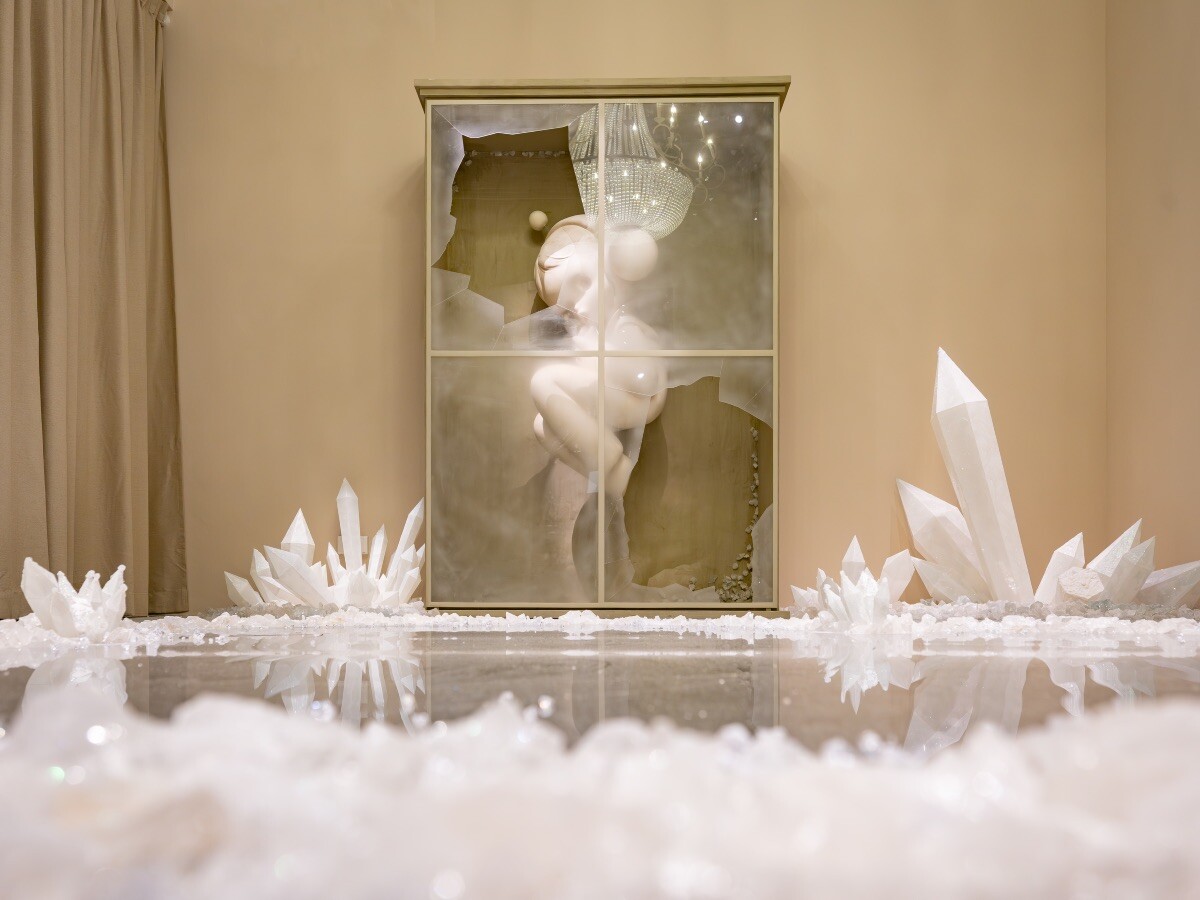
As viewers move through the space, we encounter reflected images of ourselves, reshaped by the notion of wealth. It invites us to re-examine our symbiotic relationship with material success.
Zone 4: Rules
In the Rules zone, the atmosphere shifts to explore concepts of time and gravity. The symbolism here relies on a spinning top and a precarious scale.
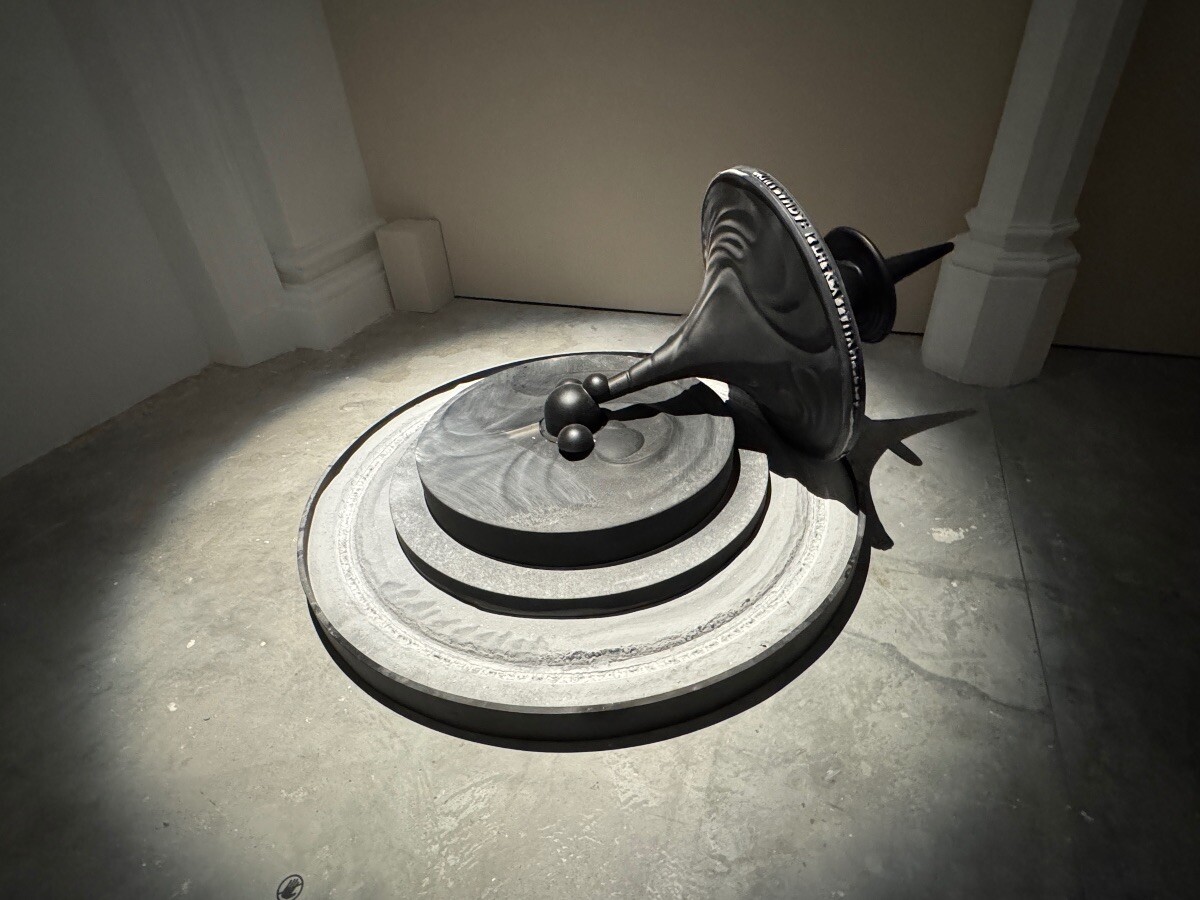
As the top circles endlessly on its axis, representing eternal order, the words engraved along its edge gradually fade with each turn. Meanwhile, the scale—a universal symbol of fairness—is presented in a fragile balance.
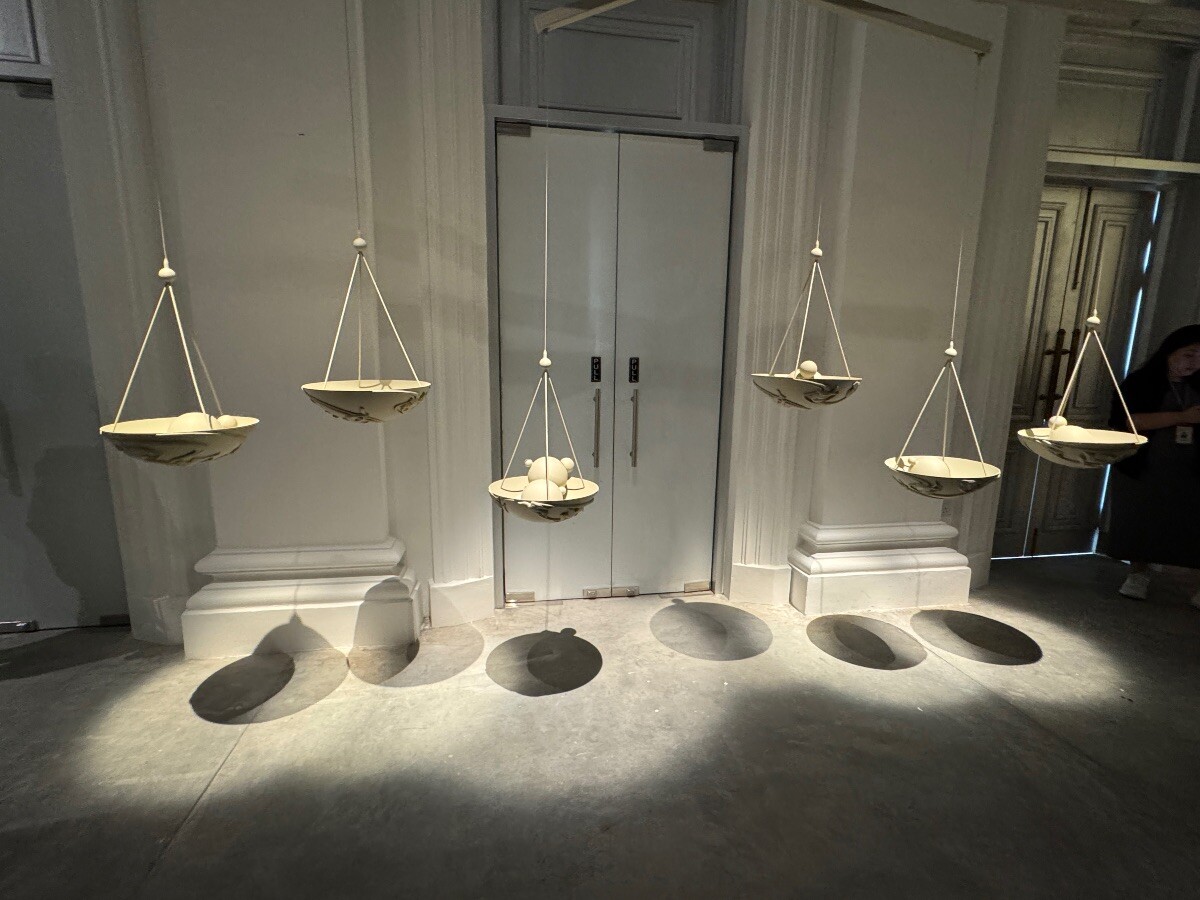
I took a moment to pause here. I could adjust the weights and observe how the balance shifted in a predictable yet multi-permutable manner. Interestingly, the shadows cast by the scales created a rhythmic pattern of chaos. It’s a reflection of our own relationship with order: teetering on the brink of imbalance, yet seeking new equilibrium.
Zone 5: Life
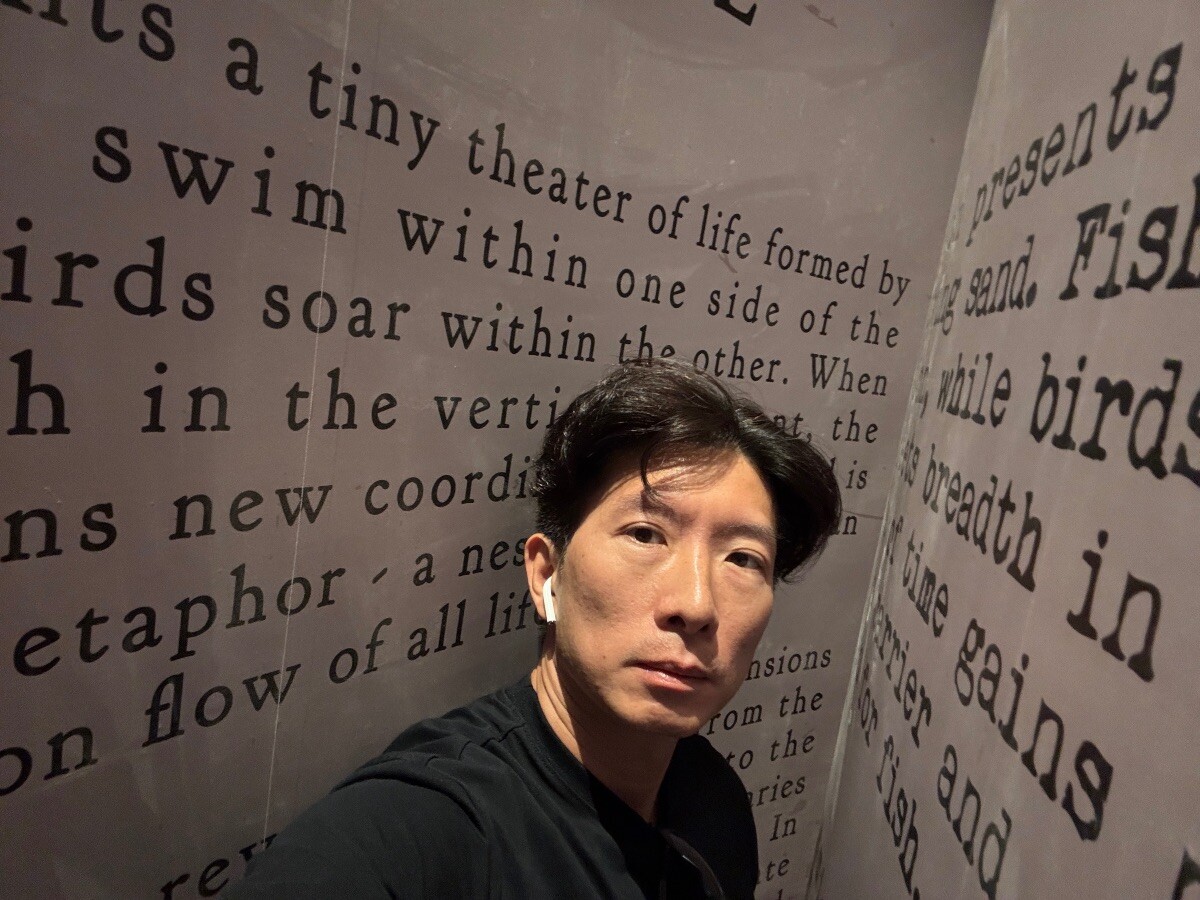
This installation felt like a miniature theatre of life through the flow of sand. A school of fish swims within one globe, while a flock of birds soars within the other.
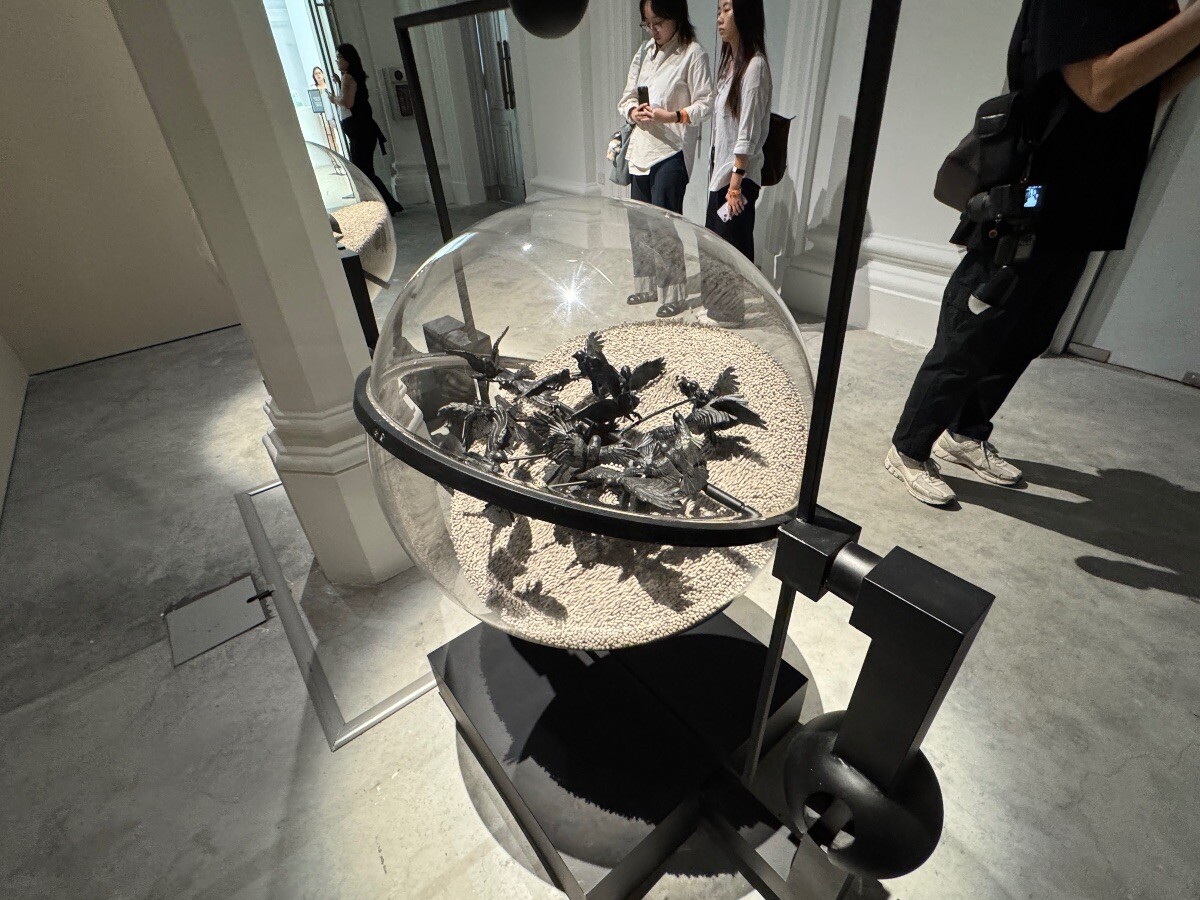
Where depth and breadth intersect, the hourglass of time unfolds. The shifting grains of sand deconstruct the boundaries of form. It makes you wonder: in the space between depth and breadth, could new coordinates emerge to reshape how we understand life itself?

Zone 6: Exploration
The world is full of puzzles waiting to be solved, and exploration is the key.
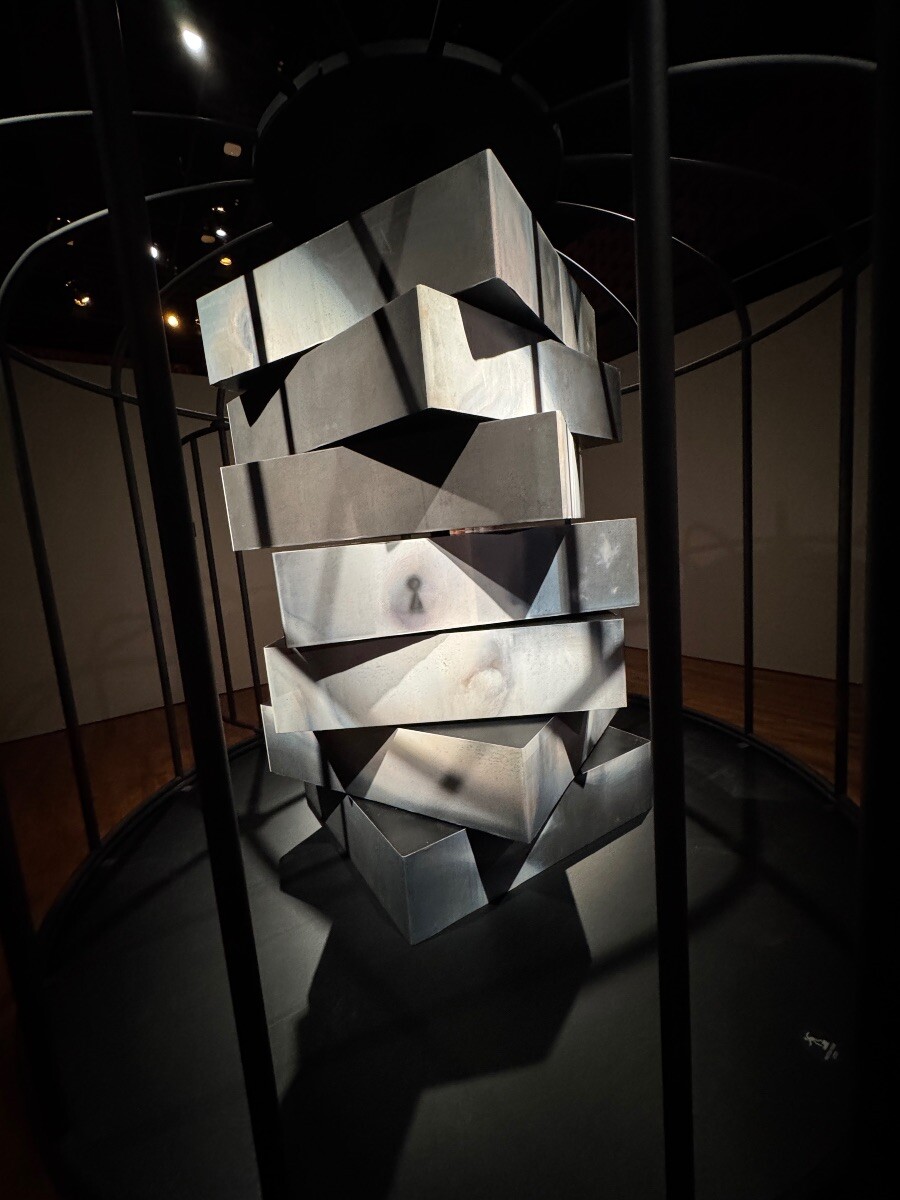
This section featured a rotating cuboid at its core. It looks like a stack of giant Jenga blocks (good thing they won’t fall off!). As you rotate the cuboid, two-dimensional images are reconfigured, and new layers of visual meanings emerge. It mimics the act of exploration: a shift in one’s perspective brings new understanding.
Final Zone: The Room
Finally, we reached The Room. This space employs a minimalist visual language to explore an abstract city within walls.
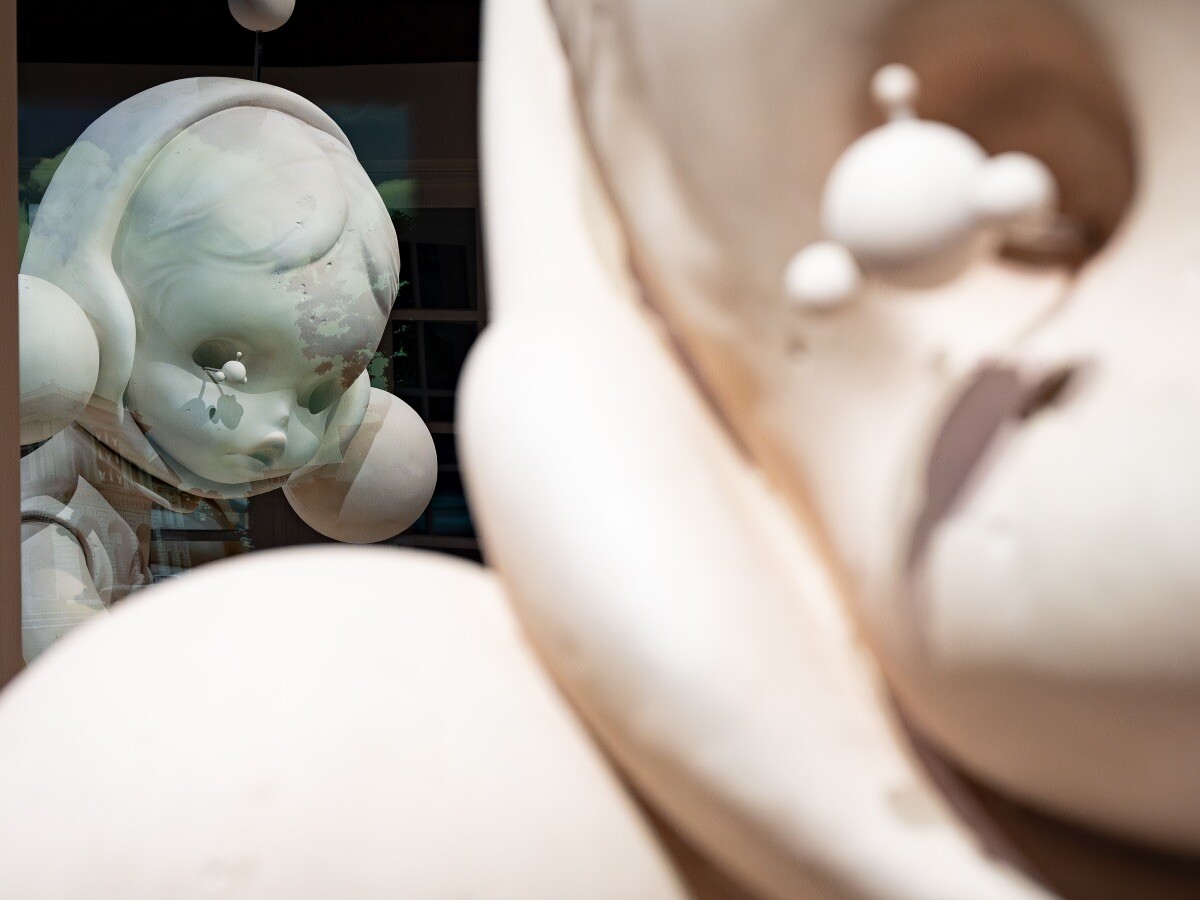
It’s a visual labyrinth of one-way mirrors where space is infinitely replicated. Ko Skullpanda holds a key symbolising both the beginning and the possibility of unlocking freedom. From the outside, it appears to enclose a complete space, yet from within, it becomes a city of blurred distance.
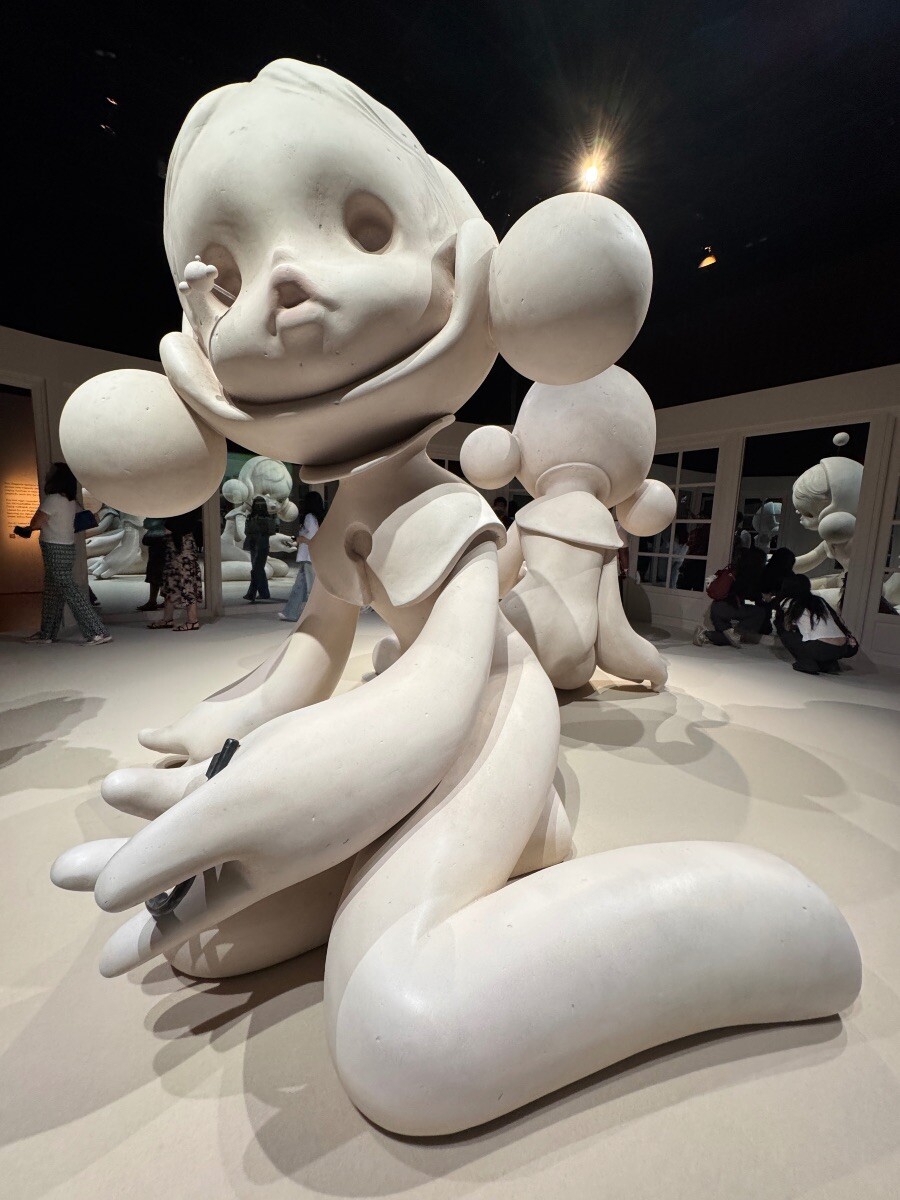
It leaves you with a lingering question: The same door separates the inside from the outside. Which key—whether for entering or leaving—can unlock the secret path to freedom?
Final Thoughts
Walking out of the National Museum, I realised that while the exhibition is visually stunning and Instagram-worthy, it’s also deeply philosophical. It challenges you to think about what confines you and what frees you.
One thing is for sure: the key is always in your own hands.
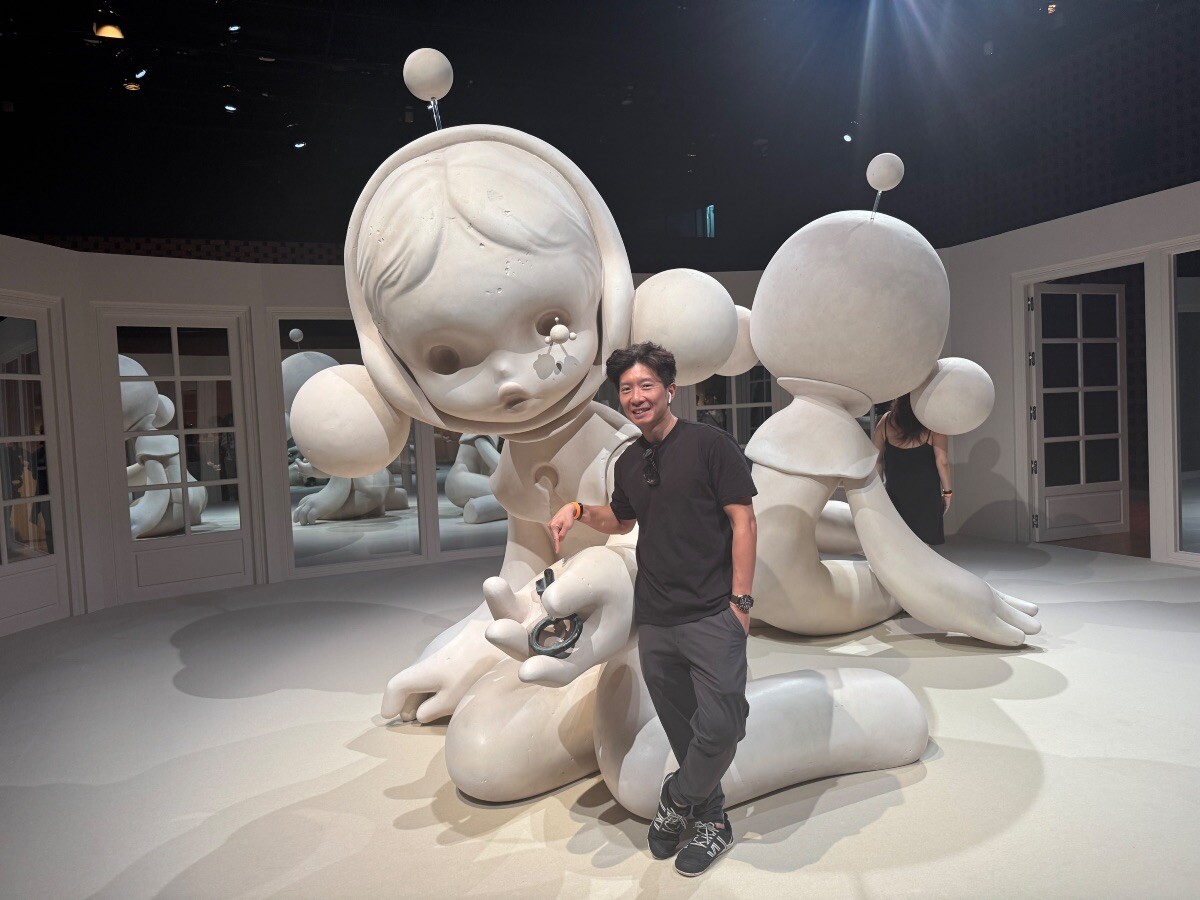
Event Details: If you want to experience this yourself, head down to the National Museum of Singapore. Whether you are a die-hard Pop Mart fan or just curious like me, it’s worth the trip.

You May Also Like
- Wunderground Festival 2023 – What To Expect?
- I attended the premier of Happy Ever Laughter on the 20th of June
- Crossing Cultures at ACM: Festive Weekend